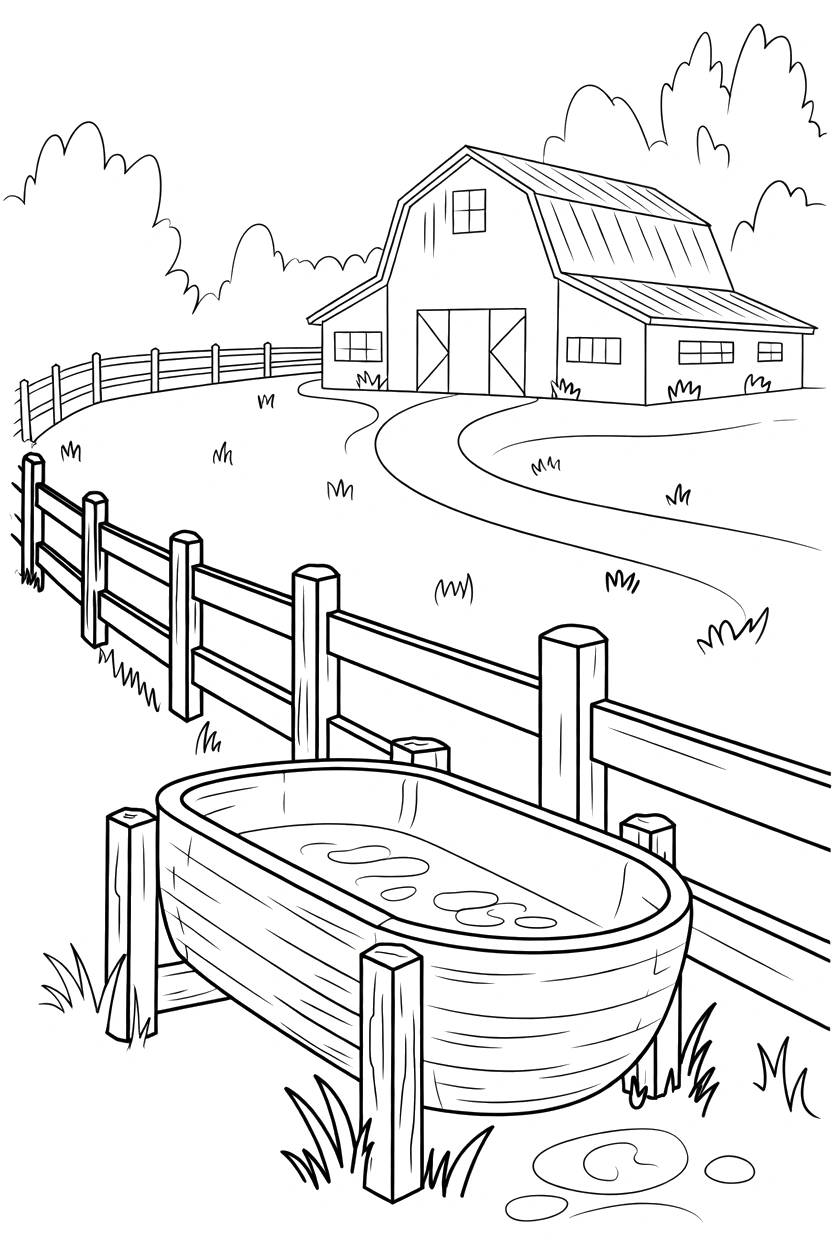
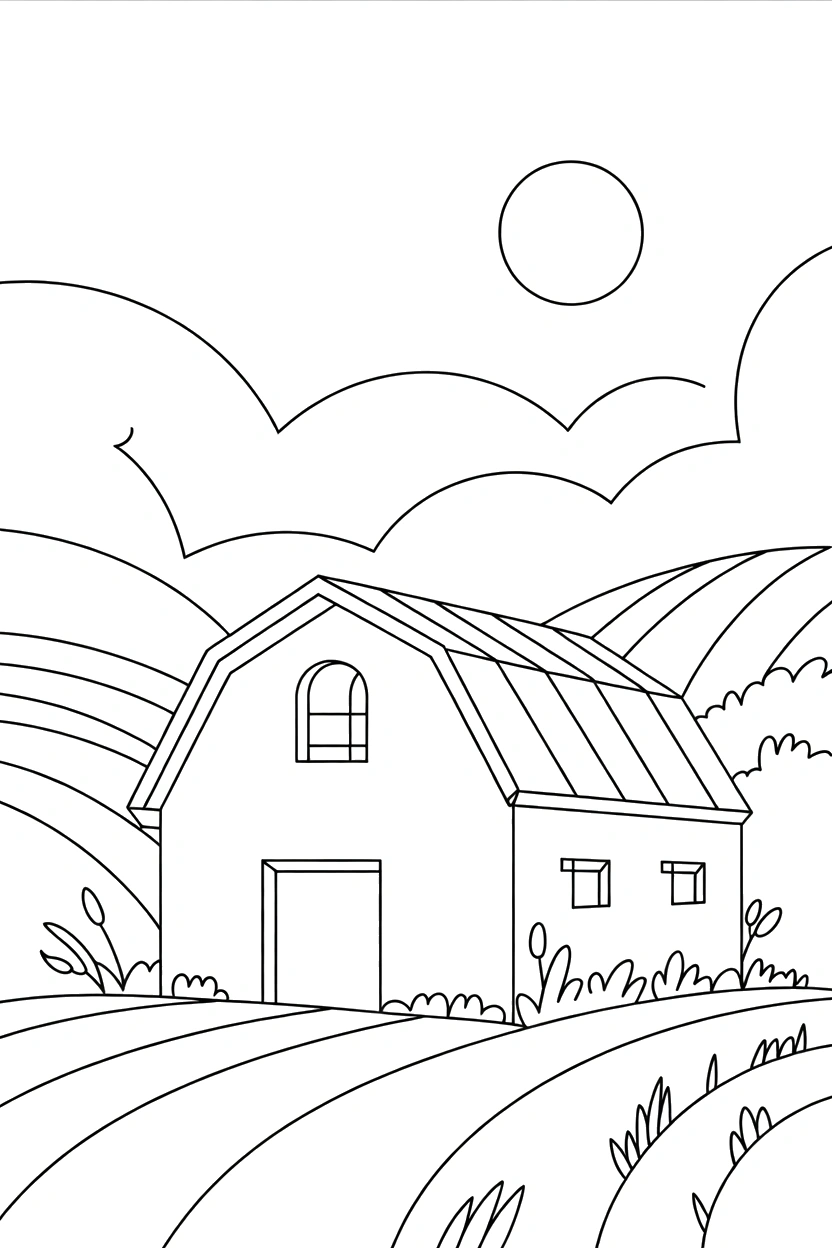
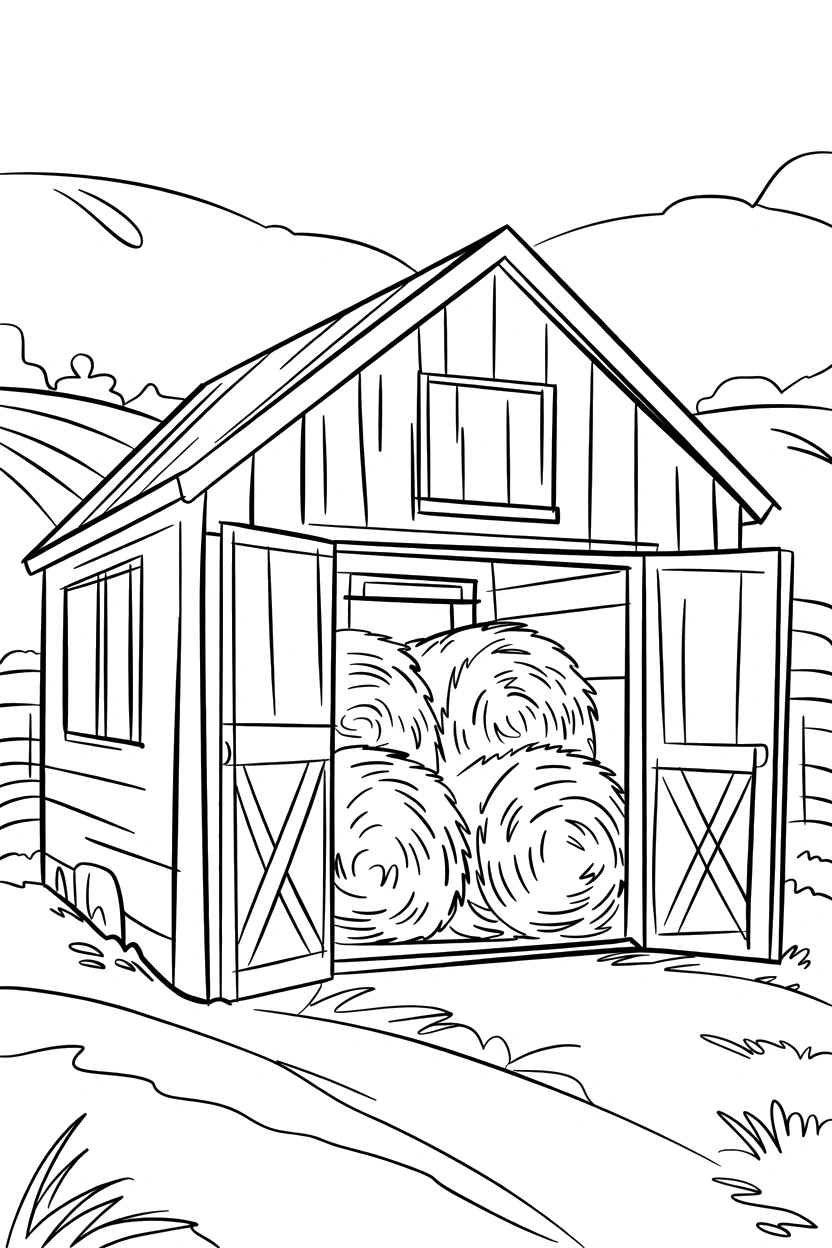
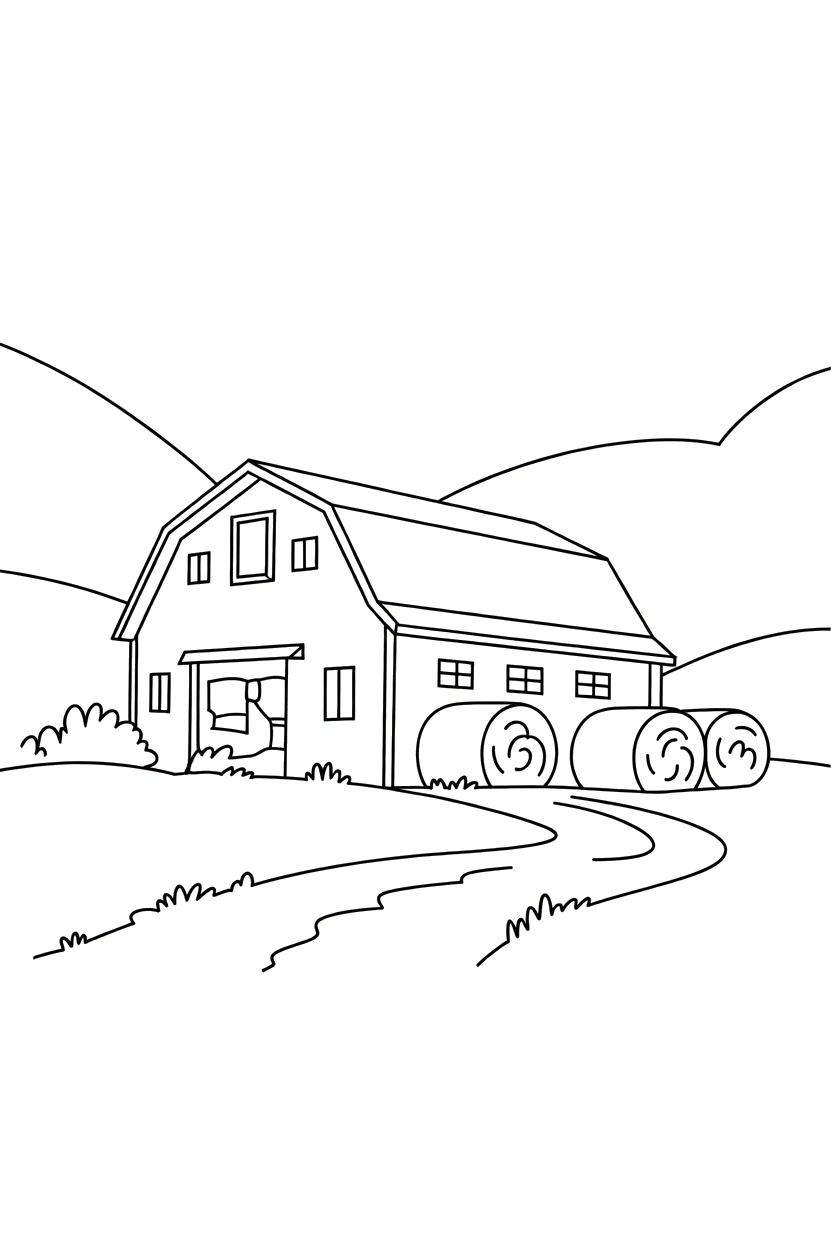
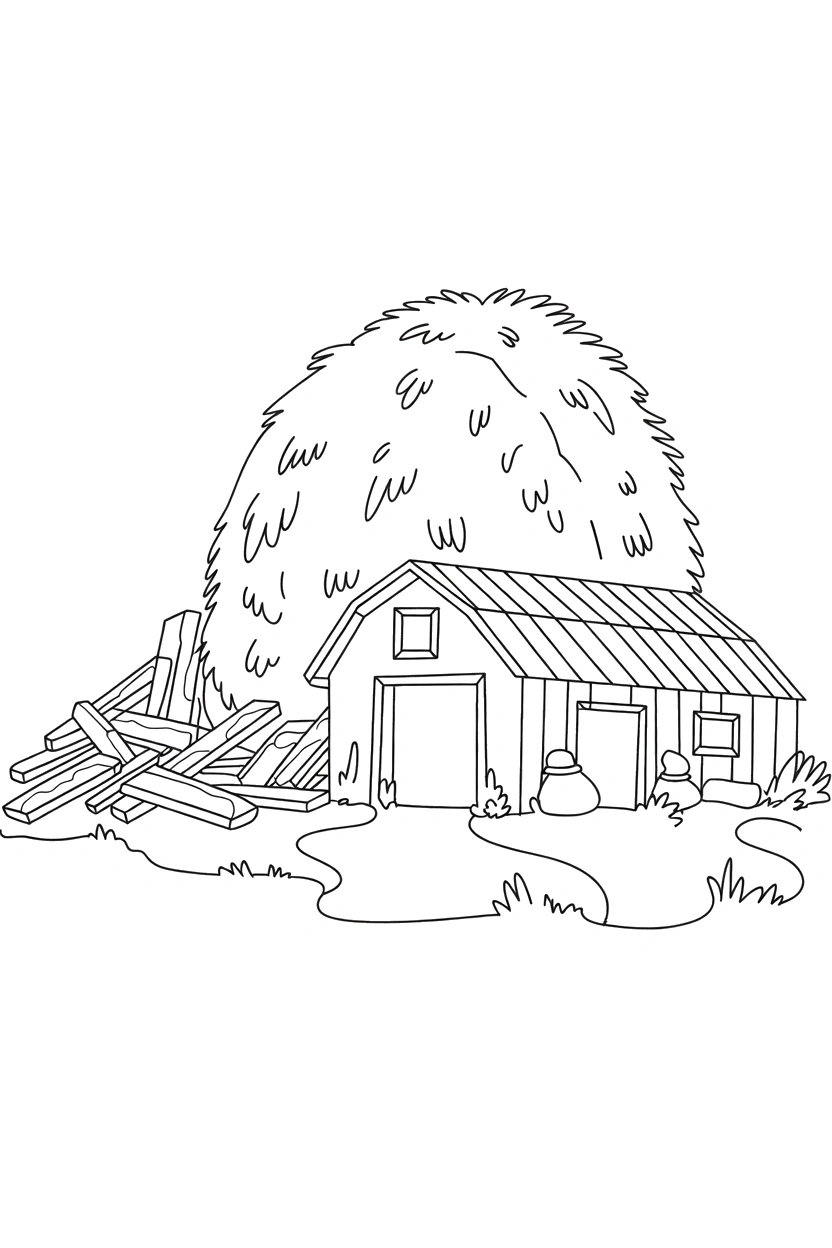
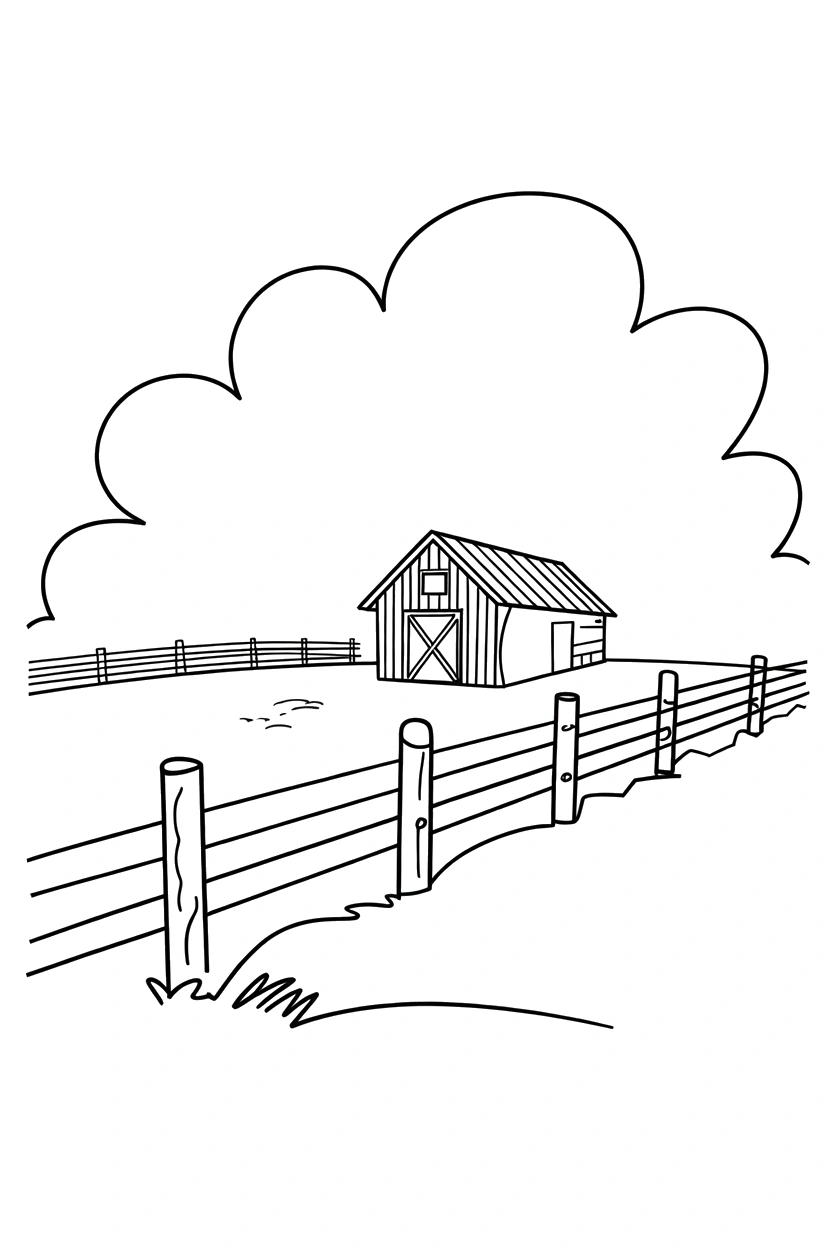
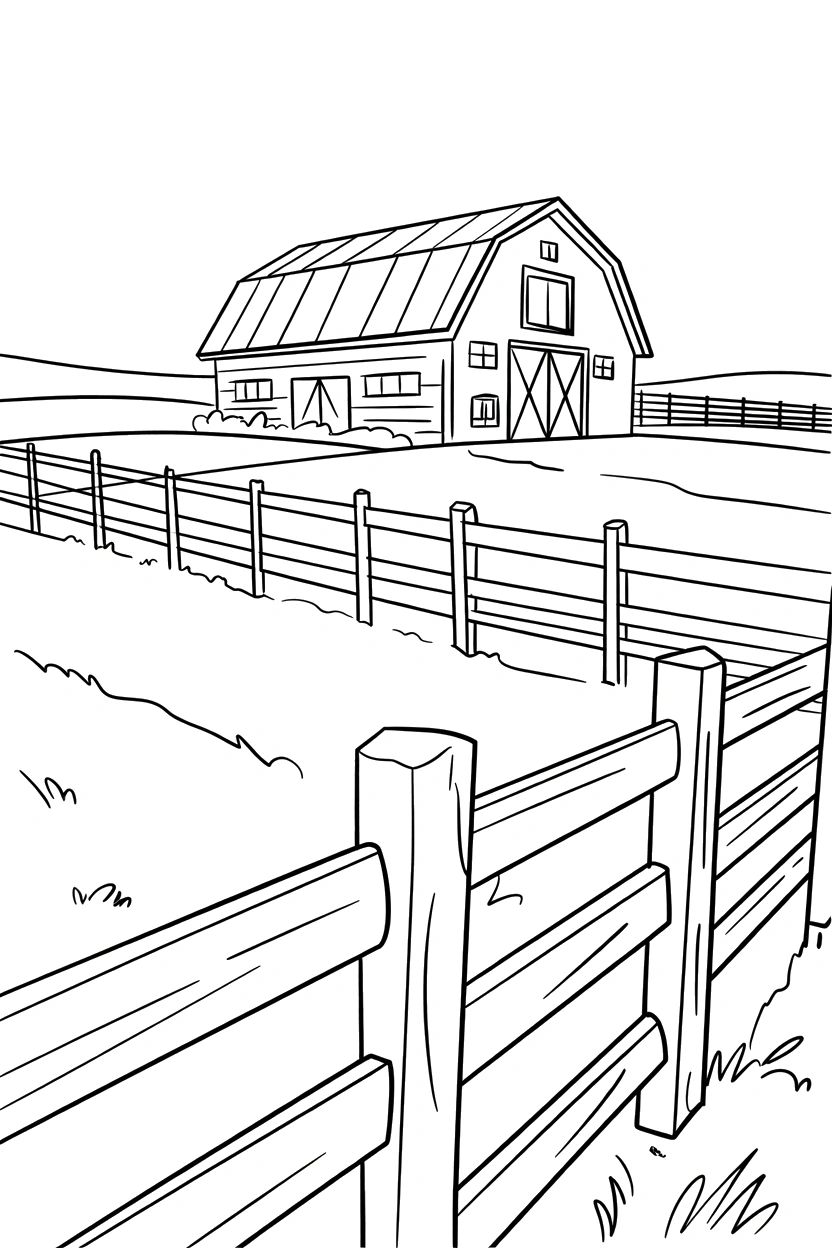
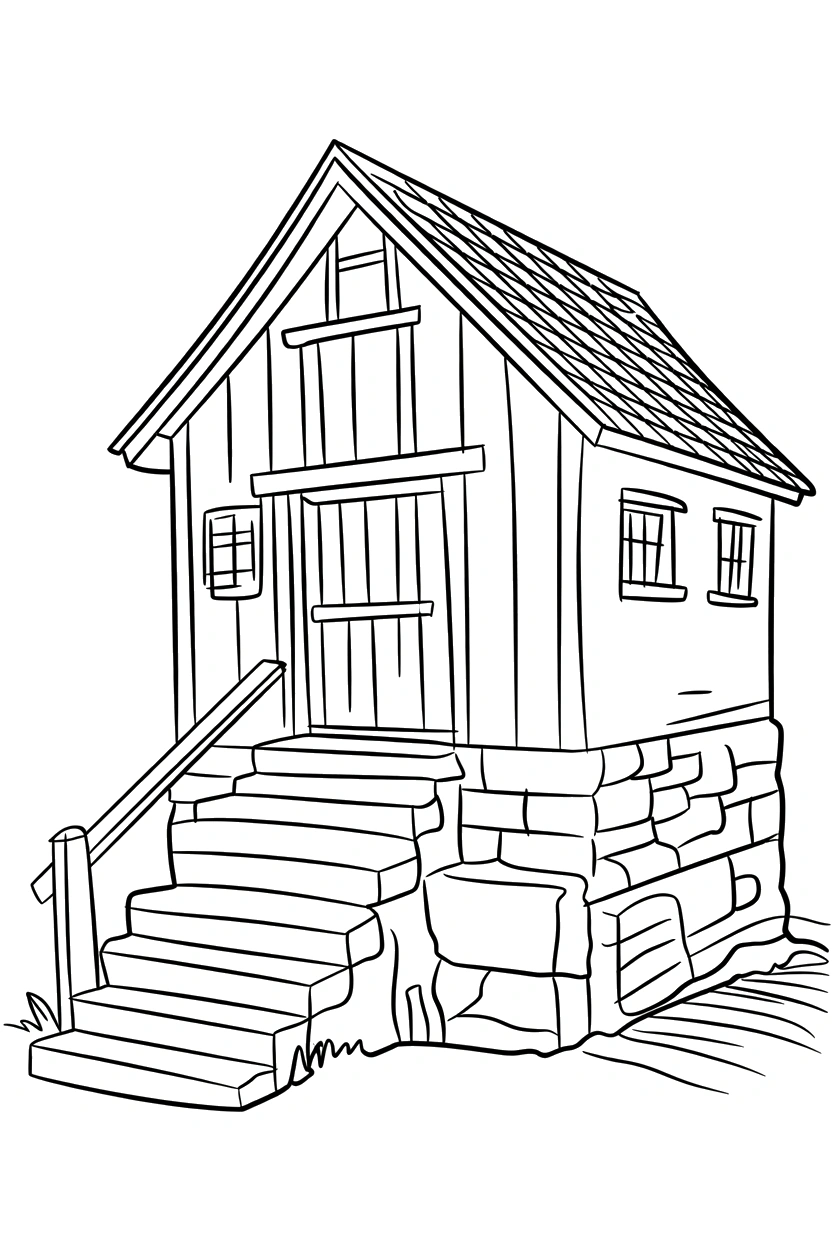
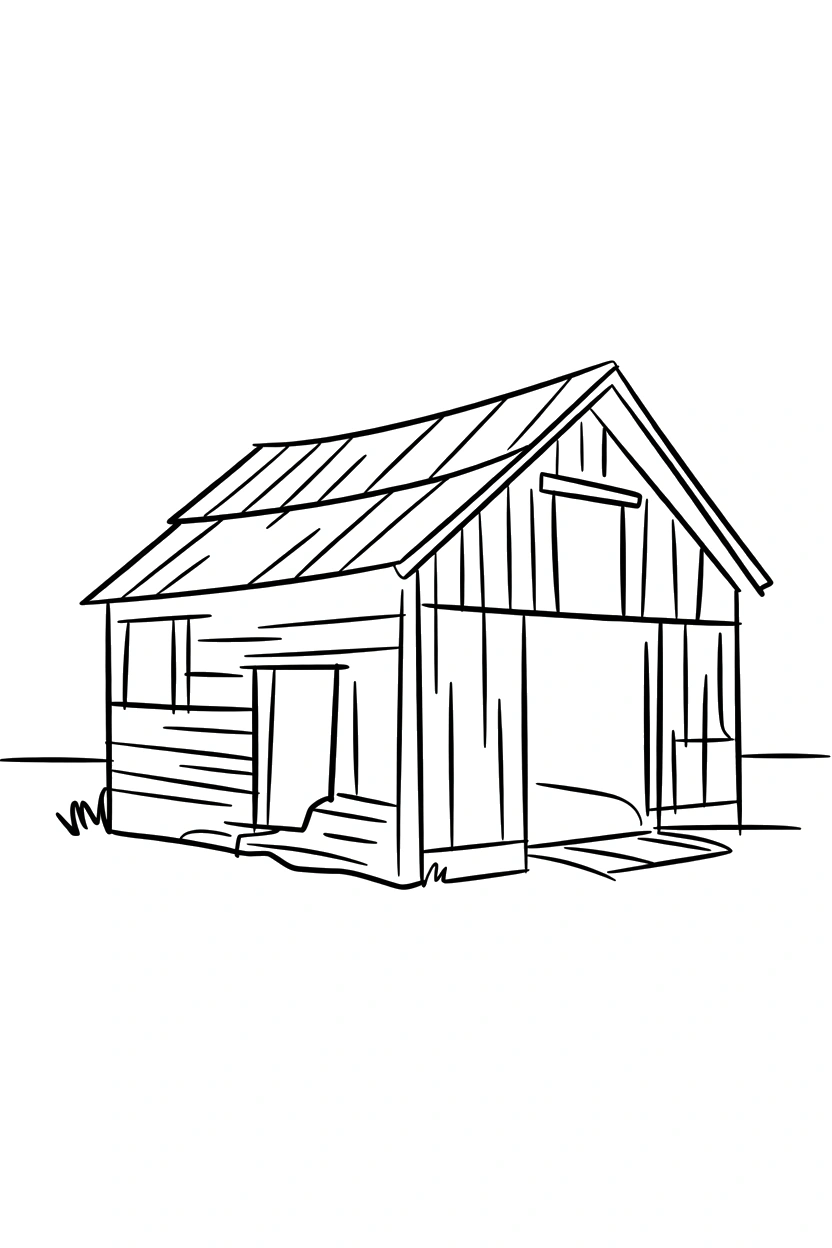
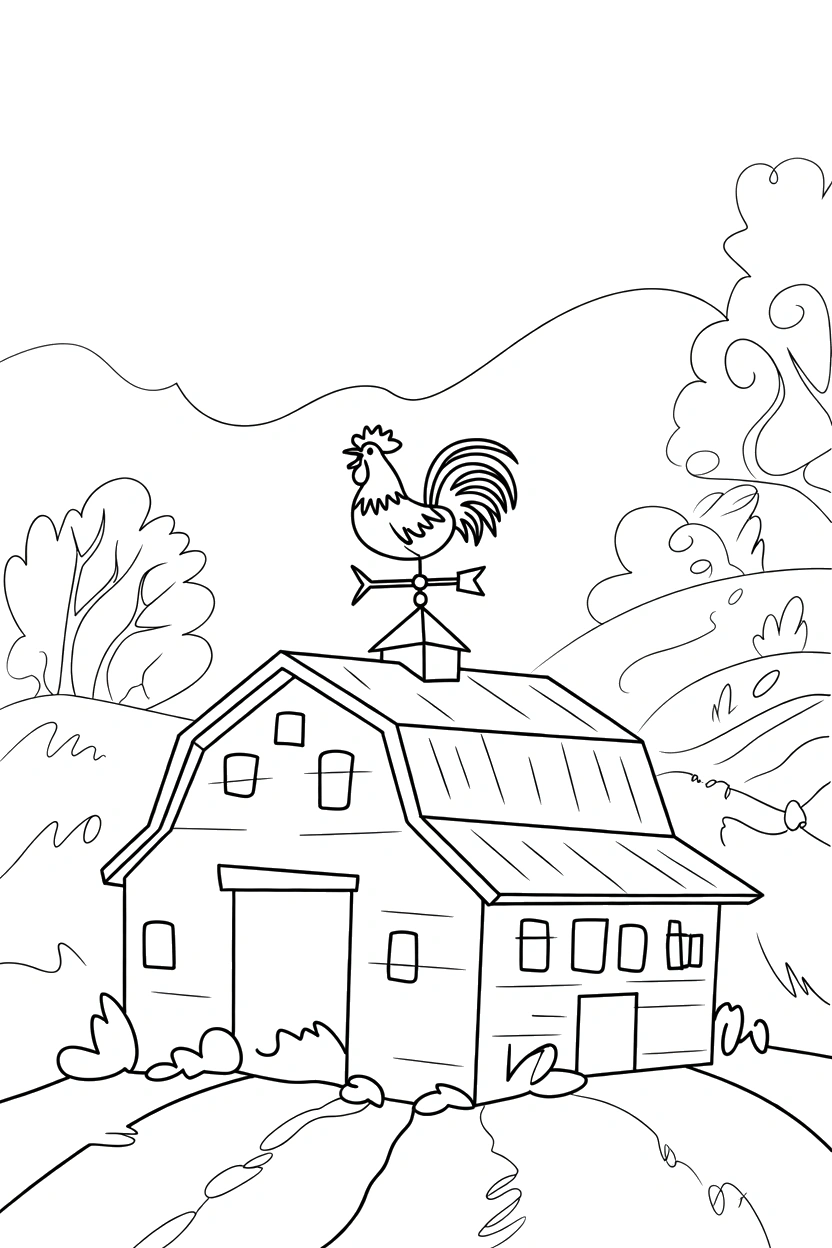
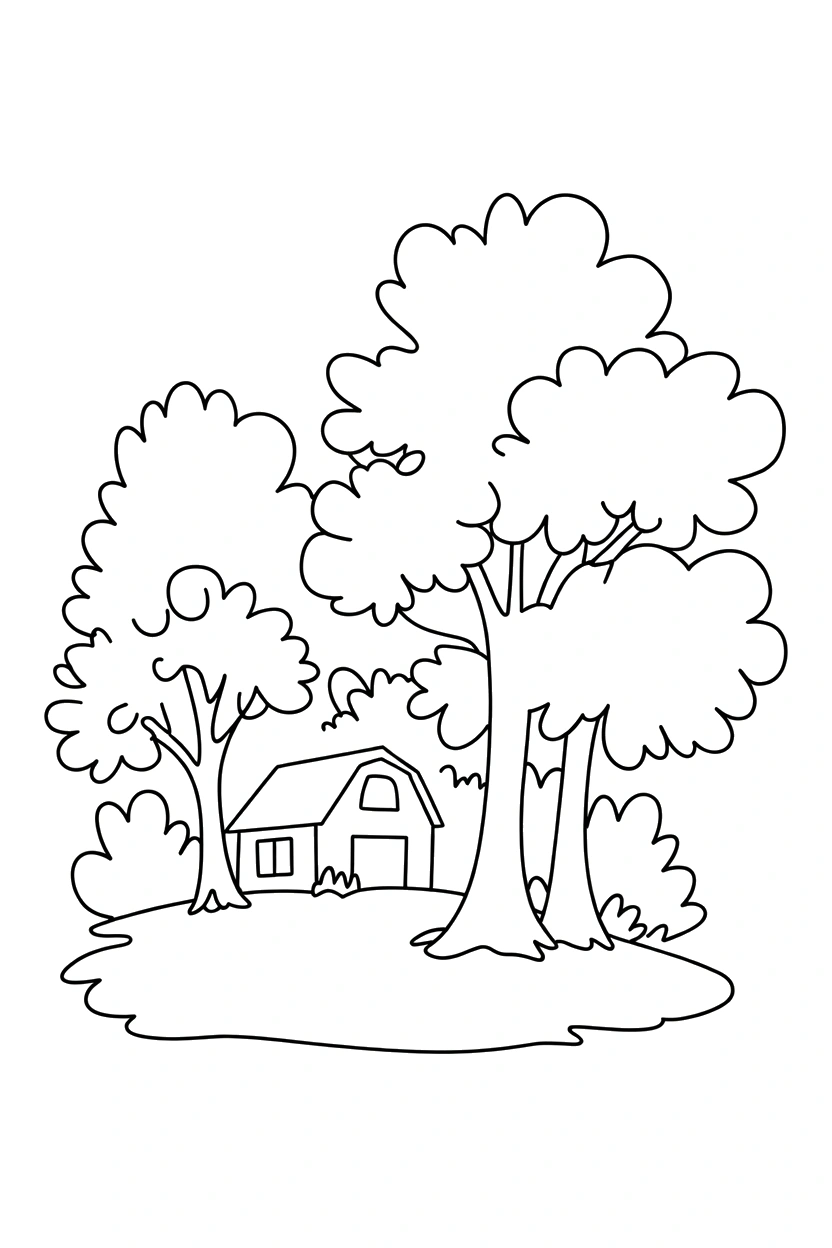
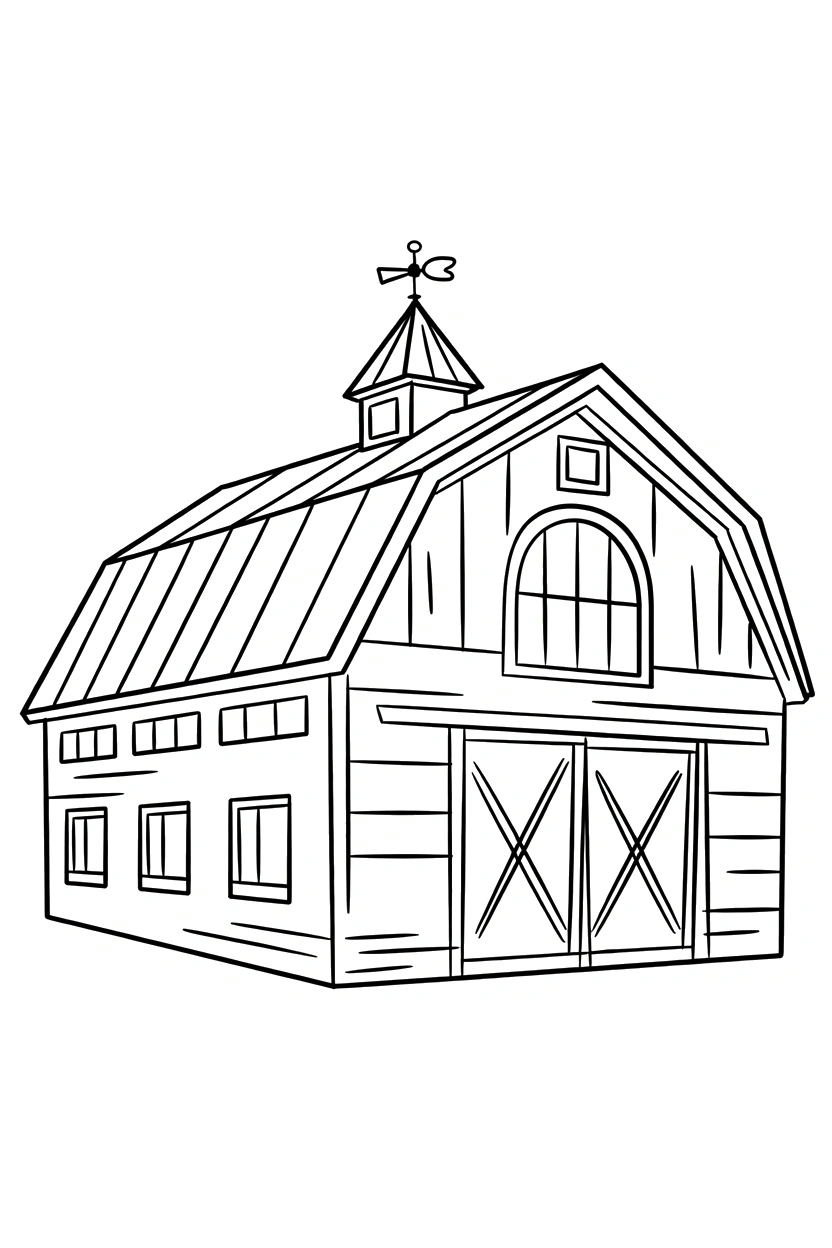
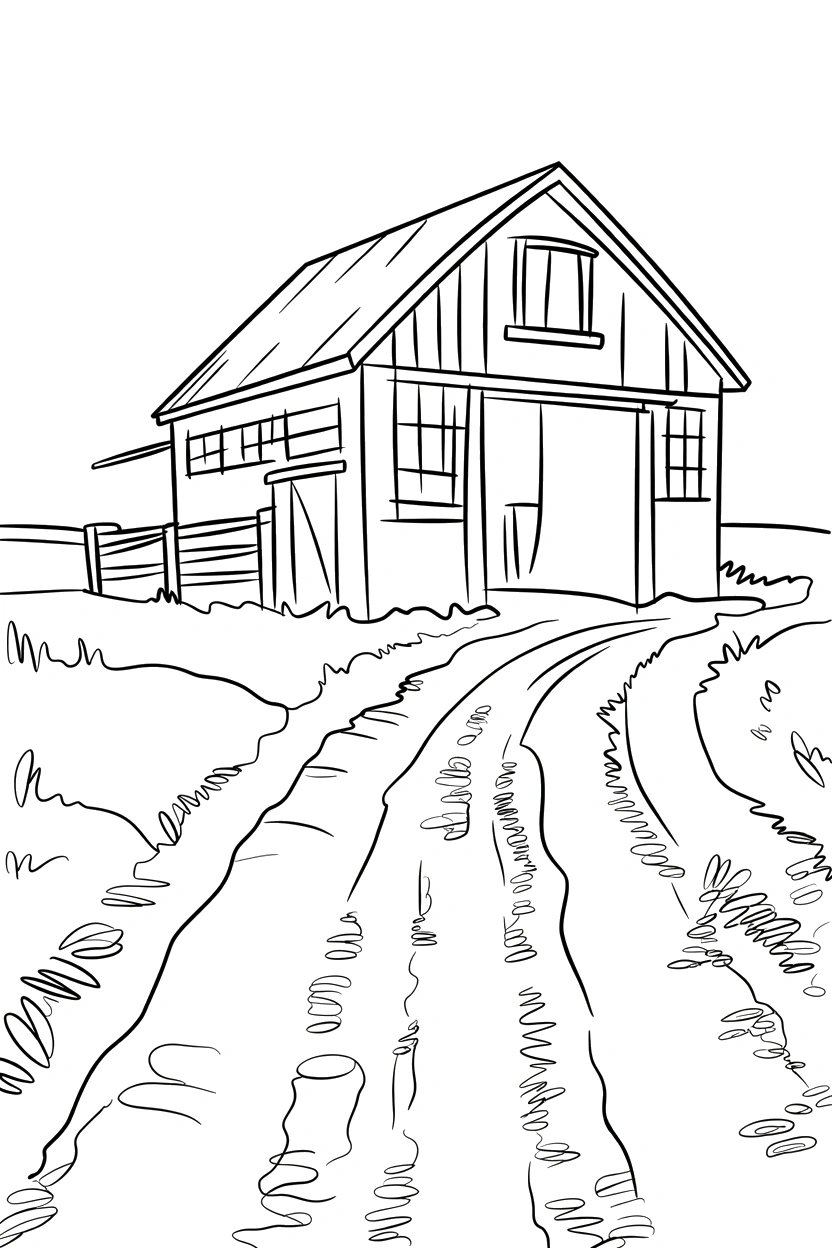
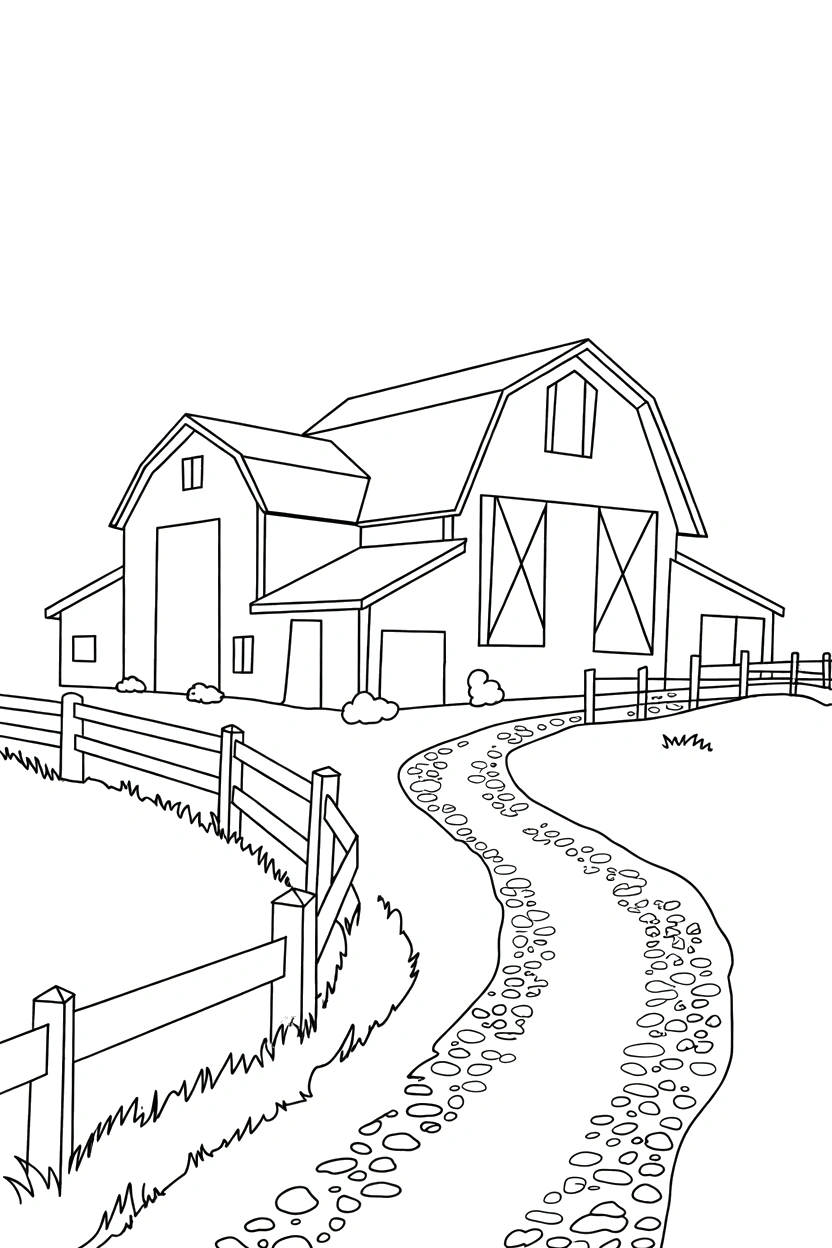
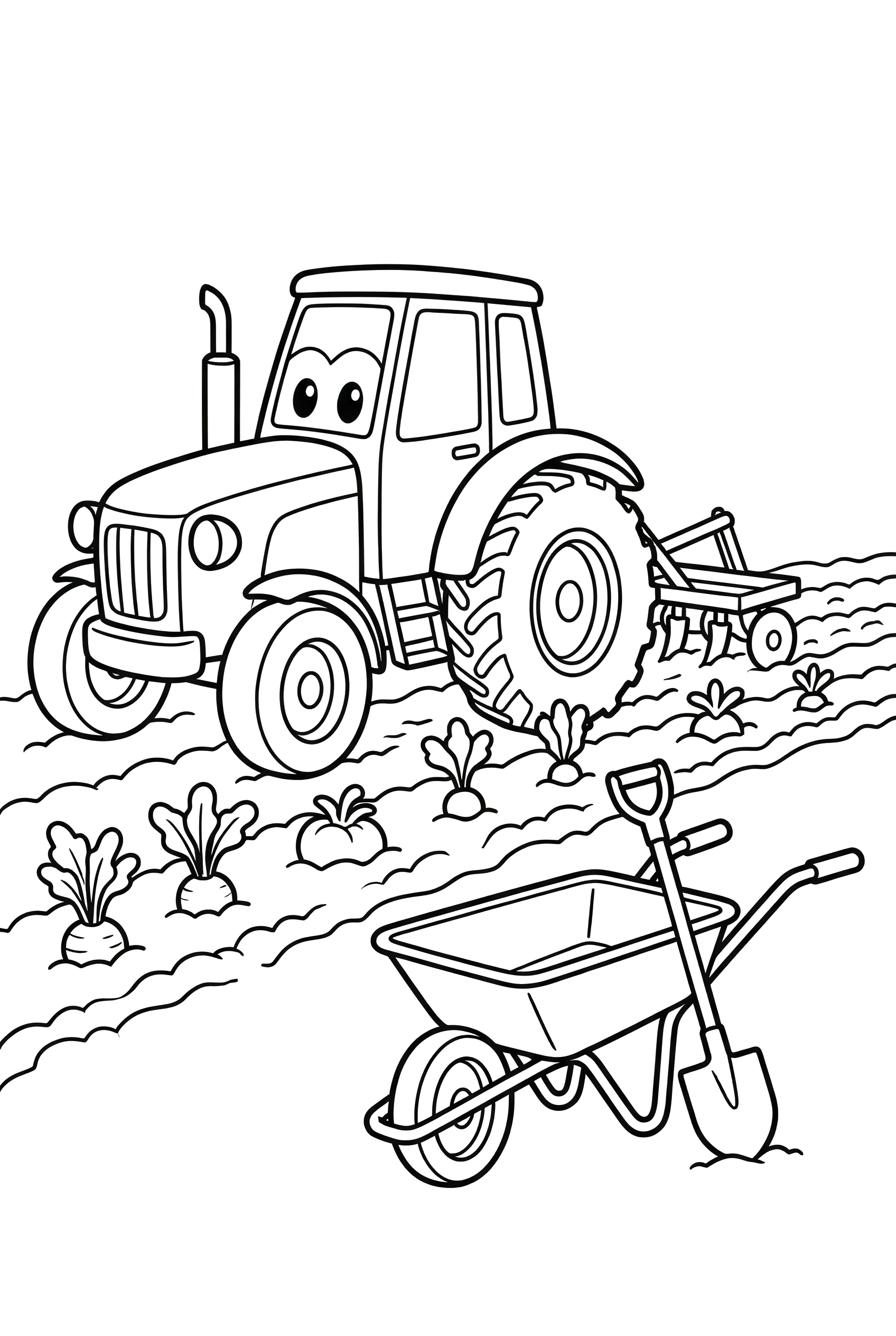
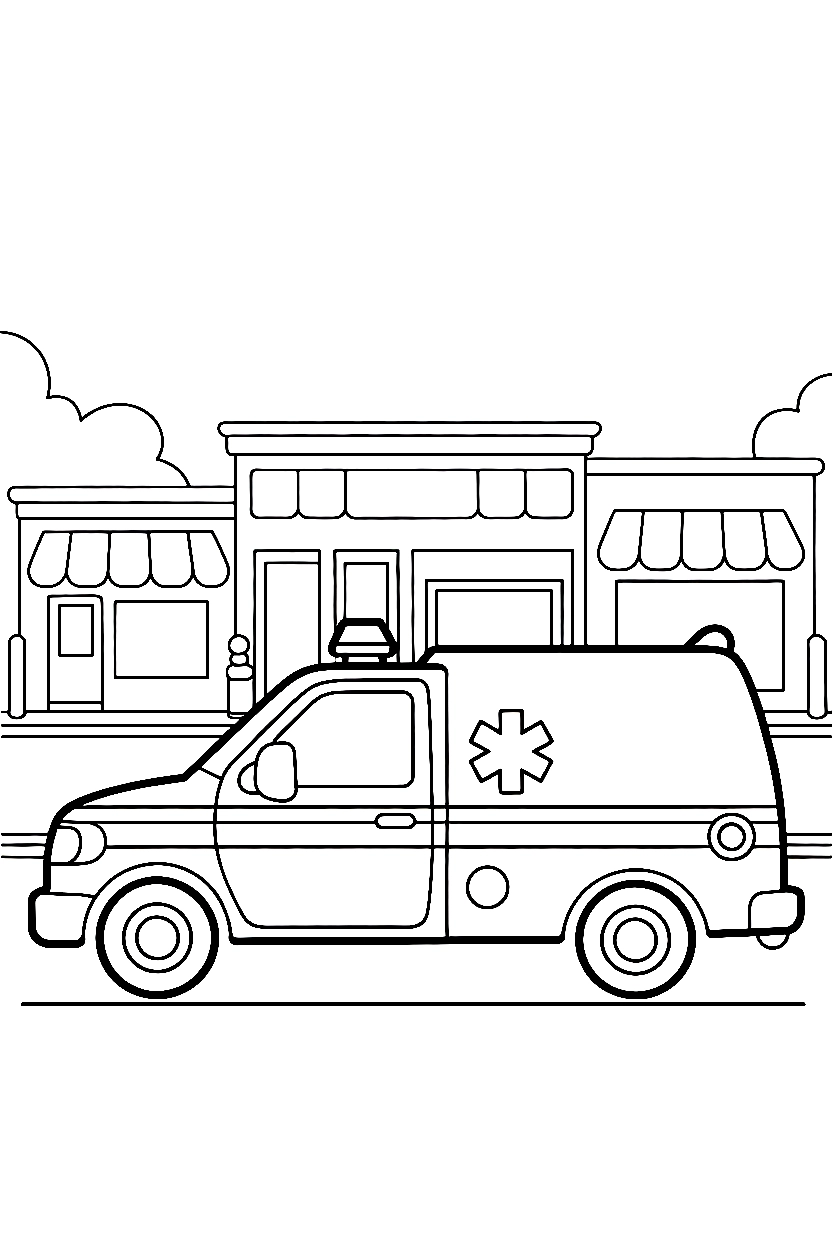
Outlined barn walls stretch across the page in Barn Coloring Pages. One sheet shows a tall structure with double doors pulled open. Another features a smaller shed beside a fence line.
A few of these fit between homework and dinner. Each black-and-white outline arrives with no fill, no texture—just crisp edges ready for crayons or colored pencils.
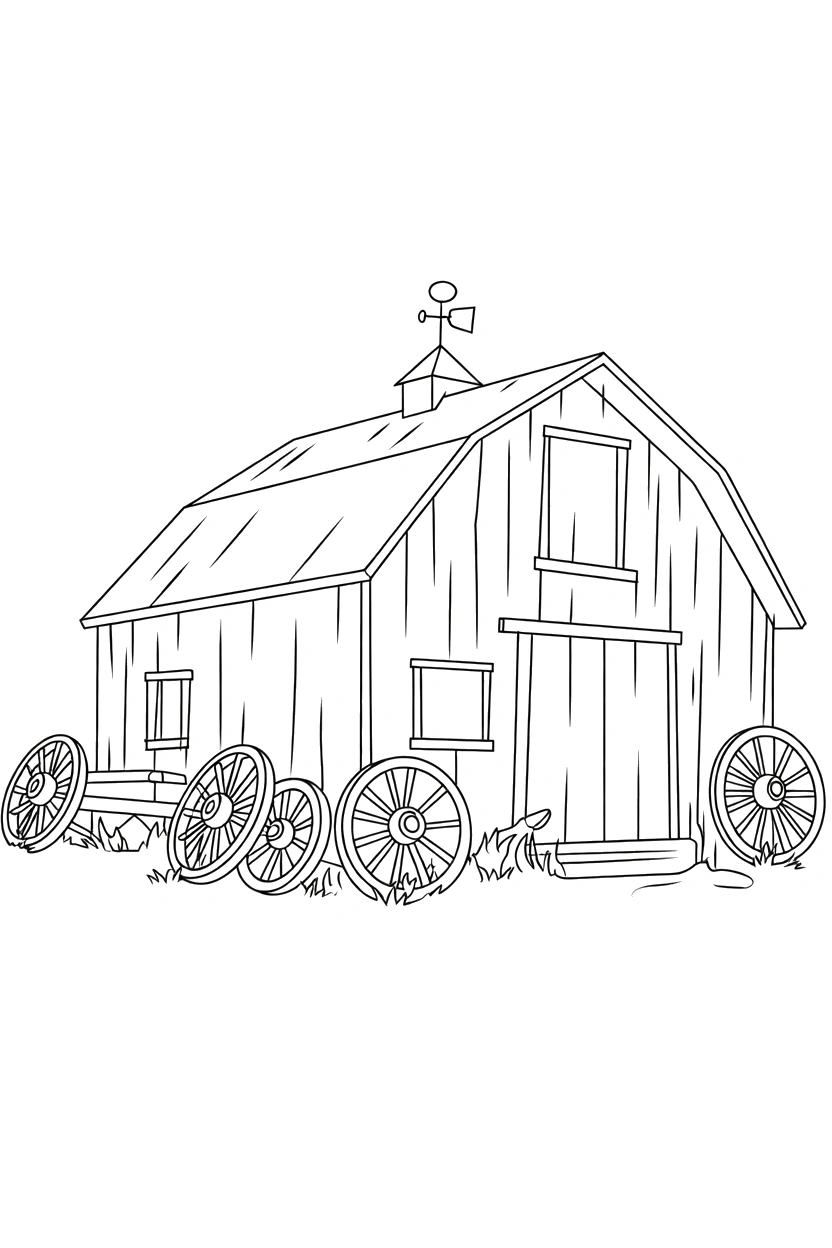
The details vary. Windows appear as square or arched cutouts. Rooflines angle sharply or slope gently. Some barns stand alone in the center of the sheet. Others share space with fence posts, hay bales, or wagon wheels.
(Barns are often painted because the iron oxide in traditional red paint helped preserve the wood from moisture and rot.)
Younger kids focus on the larger wall sections first. Older hands work through shingles, door planks, and windowpane grids.
What’s on the Page
Full barn fronts with peaked roofs and centered doors
Side views showing long wall panels and small side windows
Barns holding open doors that reveal inner shadows
Hay bales stacked beside barn foundations
Fence rails stretching across the foreground
Weathervanes perched on roof peaks
Stone paths leading up to barn entrances
Wagon wheels leaning against outer walls
Each simple line drawing keeps proportions clear without crowding. Door hinges, roof shingles, and window frames each get their own outlined sections.
A barn resting against a hillside might include ground contours. Another standing in flat space leaves room for sky or grass details around the edges.
Do the pages show only large barns?
No. Some feature smaller sheds or storage buildings with simpler structures.
Are animals included in the scenes?
Most focus on the barn itself. A few may show animal outlines near doors.
Which sheets work best for detailed coloring?
Barns with shingle patterns, door planks, or window grids offer more sections to fill.
Most Barn Coloring Pages print cleanly on standard copy paper. Heavier stock works better if switching between markers and gel pens. Each ready-to-print sheet includes enough margin space to avoid cutting off roof peaks or fence edges.
The outlines stay thick enough to handle wobbles but leave room for personal choices inside each section. Kids can pick a different barn style or background setup each session without repeating the same visual twice.
Start with the largest sections—walls or roofs—then move to smaller details like windows or door handles. Use the flat side of a crayon to cover wide areas quickly.
Switch to the tip for narrow planks or fence rails. Try layering two tones in the same space: one base layer across the whole section, then a second layer along one edge to suggest depth.
How to Print
Scroll down and pick the barn scene that looks right. Click the orange “PRINT” button under your chosen page. Your browser opens the print dialog—select your printer, confirm paper size, and press print. Once the sheet comes out, grab your coloring tools and start filling in the outlines.
Did you know? Some barns have small openings near the roof called cupolas, originally built to let heat and moisture escape from inside.