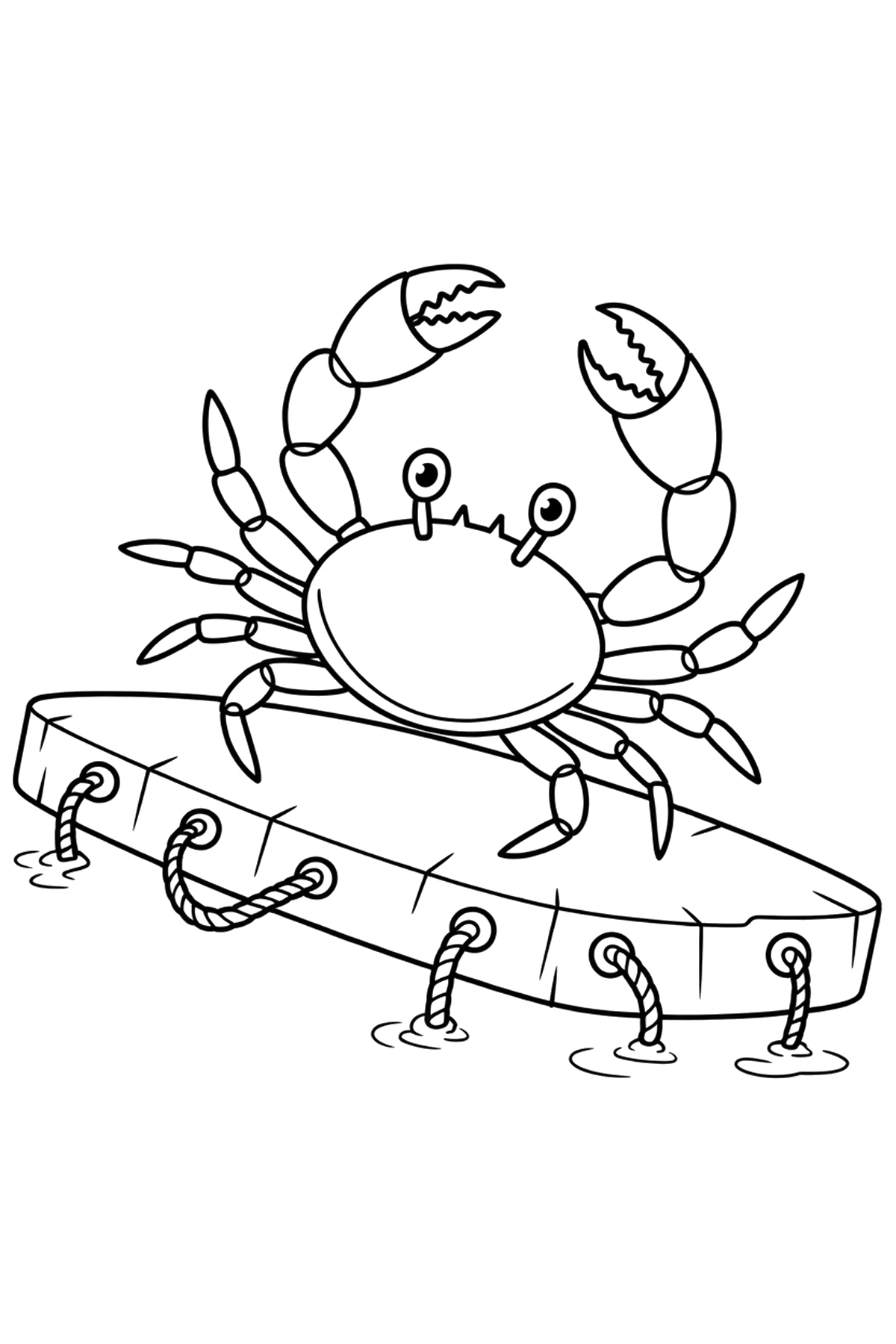
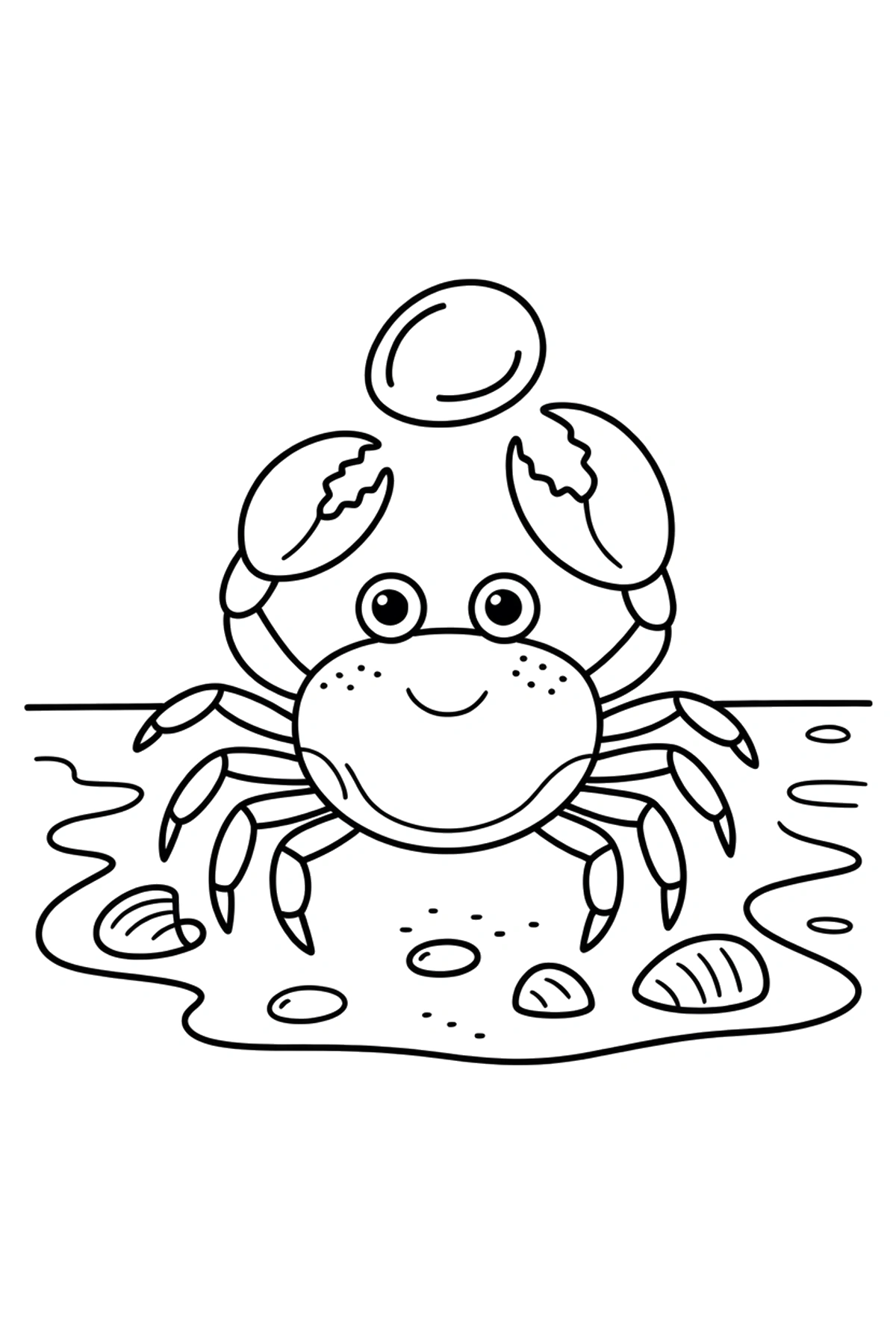
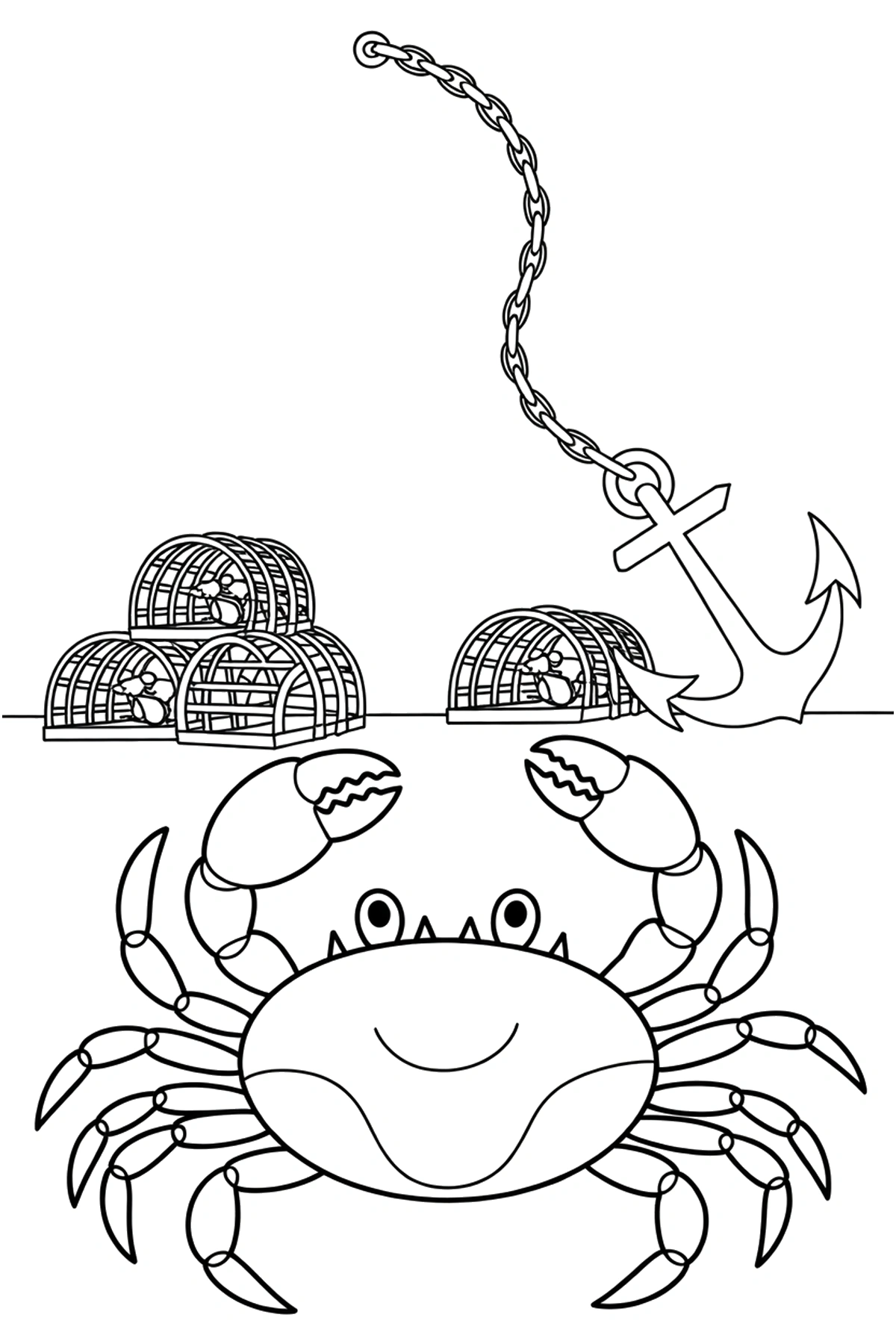
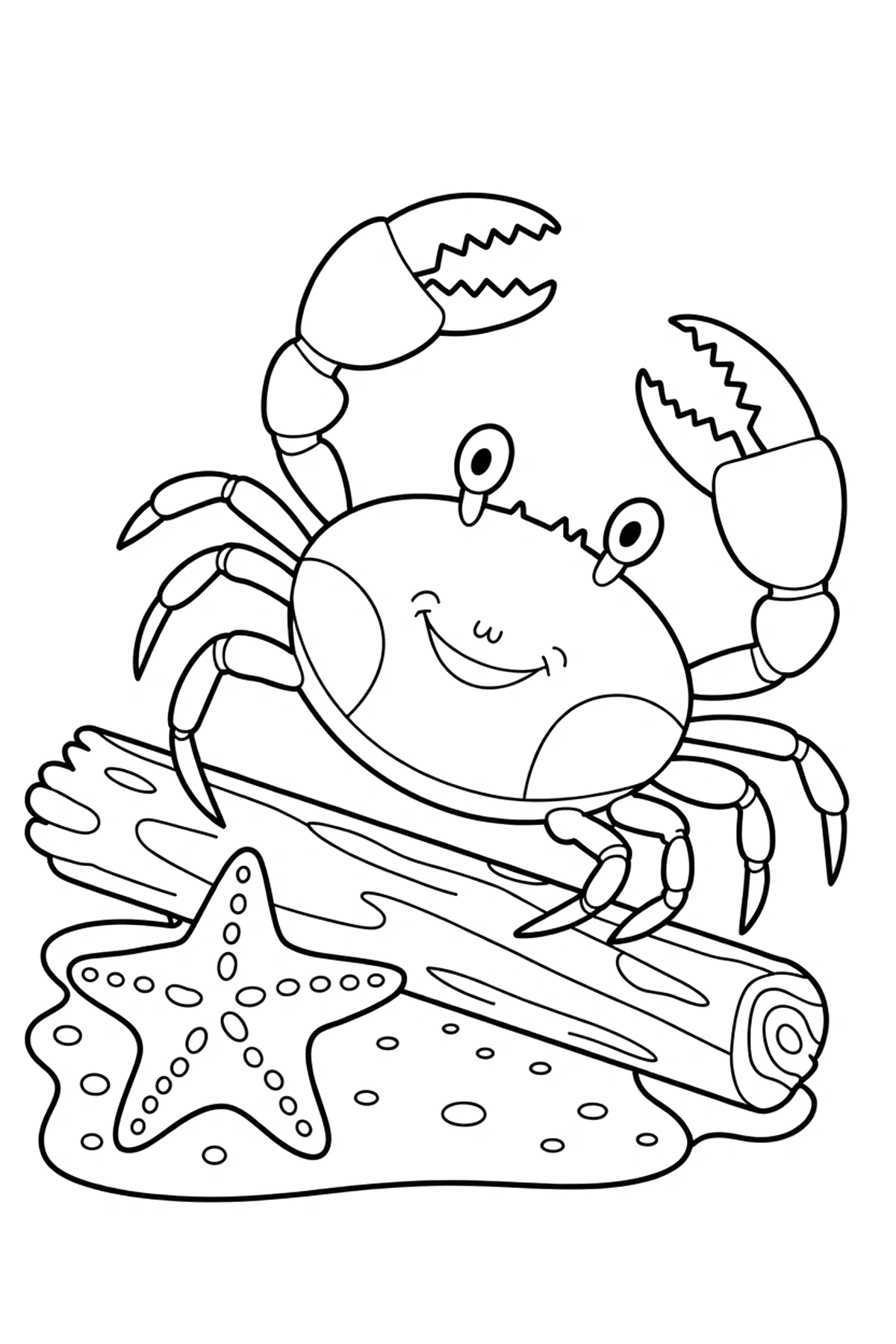
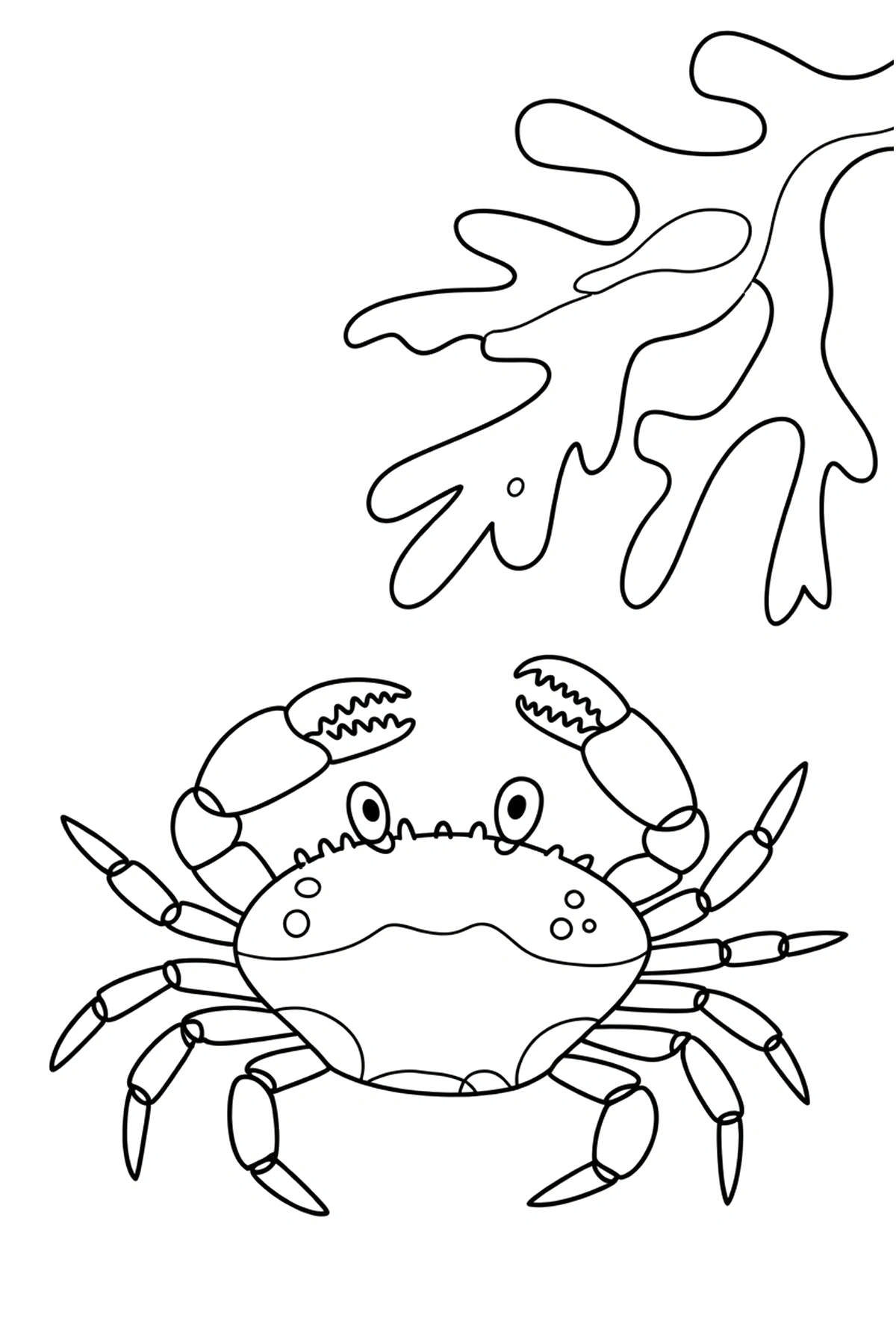
Sideways across wet sand with both claws raised is exactly how Crab Coloring Pages open. The shell curves wide and domed, edged with small ridges along every side.
Eight legs bend at sharp angles, tips pressing into the ground. Two stalked eyes sit high on the shell, pointing outward. Nothing about a crab is simple to draw — which makes it worth coloring slowly.
Shells, Claws, and Shoreline Scenes
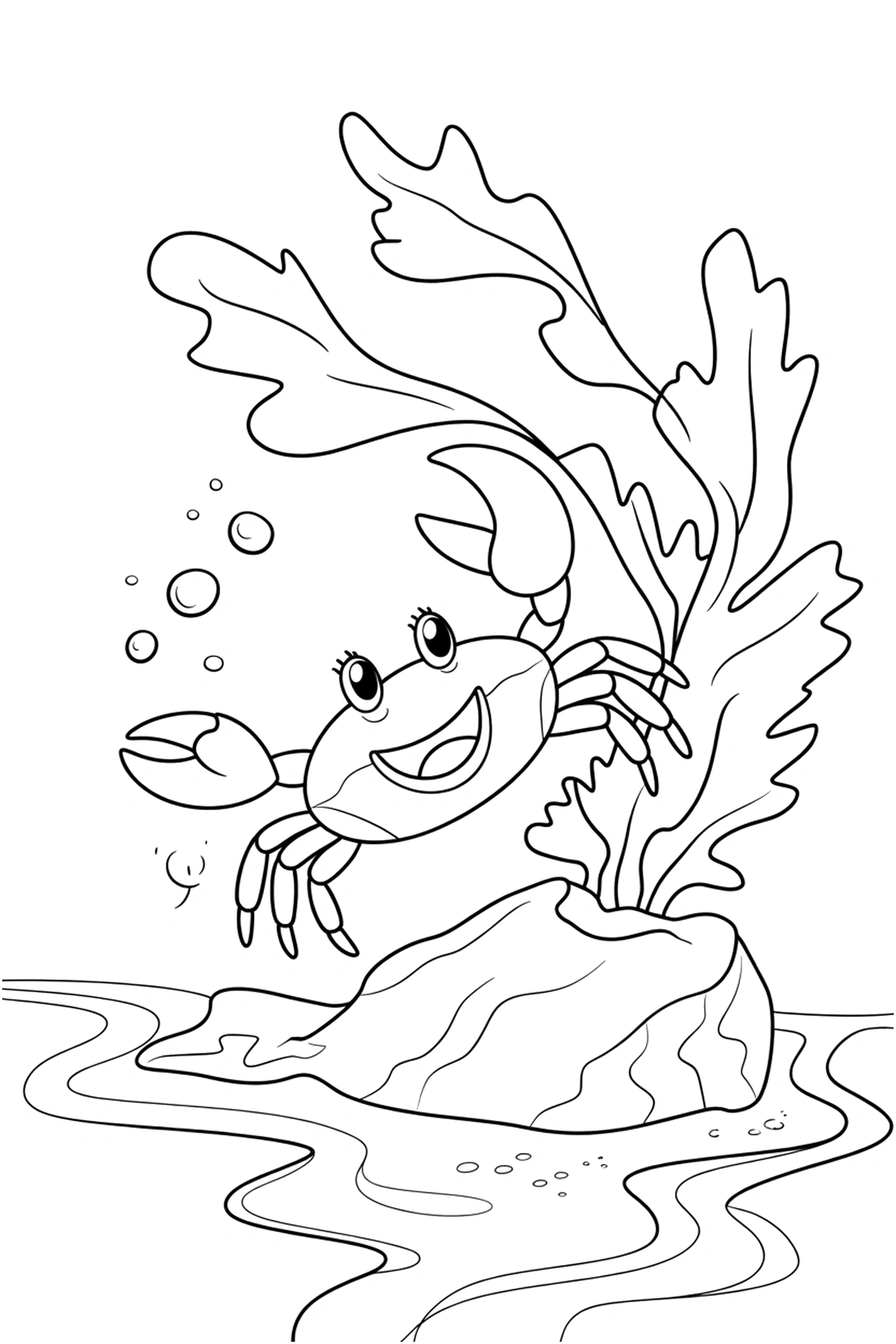
Crab Coloring Pages place these creatures where they actually belong — rocky tide pools, sandy beaches, shallow coastal waters, and tangled kelp beds.
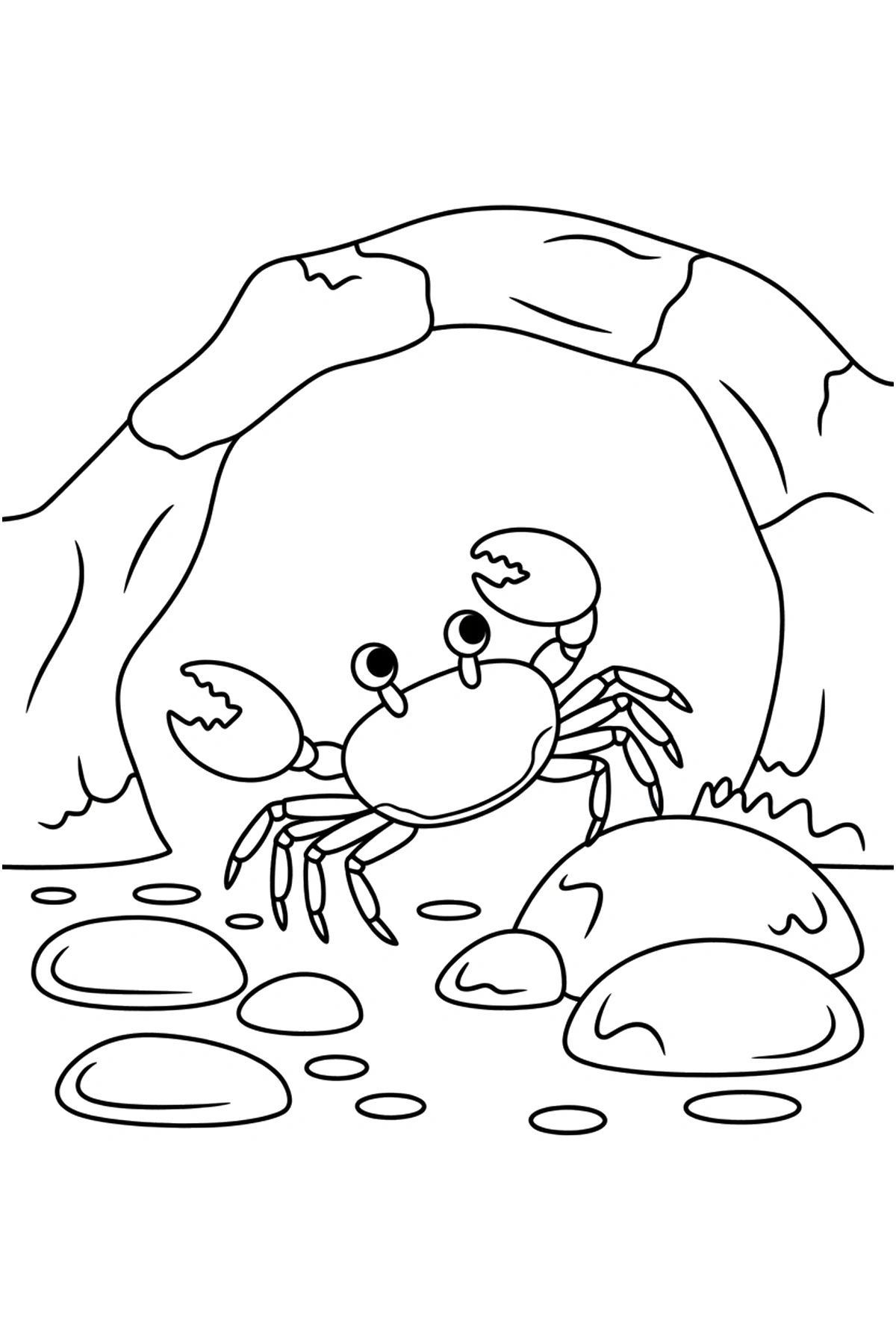
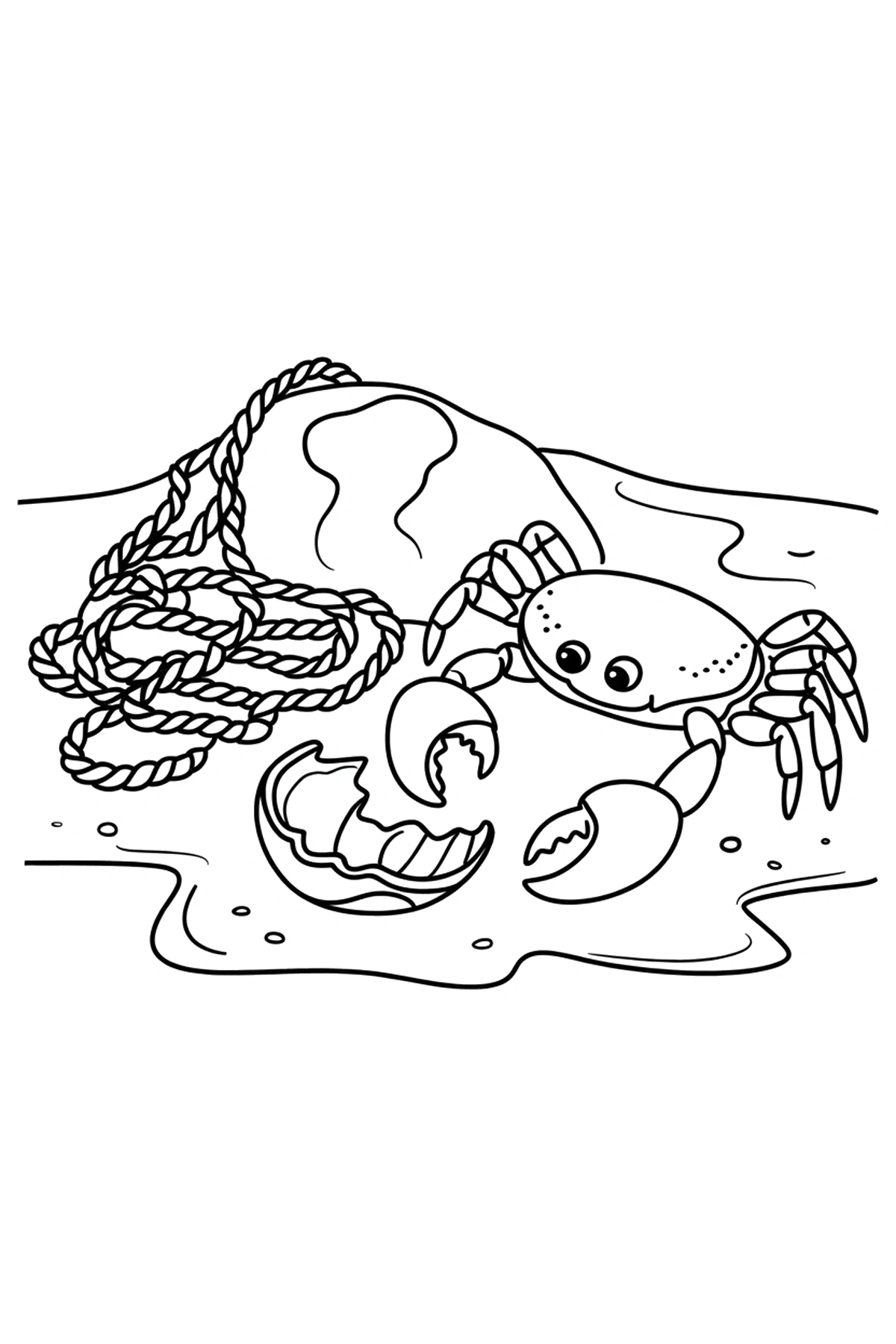
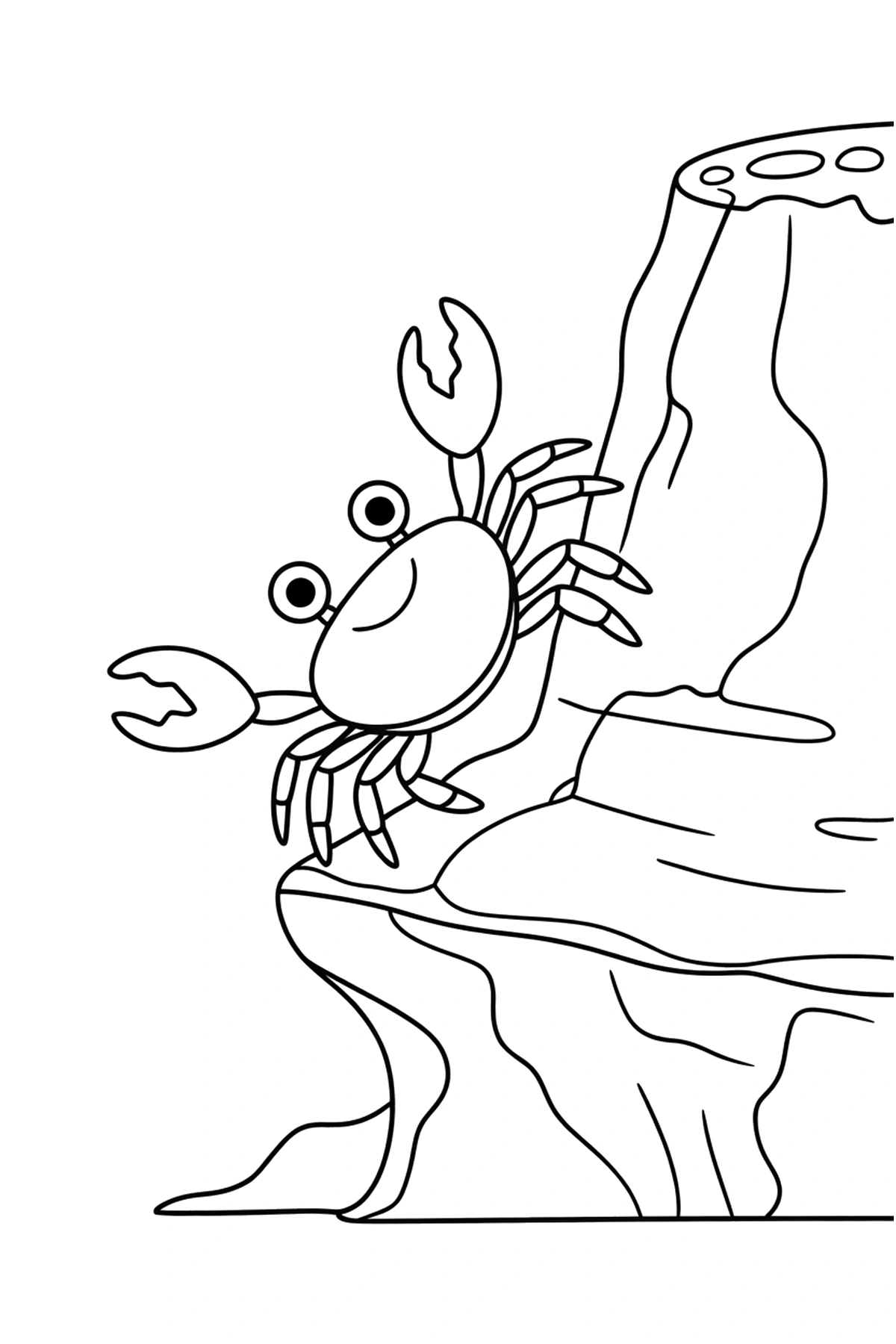
One outline drawing settles a crab flat on wet sand with claw tips just touching a broken shell beside it. Another positions a crab halfway inside a tide pool with barnacle-covered rocks surrounding the water edge.
Claw details — the ridged inner grip and hooked tip — give each page a strong focal point.
Visual Context
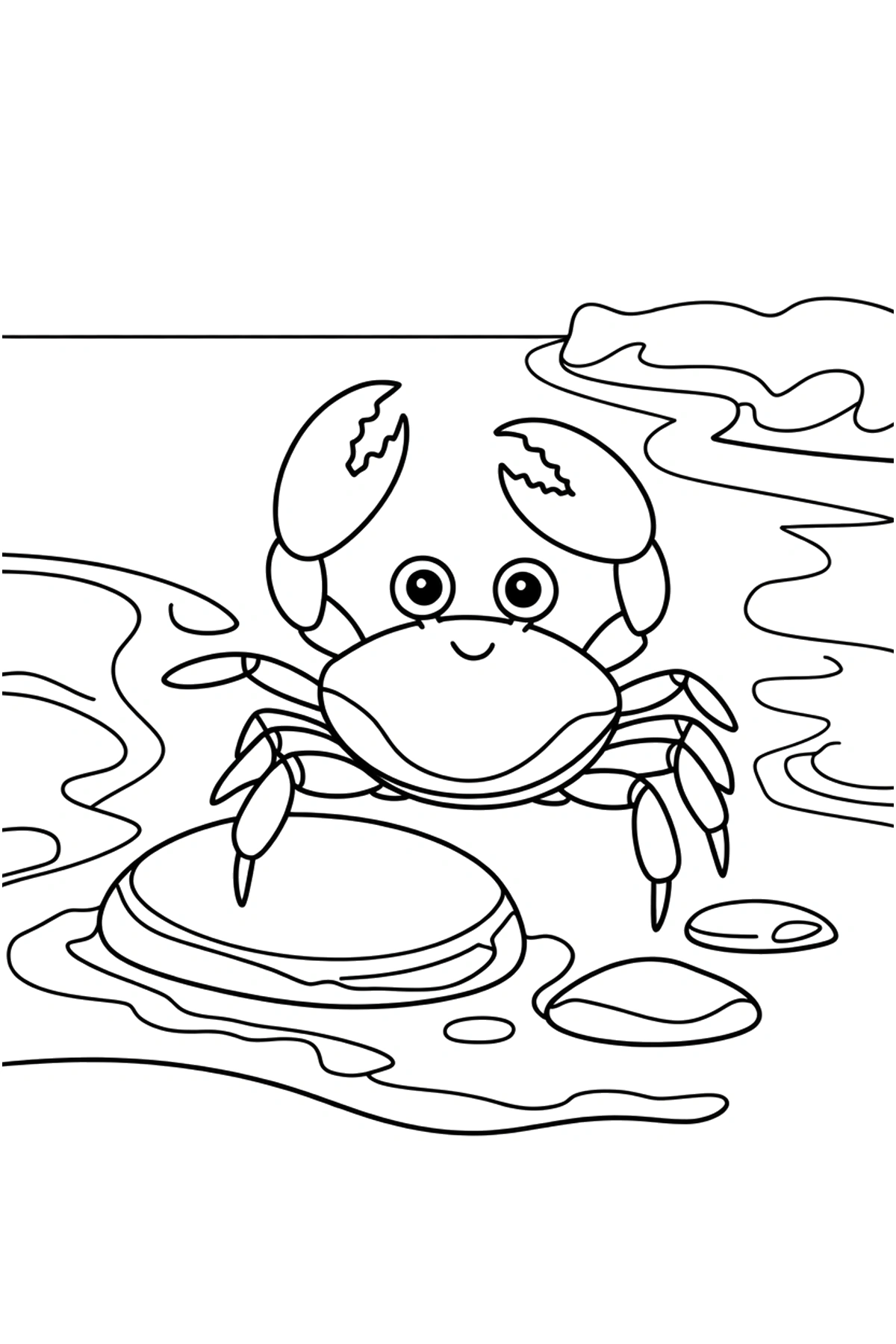
A crab resting against a barnacle-covered boulder at the shoreline. Kelp strands drape over the rock behind it. A rope net lies tangled in the sand nearby.
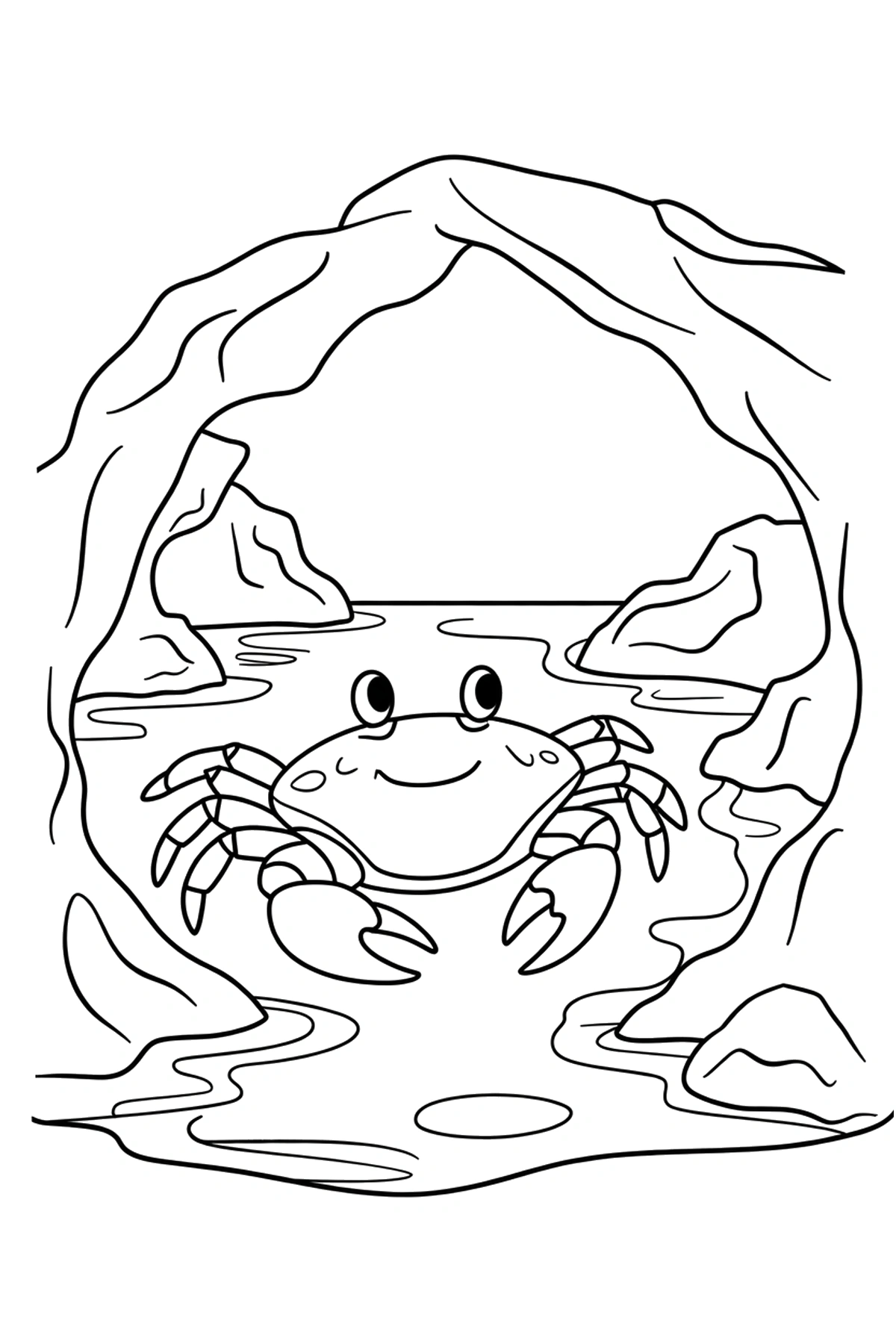
A second crab peers from inside a tide pool, legs spread across submerged pebbles, both claws angled upward toward the pool rim.
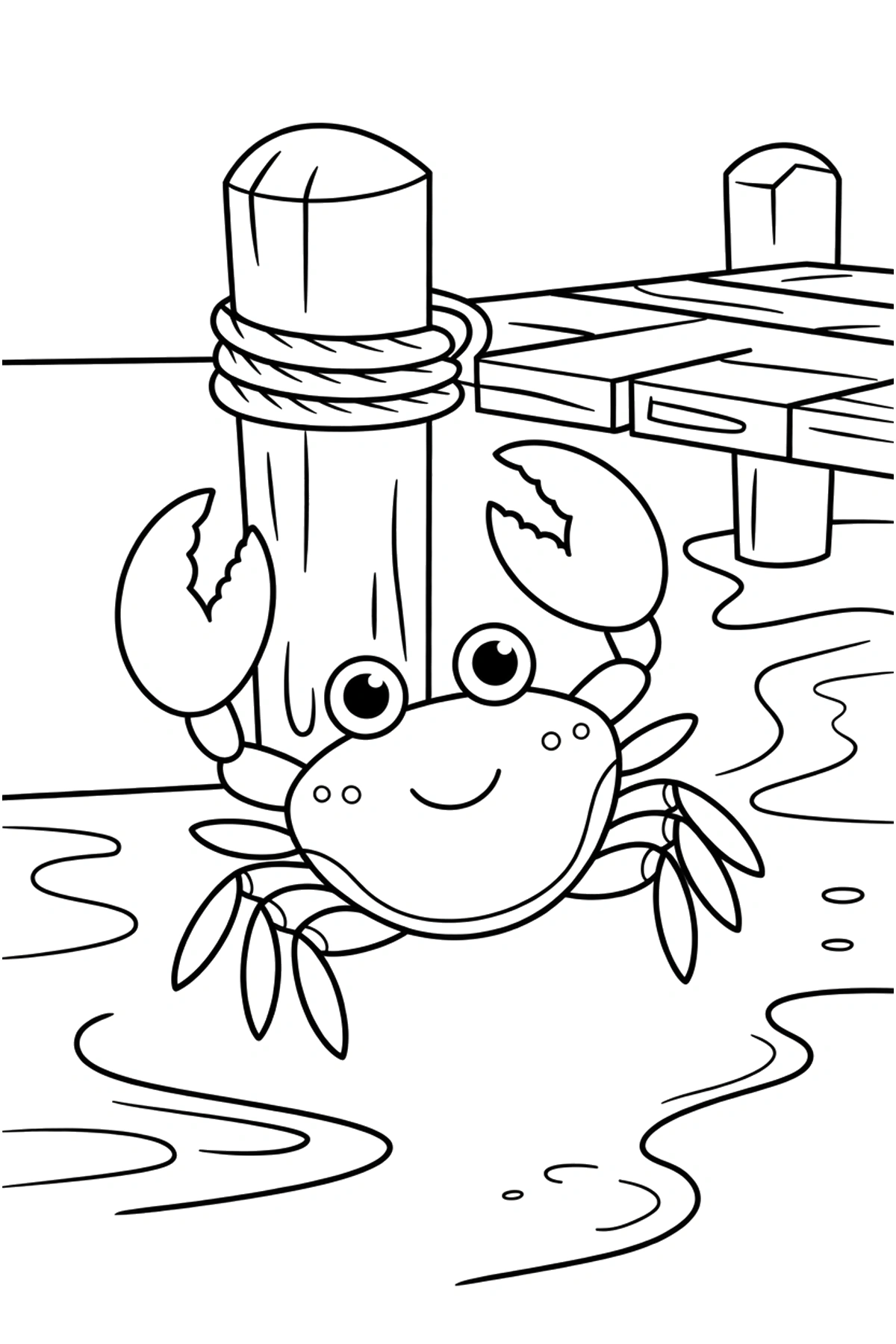
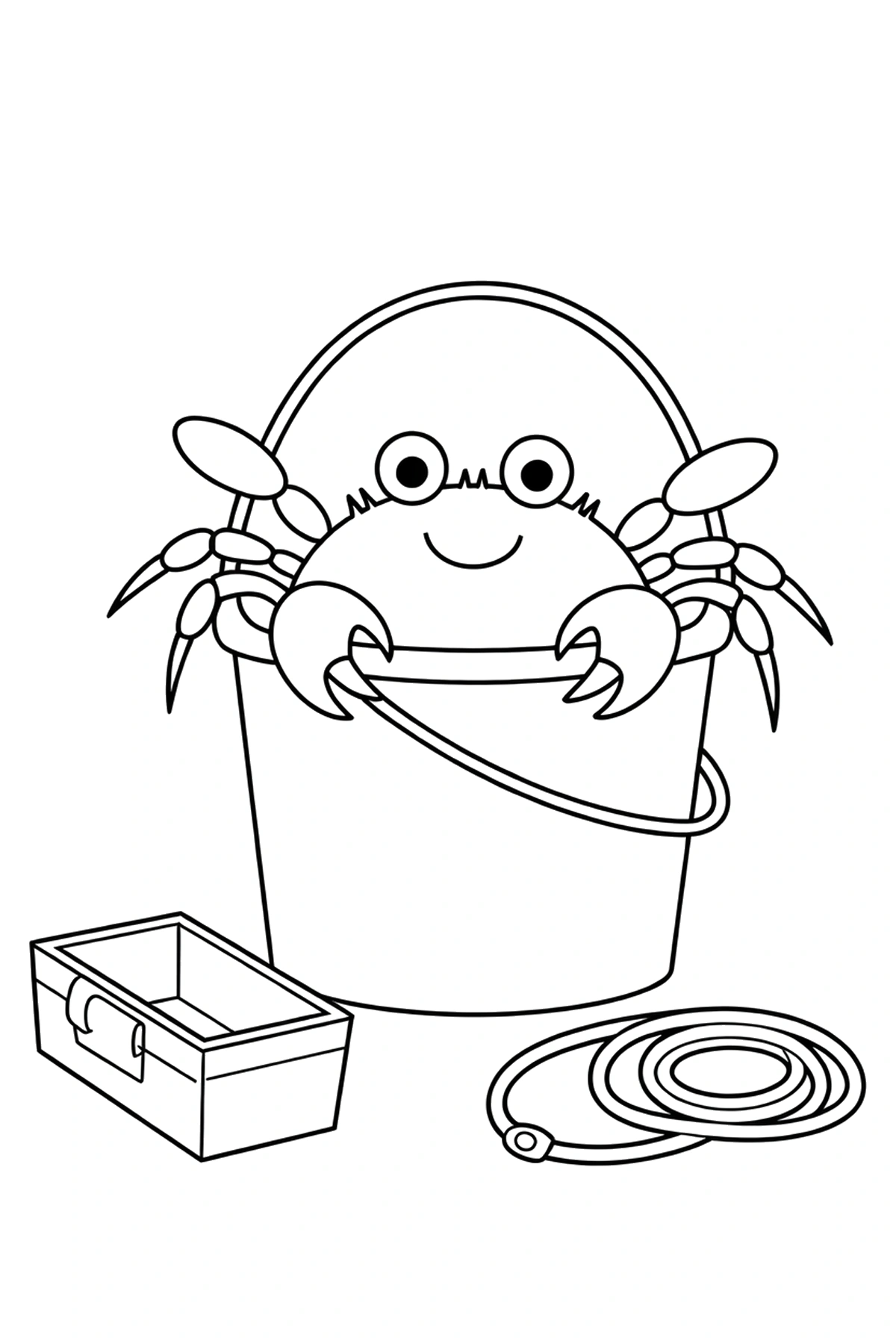
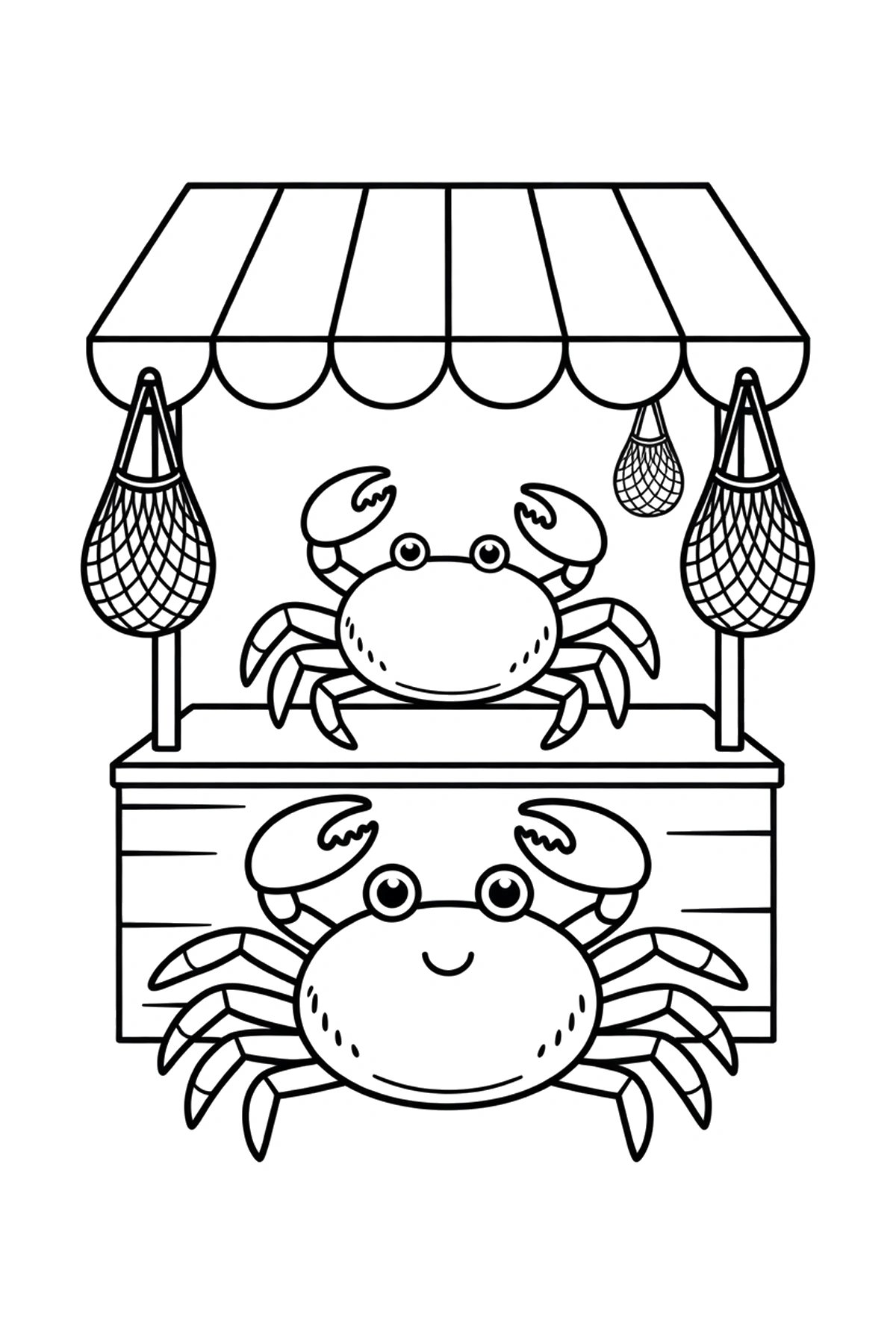
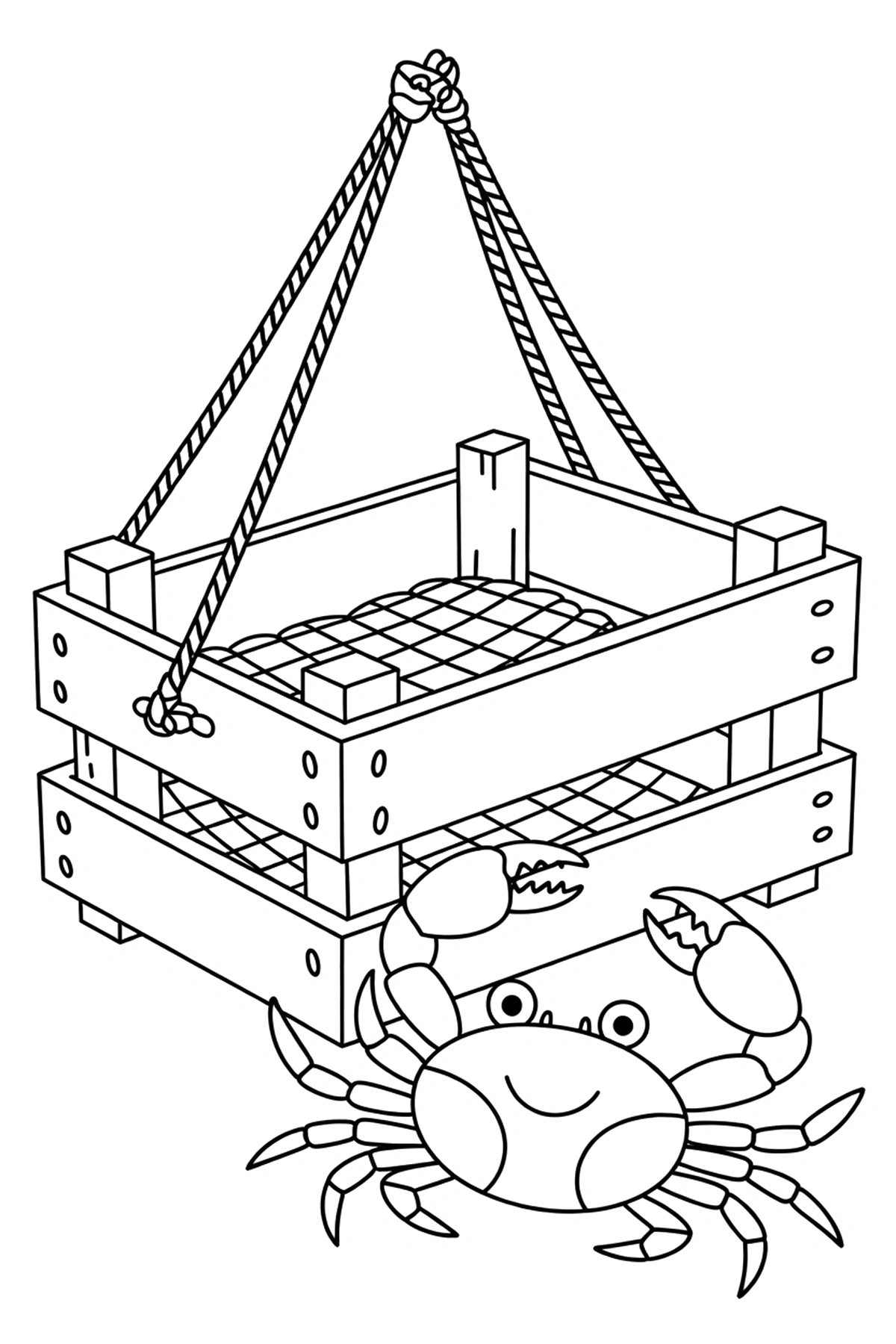
Crab Coloring Pages also explore scenes away from open water — a wooden dock edge, a fisherman’s bucket, a seafood market crate lined with crushed ice shapes.
Each printable activity sheet carries enough surrounding texture to last a full sitting. These fit into a quiet homeschool morning between subjects.
The shell alone demands attention — a domed surface with ridged edges, bumped textures across the top, and segment lines breaking it into sections. Leg joints bend in three places, each one a separate angle to follow with a crayon tip.
Kids slow down when the detail asks them to. That kind of focus builds naturally with a subject this structured.
Crab Coloring Pages work well because the body breaks into clear, manageable sections. A line art scene on a rocky shoreline gives the crab space and sets the full mood of the page.
Fun Fact: Crabs can regrow a lost claw over time — the new one grows back slowly after each molt.
Trace the outer shell edge first with a marker before filling the sections with crayon. Use short side strokes along the legs to follow each segment line.
Crab drawing templates spread across multiple coastal settings — open beaches, sea cave entrances, dock pilings, and tidal flats. The crab stays the main focus but the surrounding scene shifts.
Printable crab sheets hold fine line detail on standard paper without losing clarity. Crab Coloring Pages stay engaging because shell textures and claw positions shift from page to page, keeping every scene different.
How to Print
Scroll through the full crab collection below. Find the scene that catches your eye. Hit the orange “PRINT” button right below it. Pick up your crayons and start coloring.
Do the crabs show detailed textures on their shells?
Yes, most shells include ridged edges and bumped surface sections throughout.
Are there crabs shown inside tide pools or near rocks?
Several scenes place crabs inside tide pools with barnacle-covered rocks nearby.
Can I find a crab holding or touching objects in the scenes?
Yes, some scenes show crabs with claws near shells, nets, and dock ropes.