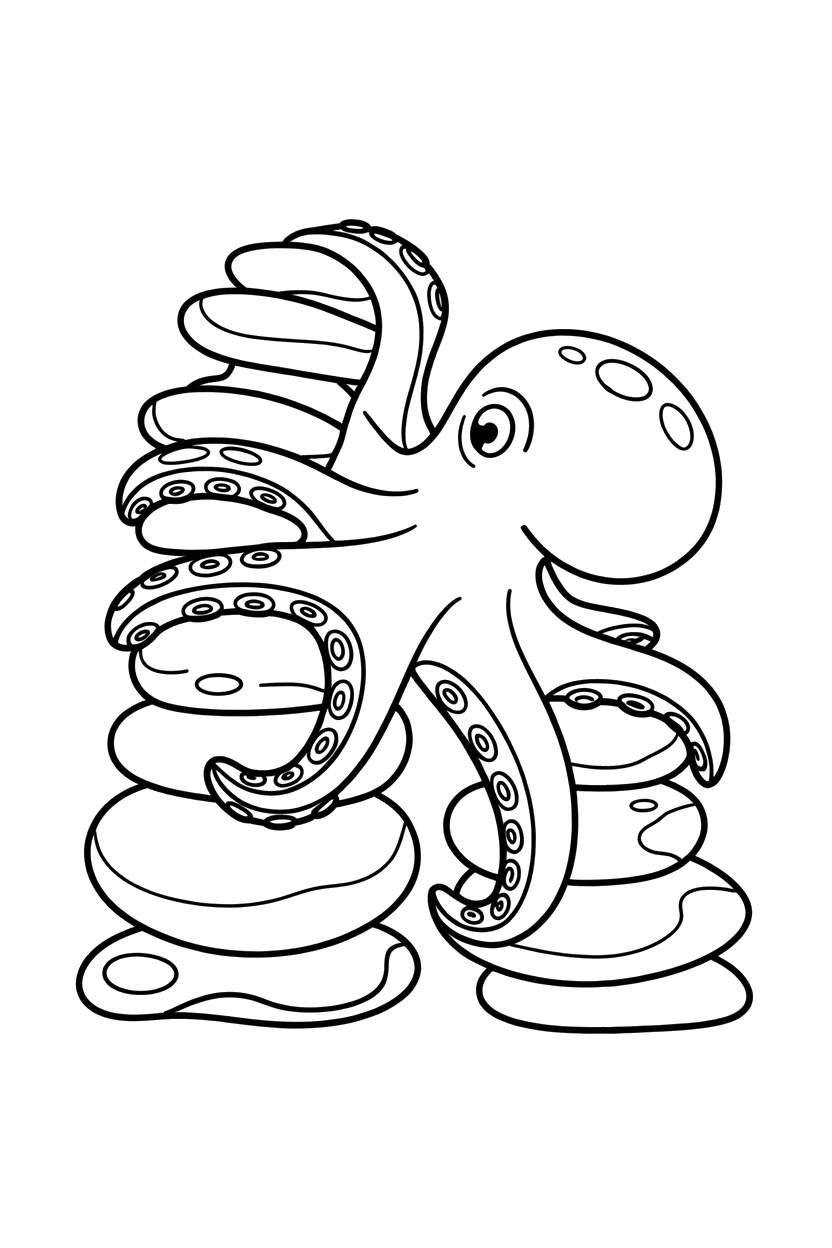
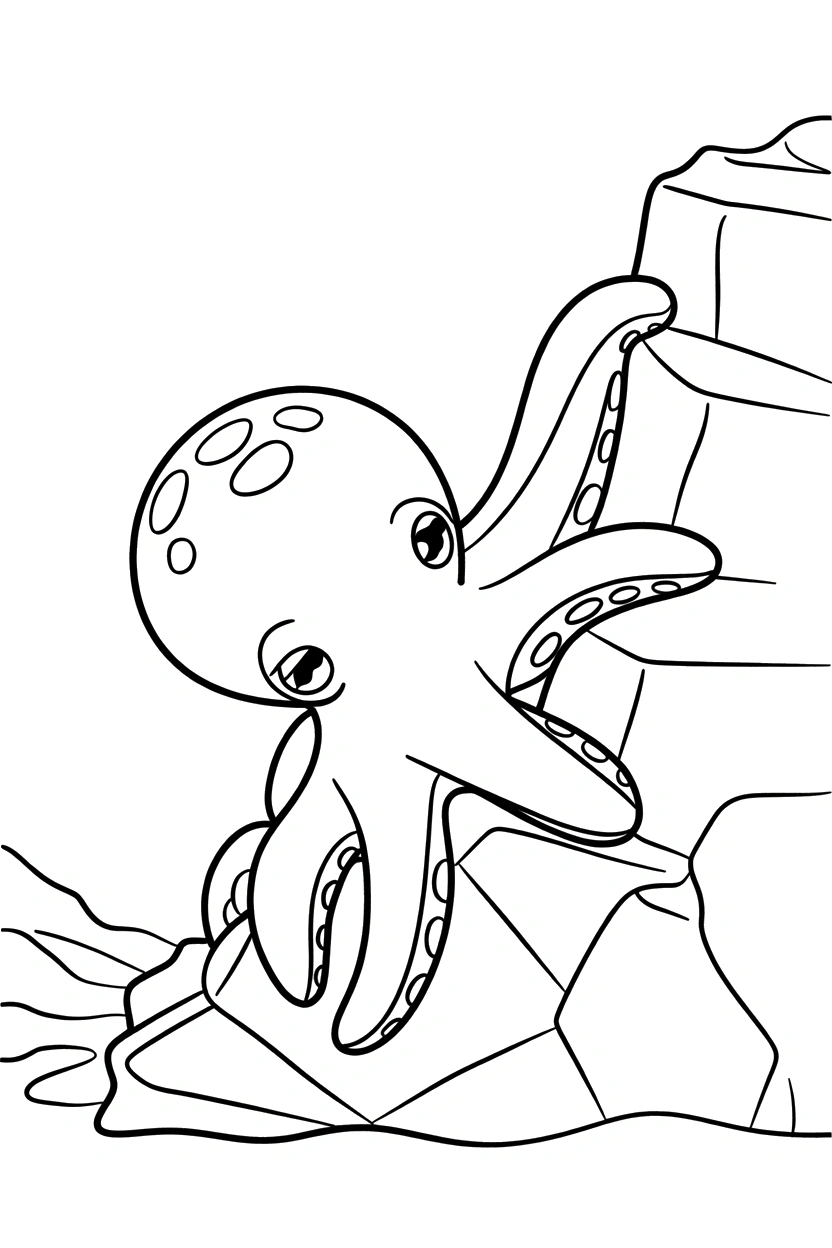
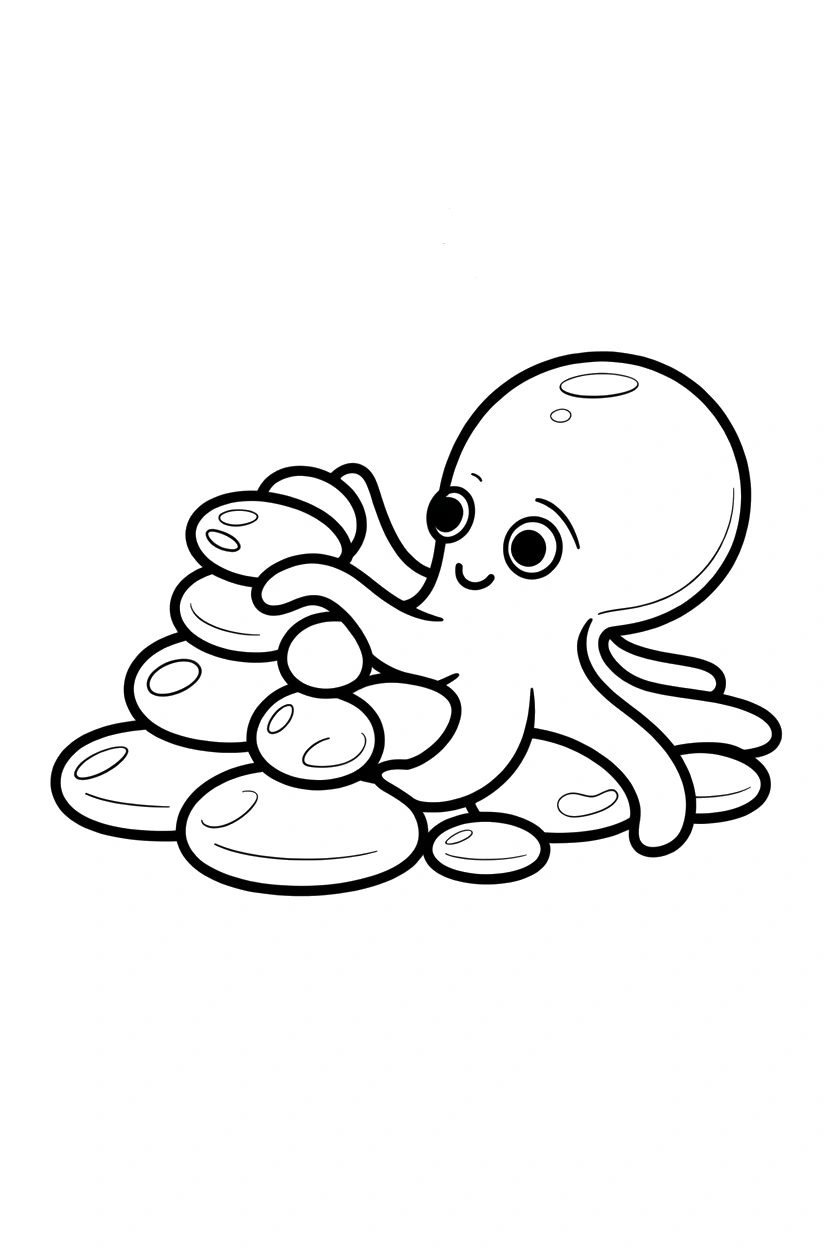
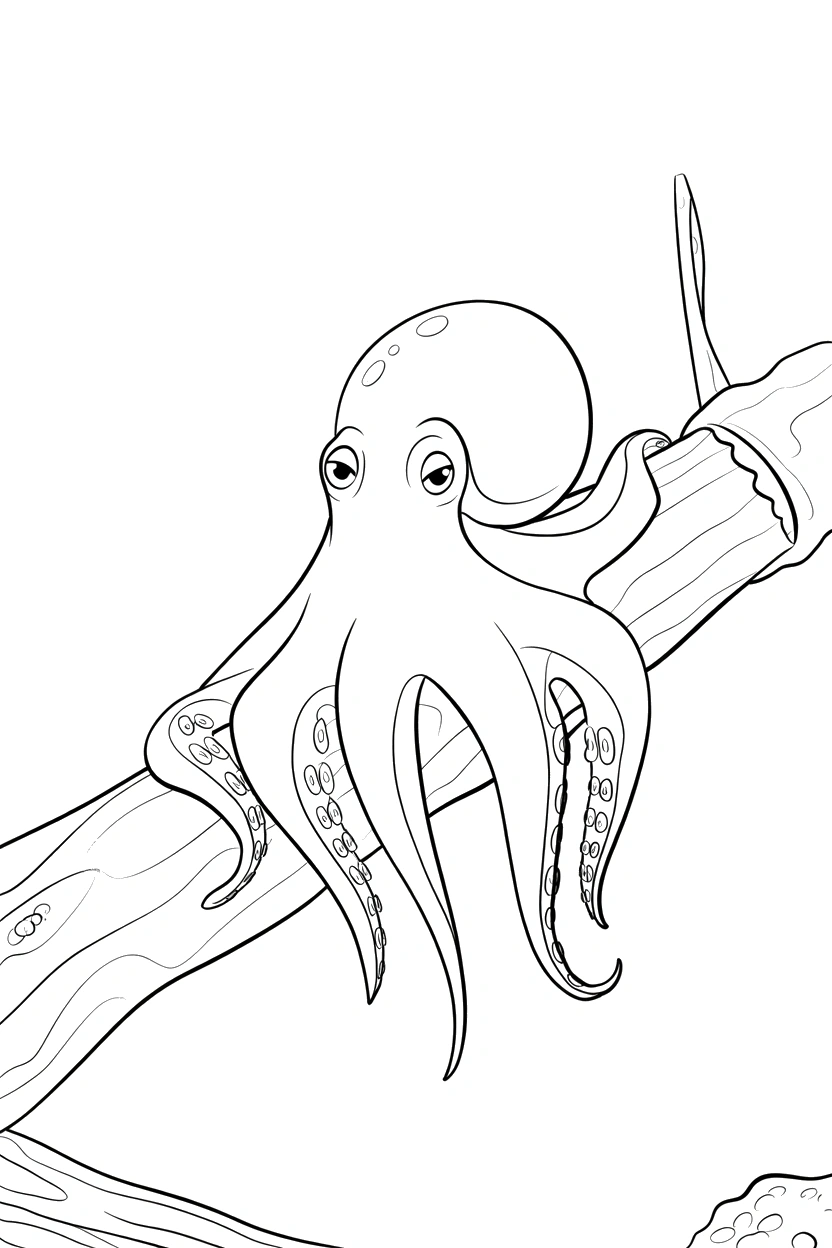
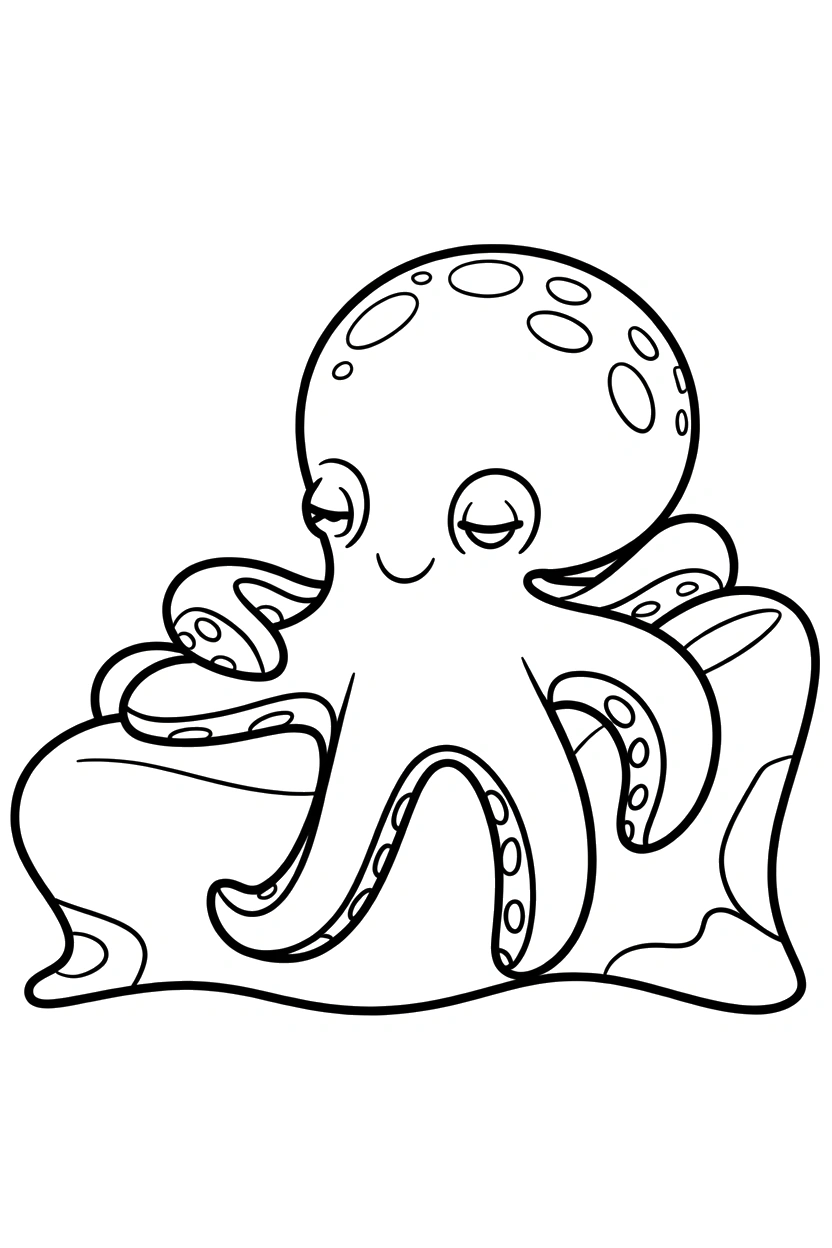
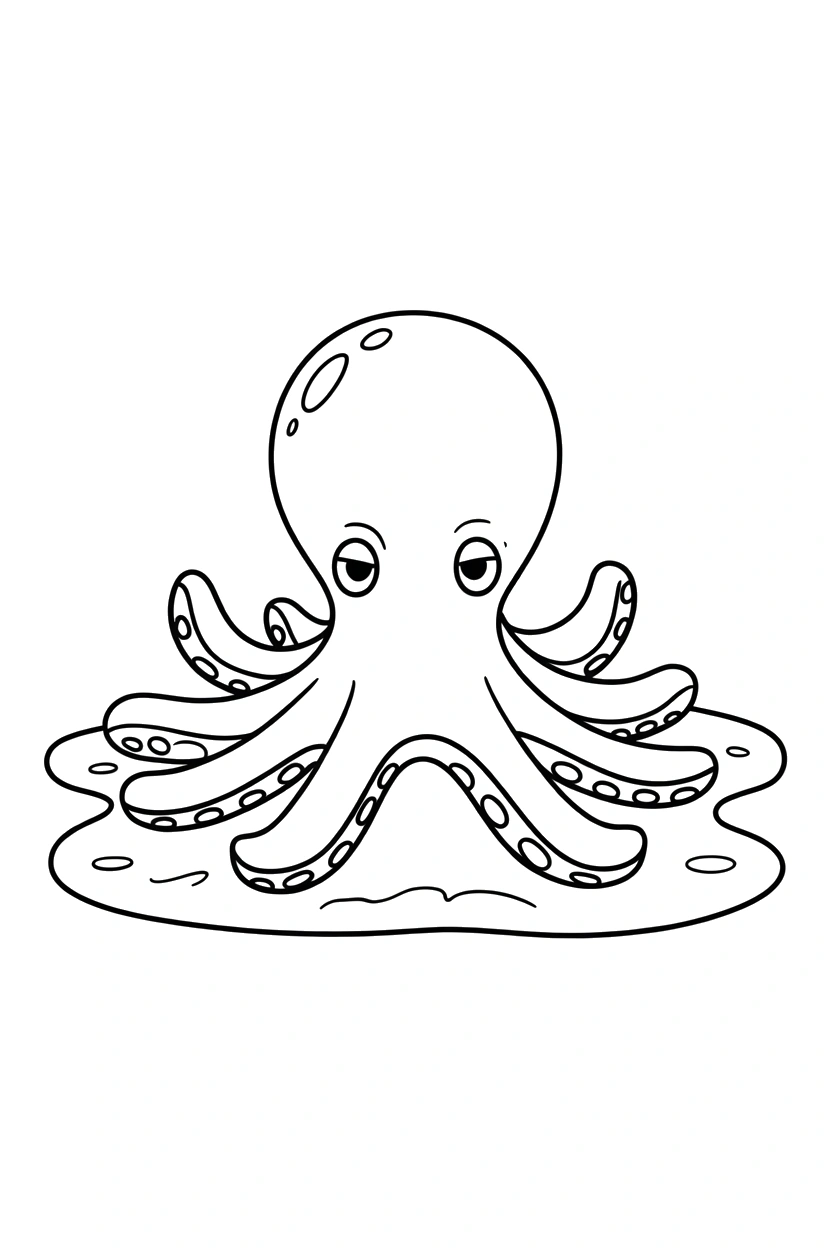
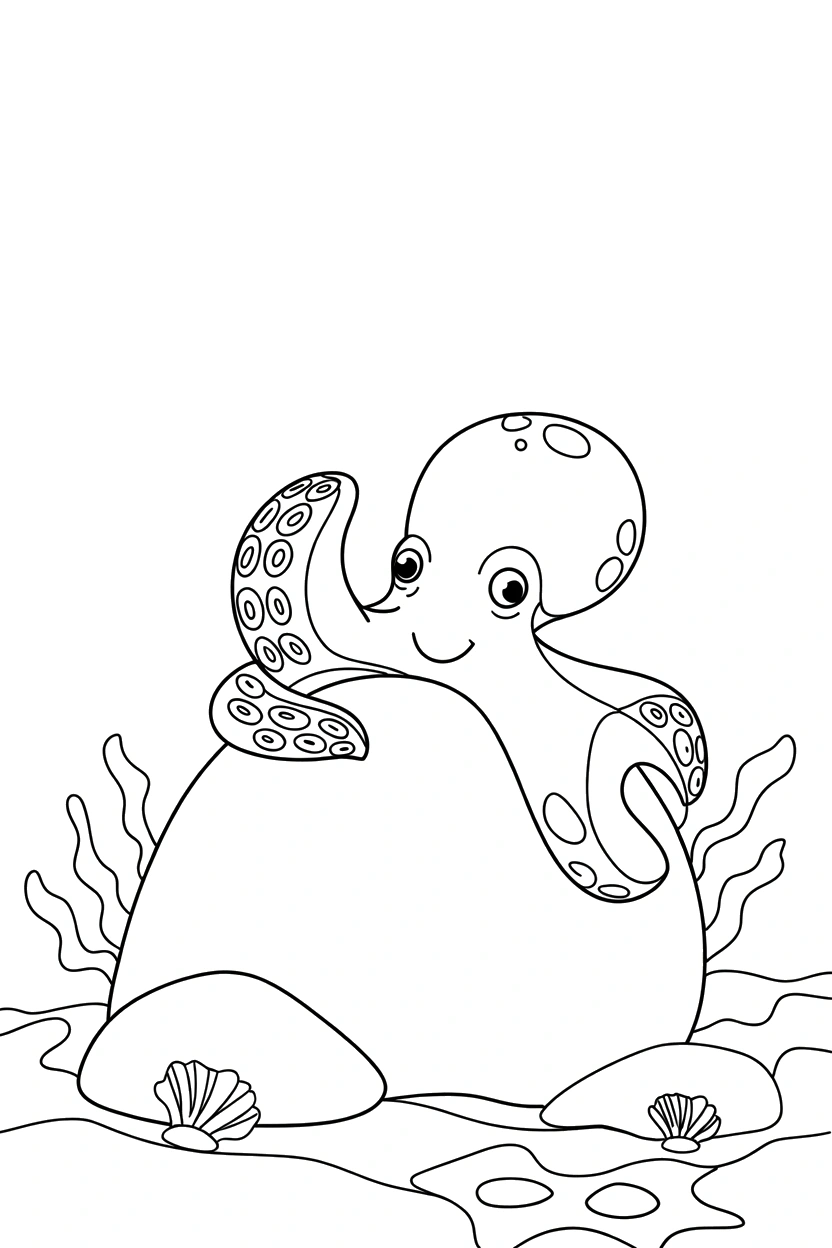
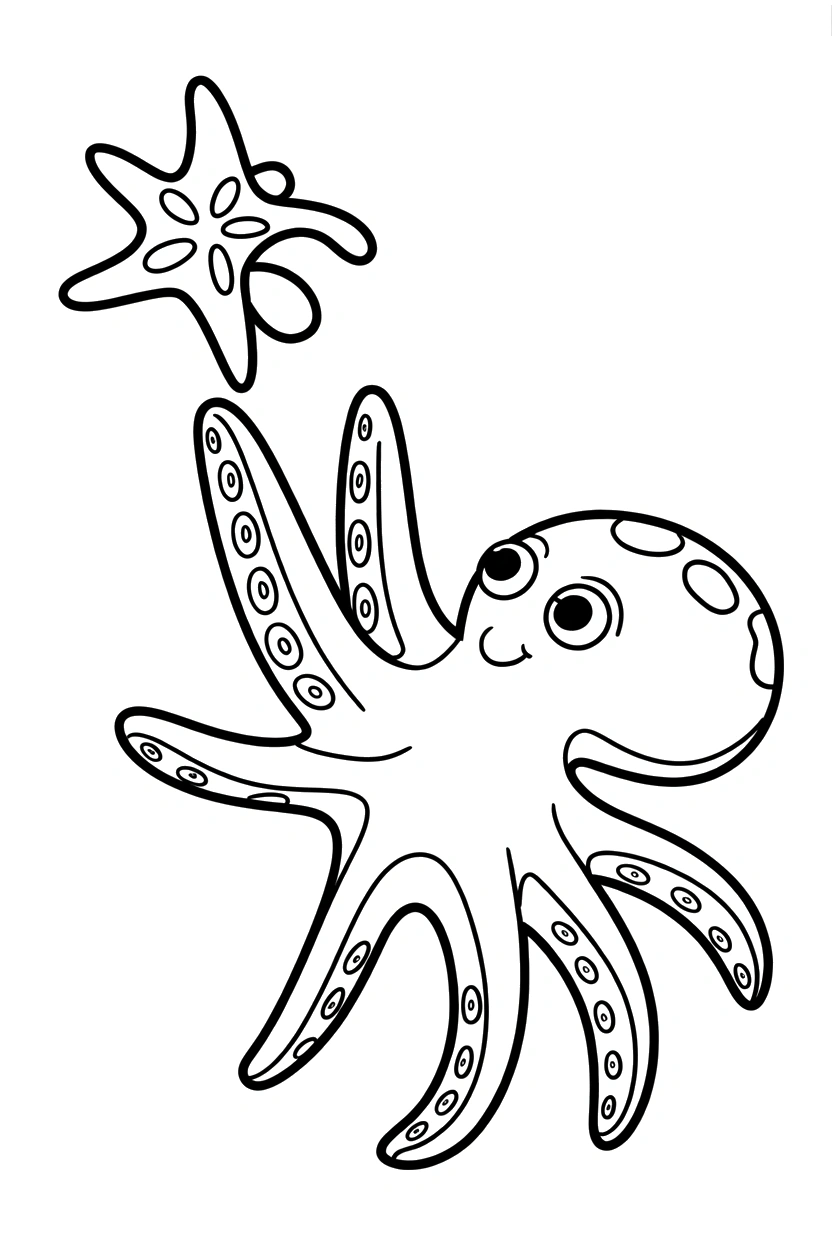
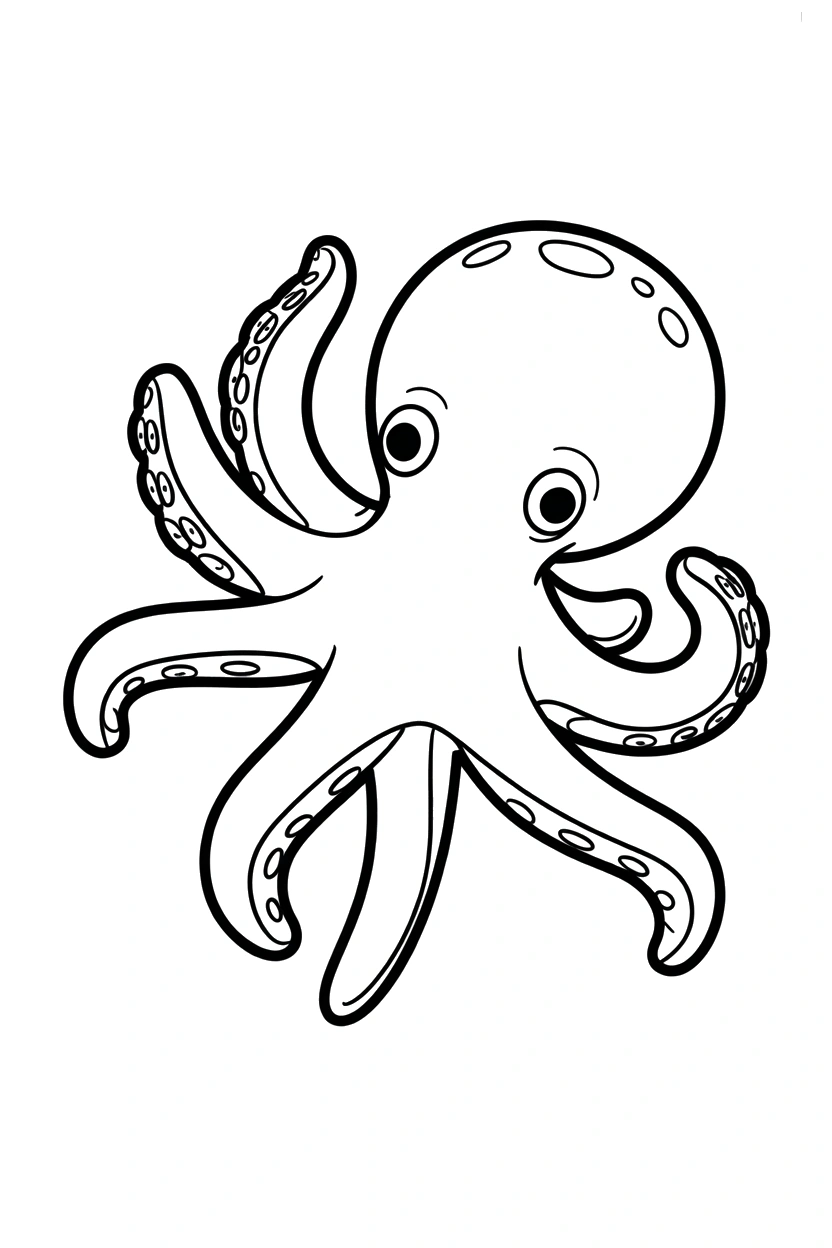
Eight arms spread across the page in Octopus Coloring Pages. Each black-and-white outline shows suction cups dotting the underside of every tentacle. One octopus reaches toward a cluster of rocks.
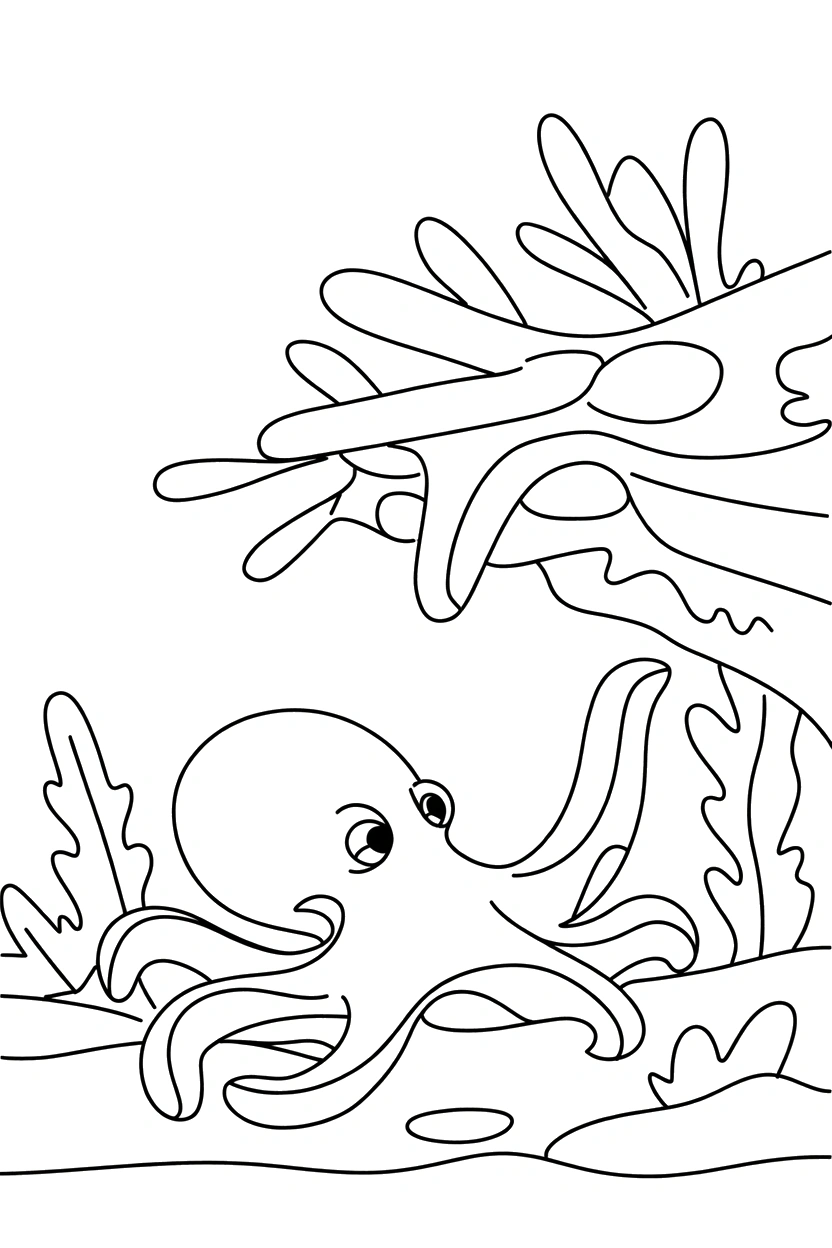
Another rests against a seafloor ridge with arms coiled loosely underneath. These sheets work well during quiet morning hours before breakfast or tucked into a waiting room activity bag.
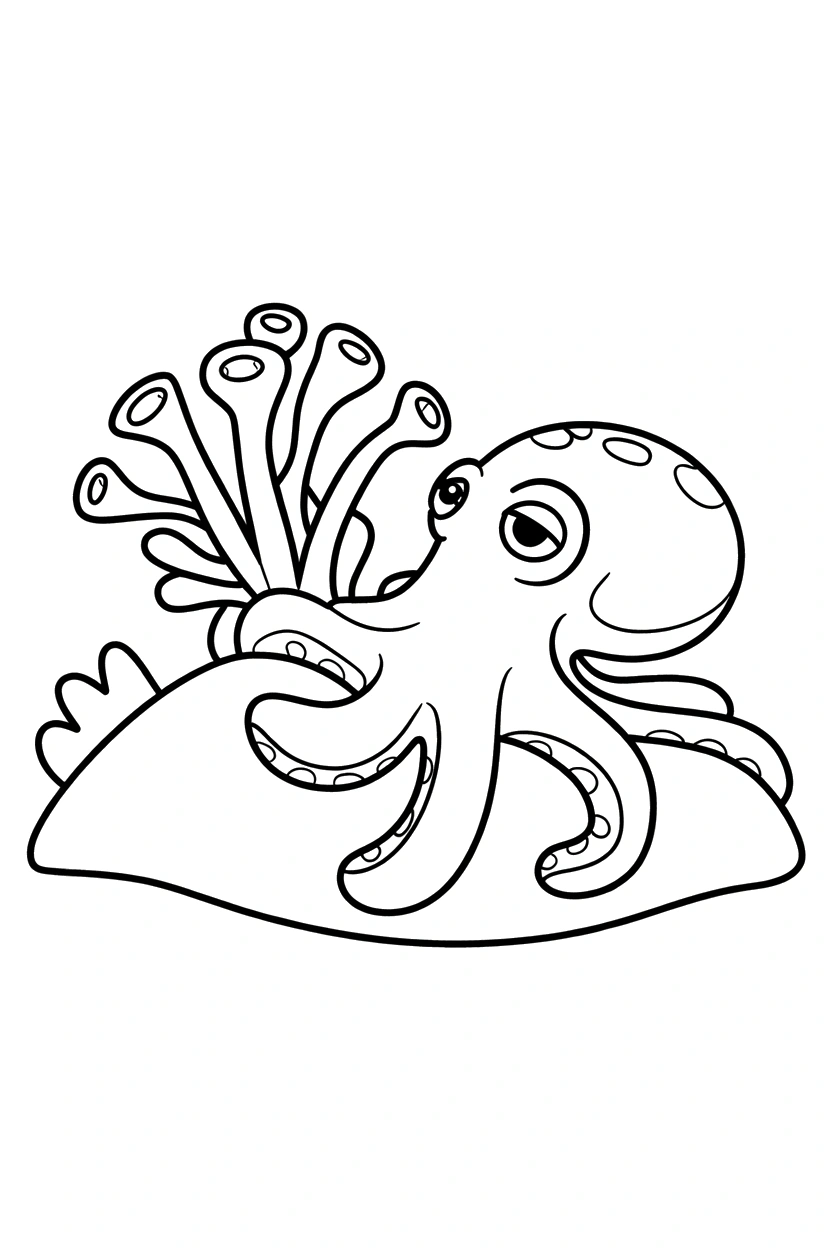
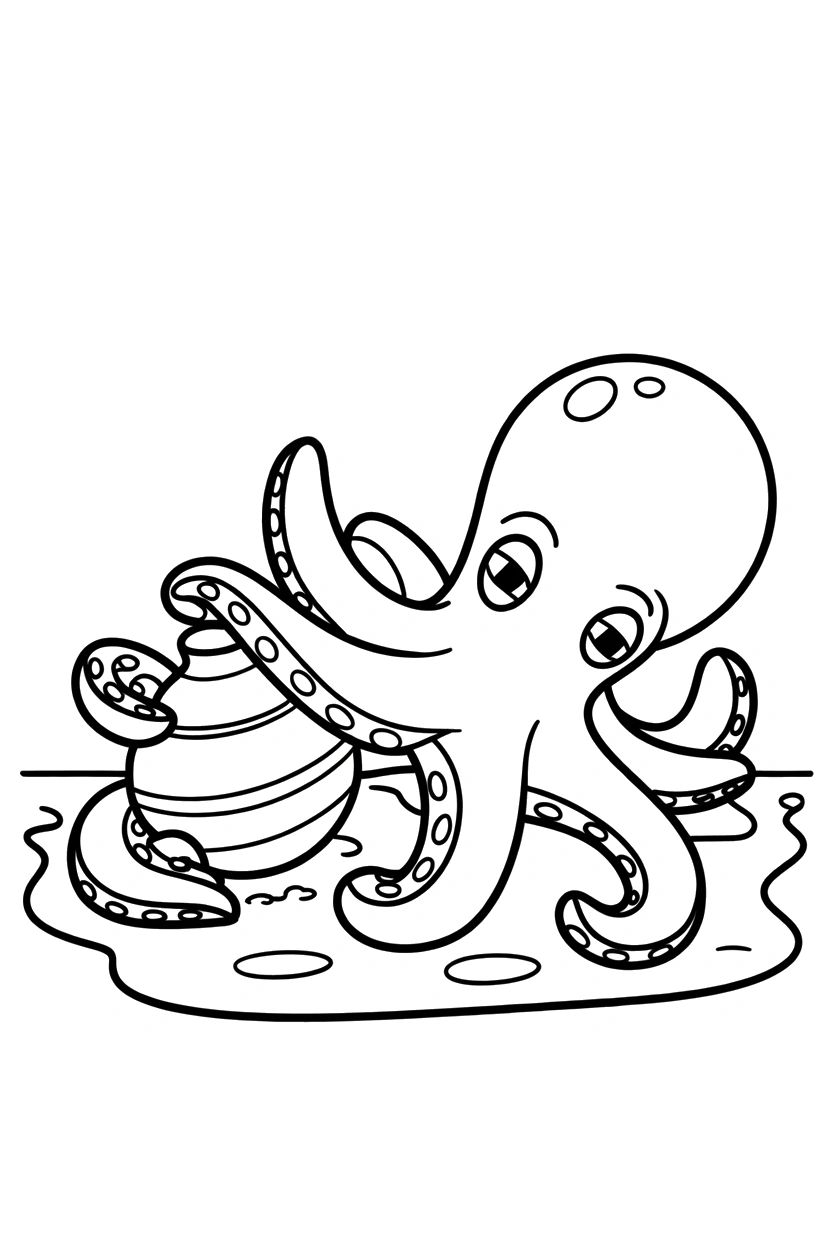
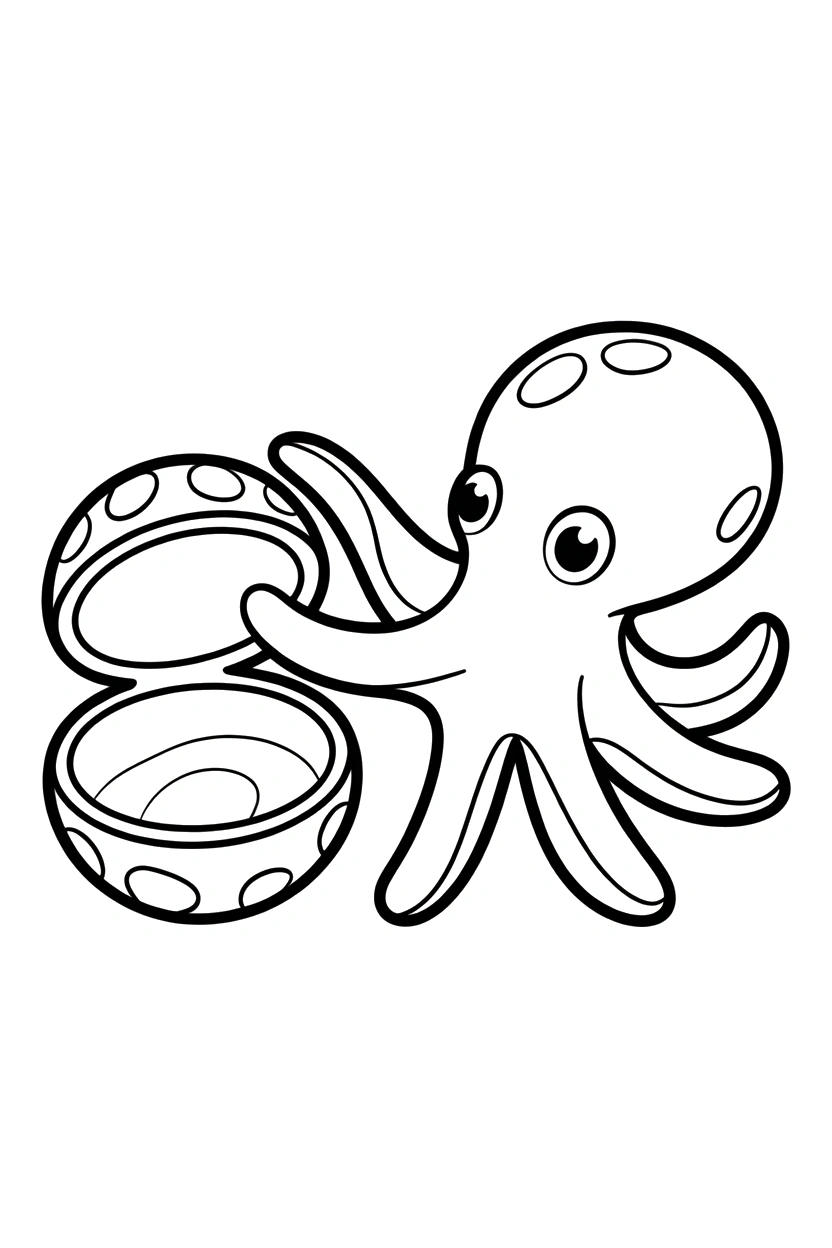
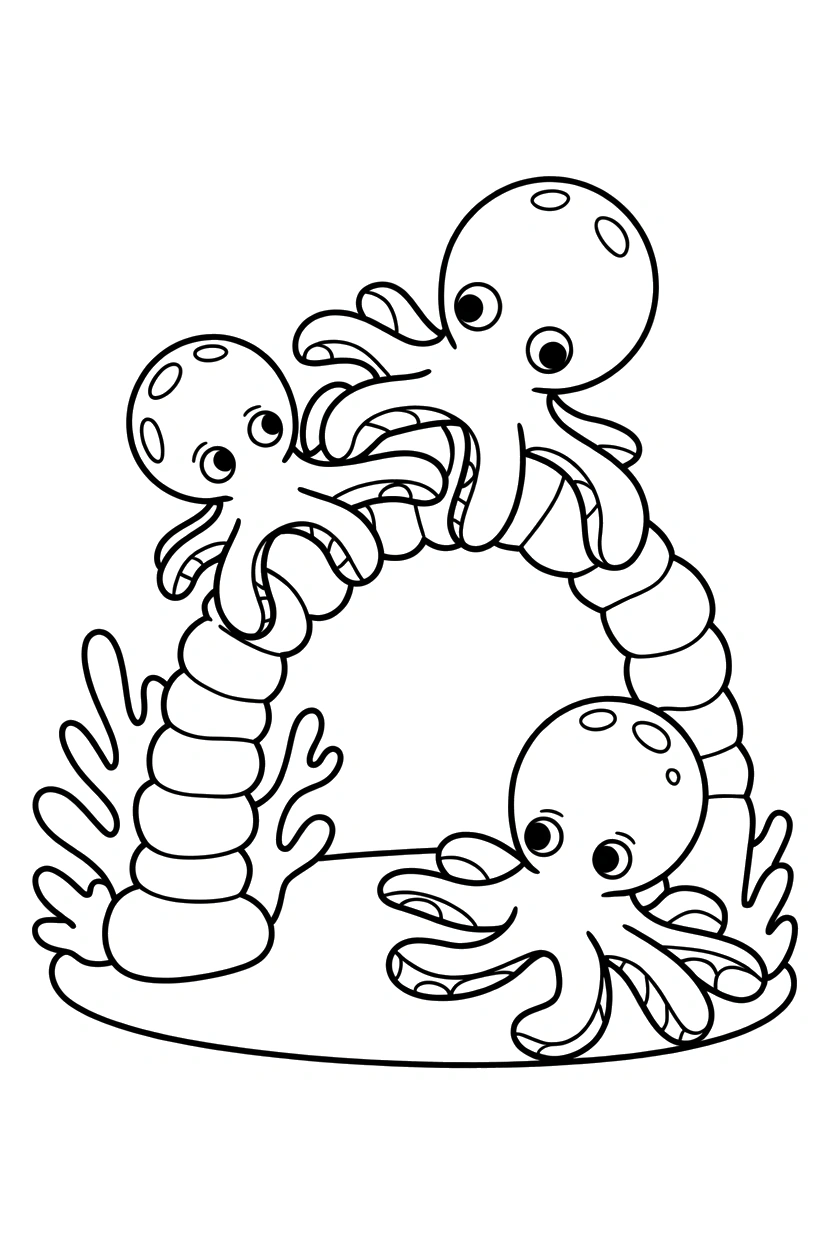
The scenes shift from open water to reef corners. Some octopuses hold themselves near hollow shells. Others peek out from behind stacked coral branches.
Body shapes stay simple enough for younger hands but include enough detail—like individual suction cup circles—to keep older kids engaged.
(An octopus can taste what it touches because its suckers contain chemoreceptors that detect flavors.) A few of these slip into a travel bag easily.
What’s on the Page
Full-body octopuses with all eight tentacles visible
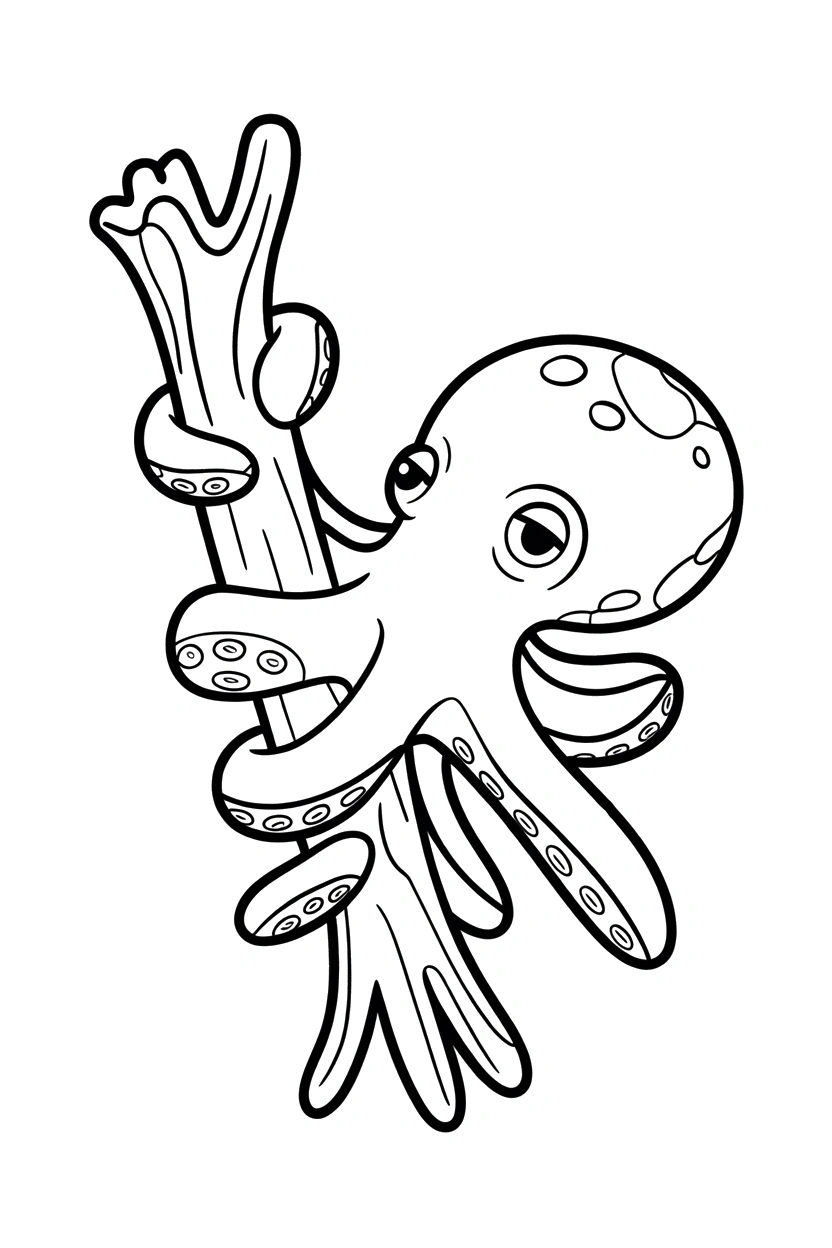
Octopuses holding onto rock surfaces with curled arms
Side views showing the bulbous head and eye placement
Tentacles arranging themselves around coral structures
Seafloor pebbles scattered near the base
Octopuses resting against underwater ledges
Single octopuses centered with arms spread outward
Pairs of octopuses facing each other near cave openings
Each simple line drawing keeps proportions clear without crowding the page. Tentacles curve in different directions. Eyes appear large and round near the top of the head.
Suction cups line the inner sides of each arm in neat rows. Each ready-to-print sheet arrives with clean borders and enough white space around the figure to avoid cutting off any tentacle tips.
Coloring helps with hand-eye coordination.
Most Octopus Coloring Pages print cleanly on standard copy paper. Heavier stock reduces marker bleed-through if switching between tools.
The outlines stay thick enough to handle wobbles but thin enough to leave room for personal choices inside each section. Kids can pick a different pose or background setup each time without repeating the same visual twice.
One octopus might be leaning forward with tentacles stretched wide. Another pulls its body low near a shell pile.
Do the drawings show realistic suction cup patterns?
Yes. Most tentacles feature rows of small circles along the inner sides.
Are underwater plants included in the scenes?
Some pages show coral or seaweed. Others focus only on rocks and seafloor.
Which pages suit younger children?
Octopuses with fewer background elements and wider open spaces work best for beginners.
Start with the head, then move to one tentacle at a time. Let each arm dry if using markers before starting the next. Try using the side of a crayon to fill the body quickly, then switch to the tip for suction cup details.
Layer two shades in the same section—one light base across the whole tentacle, one slightly darker along the outer edge to suggest depth. Focus on one area at a time instead of jumping around the page.
Did you know? Octopuses have three hearts, and two of them stop beating when the animal swims.
How to Print
Scroll through the image list below and pick the octopus scene that looks right. Click the orange “PRINT” button beneath your chosen page. Your browser opens the print menu—select your printer, confirm the page size, and hit print. Once the sheet comes out, grab your coloring tools and start.