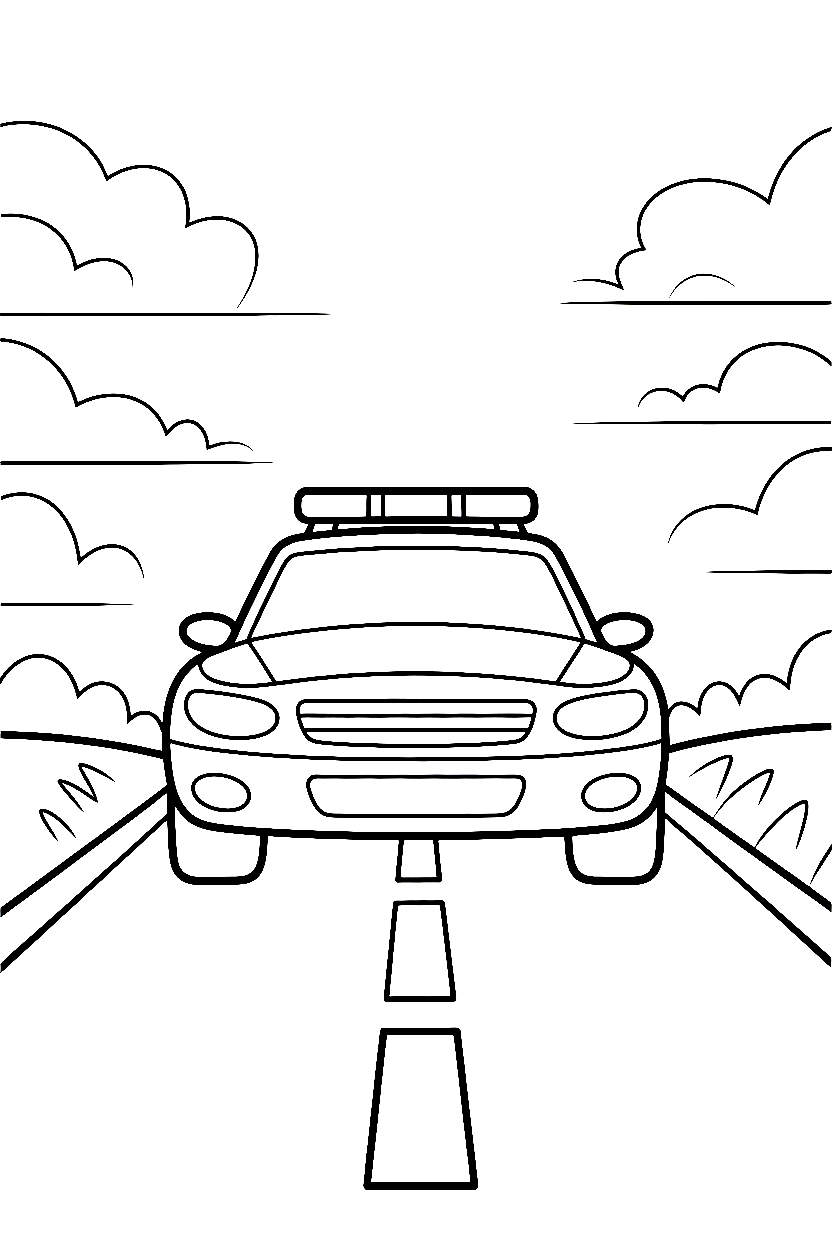
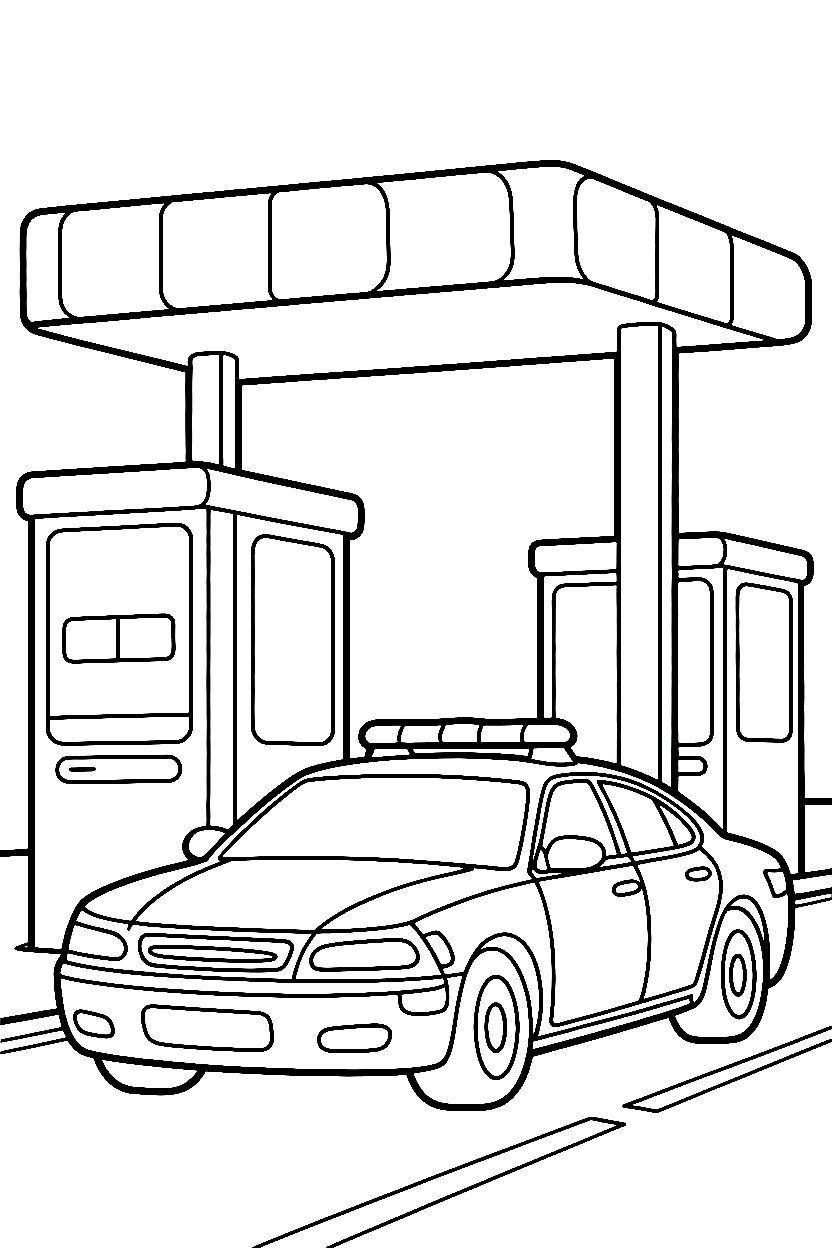
A bold set of Police Car Coloring Pages sits spread across a classroom table, each sheet dense with angular shapes, door panels, and roof-mounted lights mid-flash.
The weight of the compositions is immediately clear — these are not simple outlines. The detail is generous, the vehicles grounded and specific. Something about the hard edges and clean geometry makes the pages feel satisfying before a single crayon is lifted.
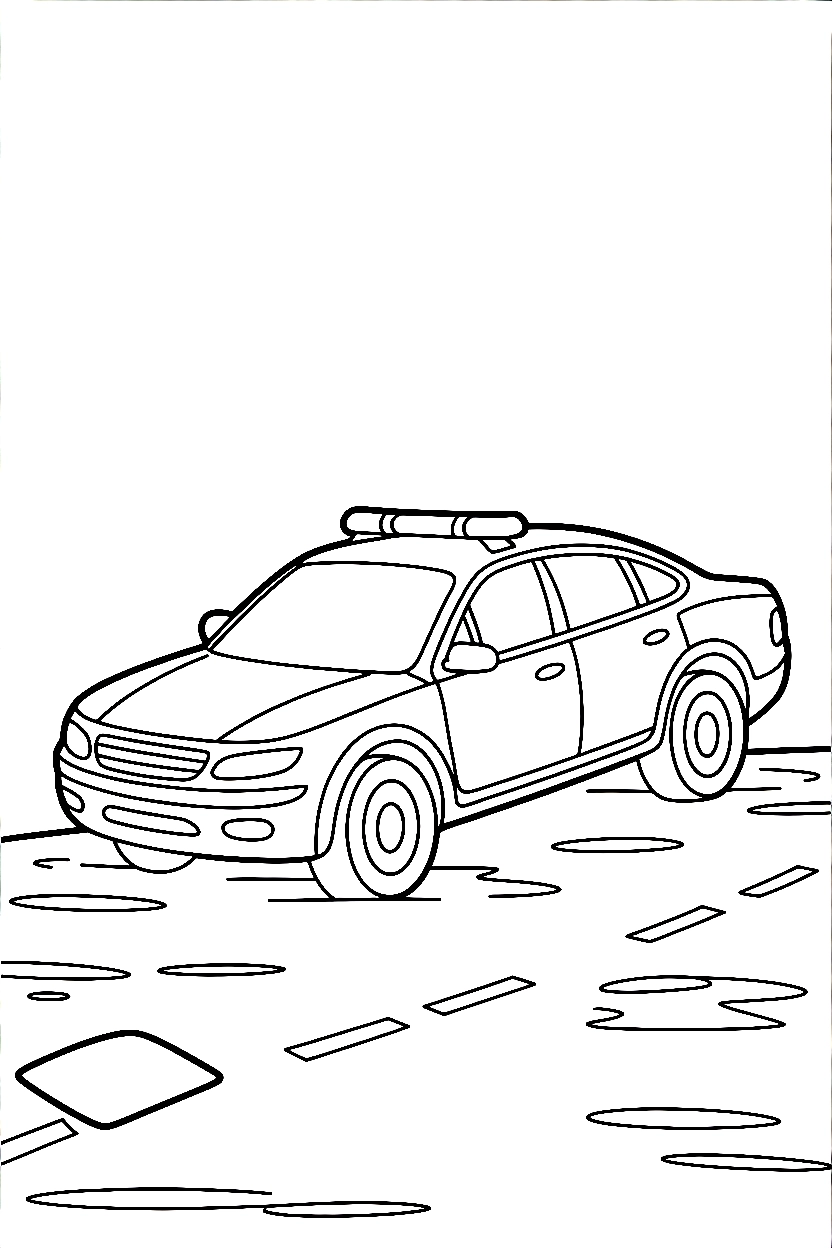
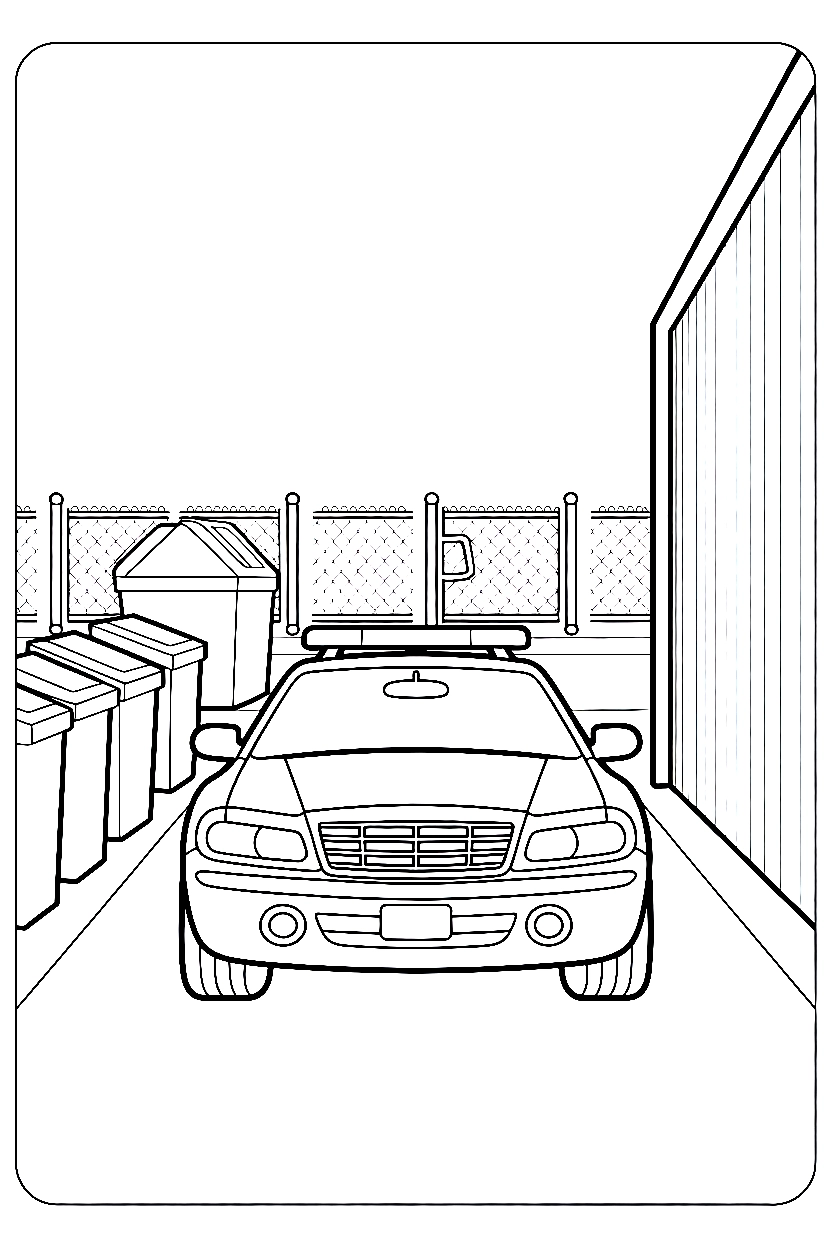
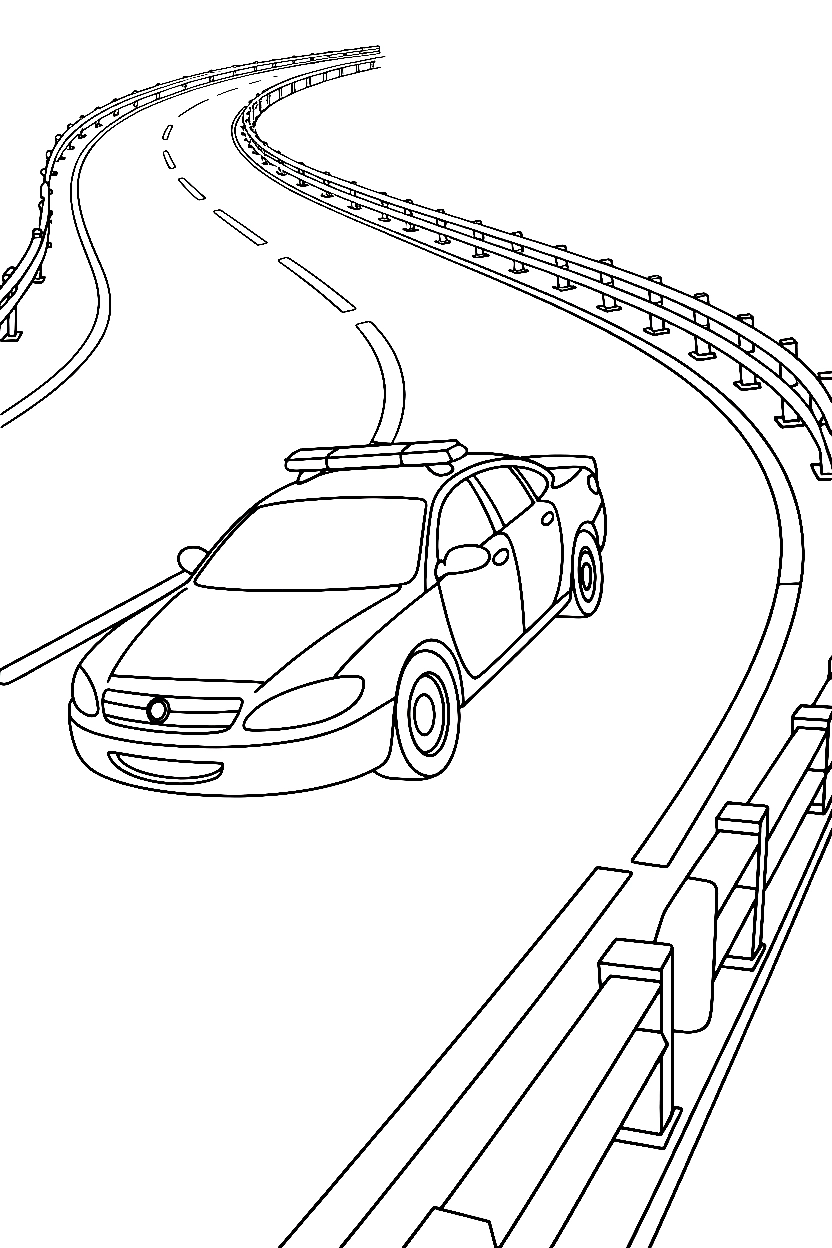
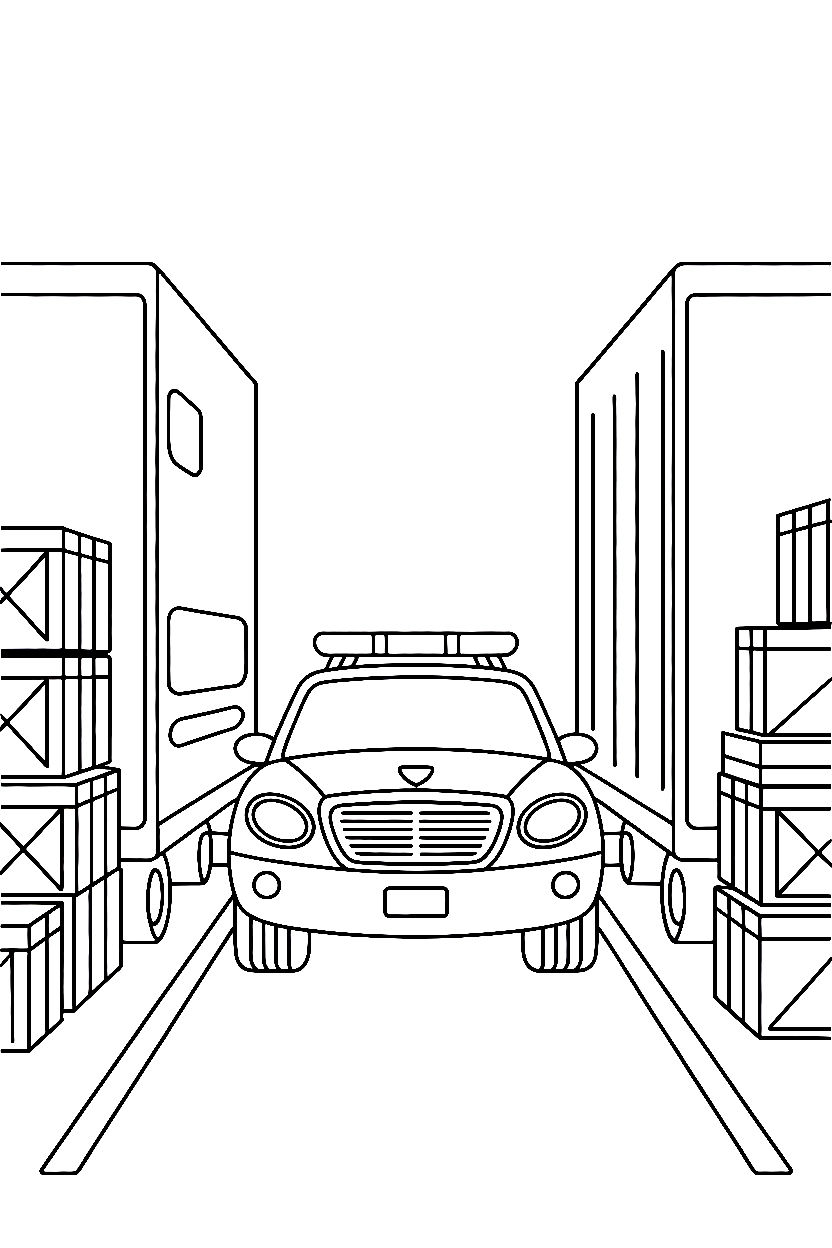
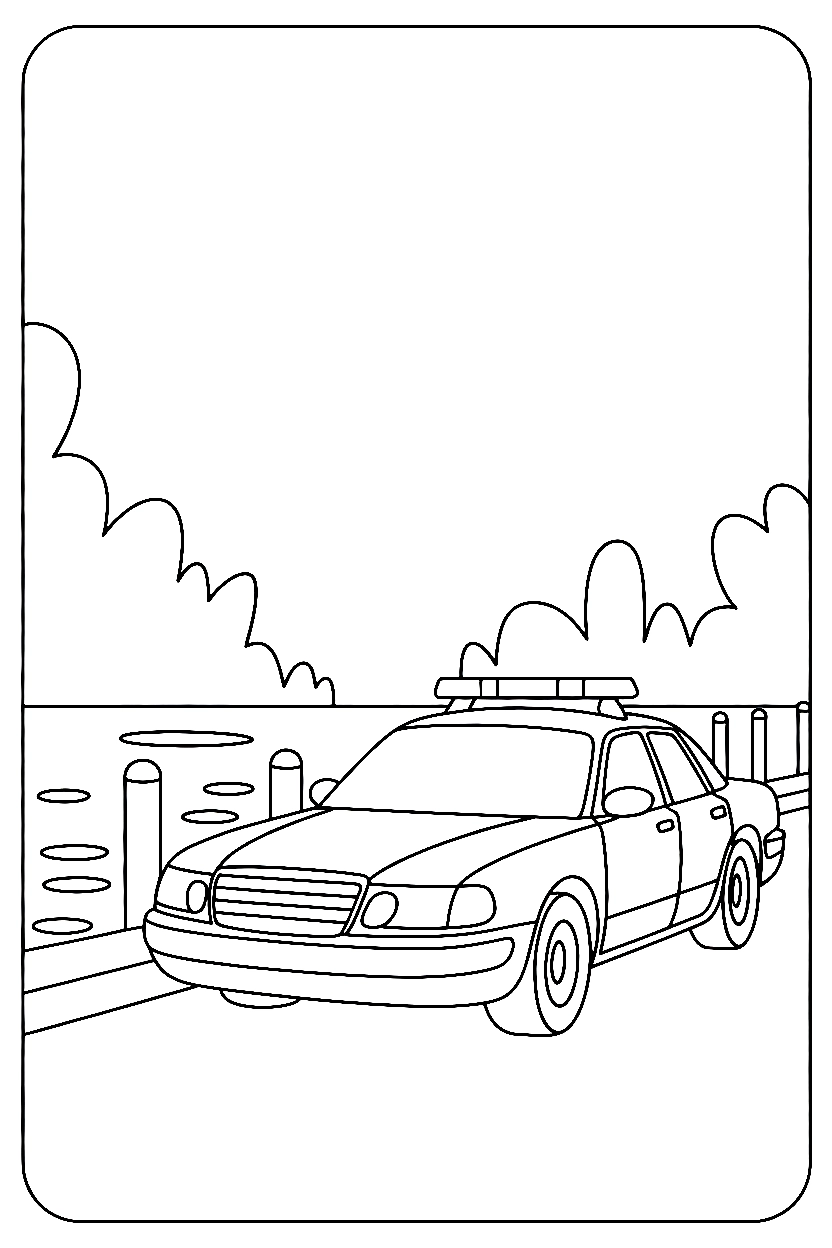
A police car drawn at an angle carries a particular kind of energy. The front grille pressed forward, the hood lines converging toward the viewer, the roof rack stretched wide with its row of emergency lights.
An outline drawing like this rewards patience — the narrow gaps between the light bar segments, the seam lines running down the door panels, the emblem centered on the hood. All of it there. All of it waiting. Coloring supports fine motor skills.
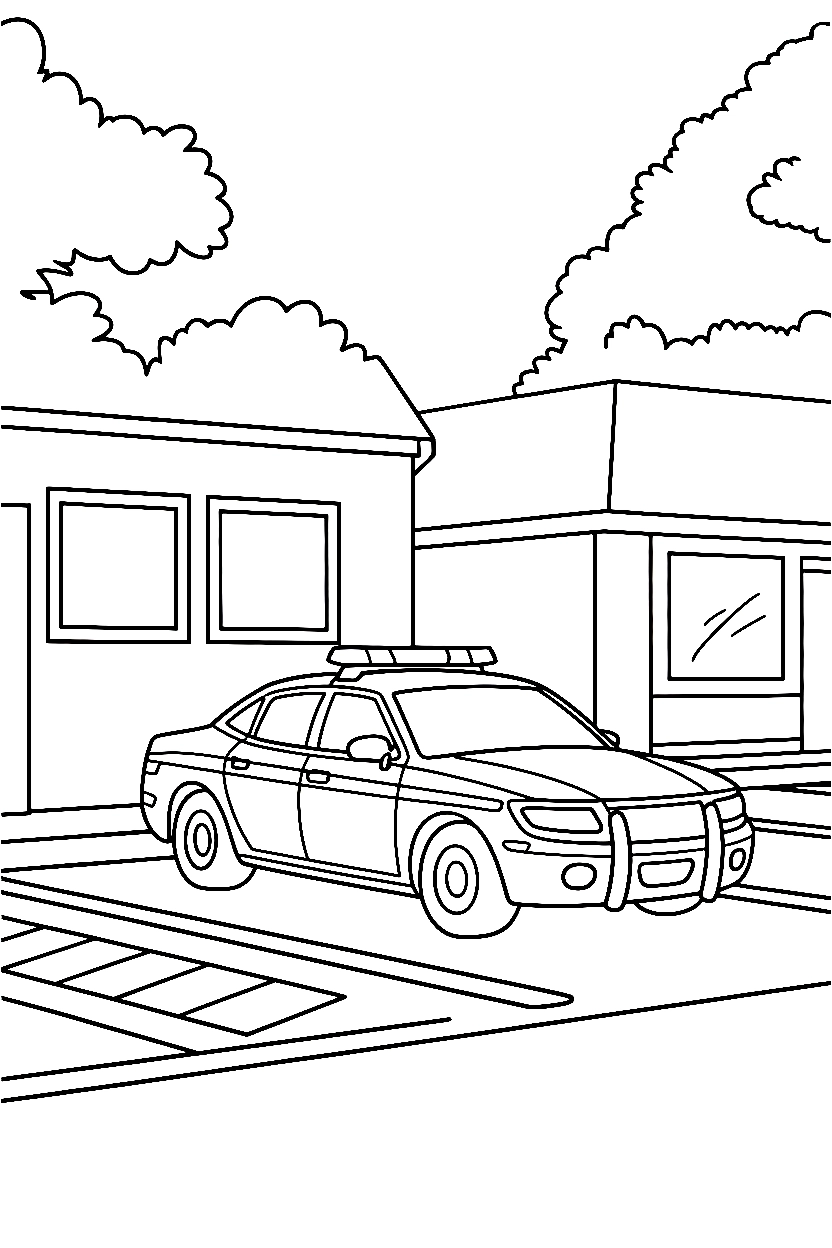
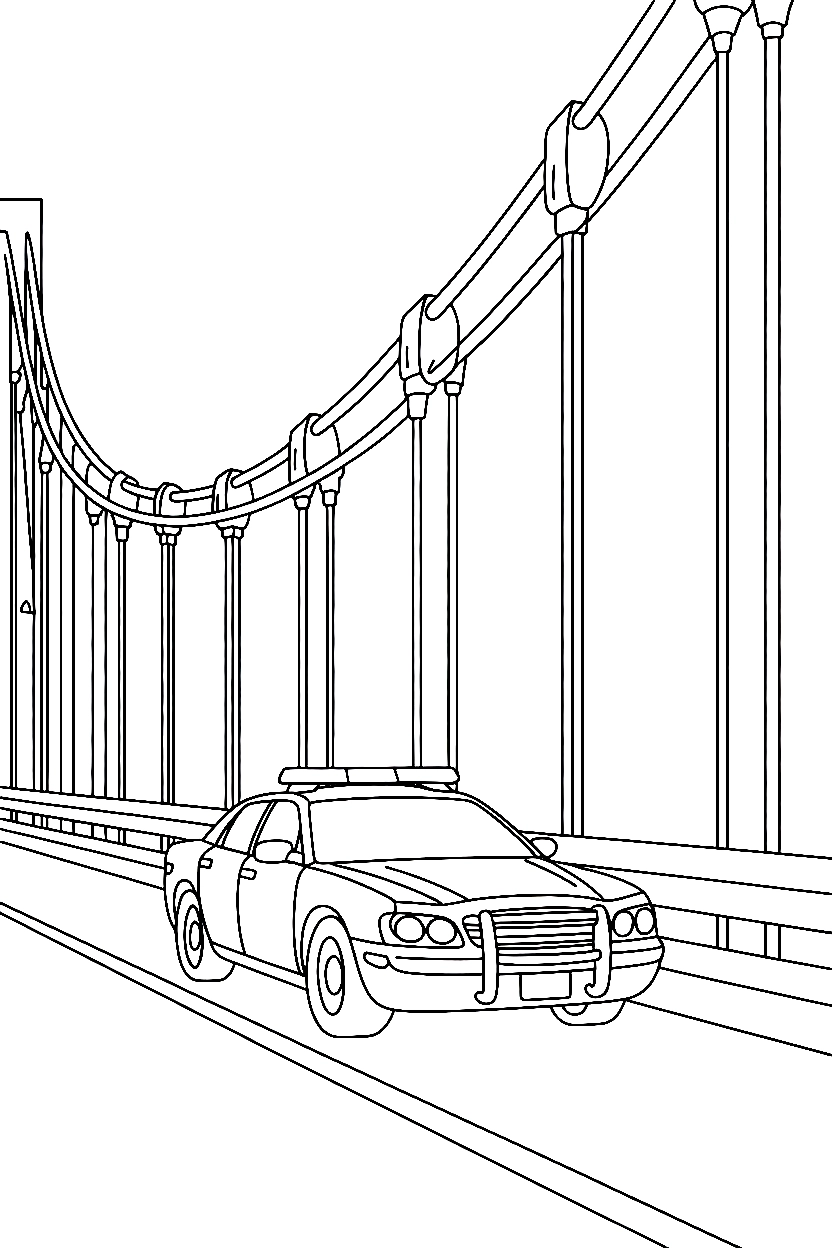
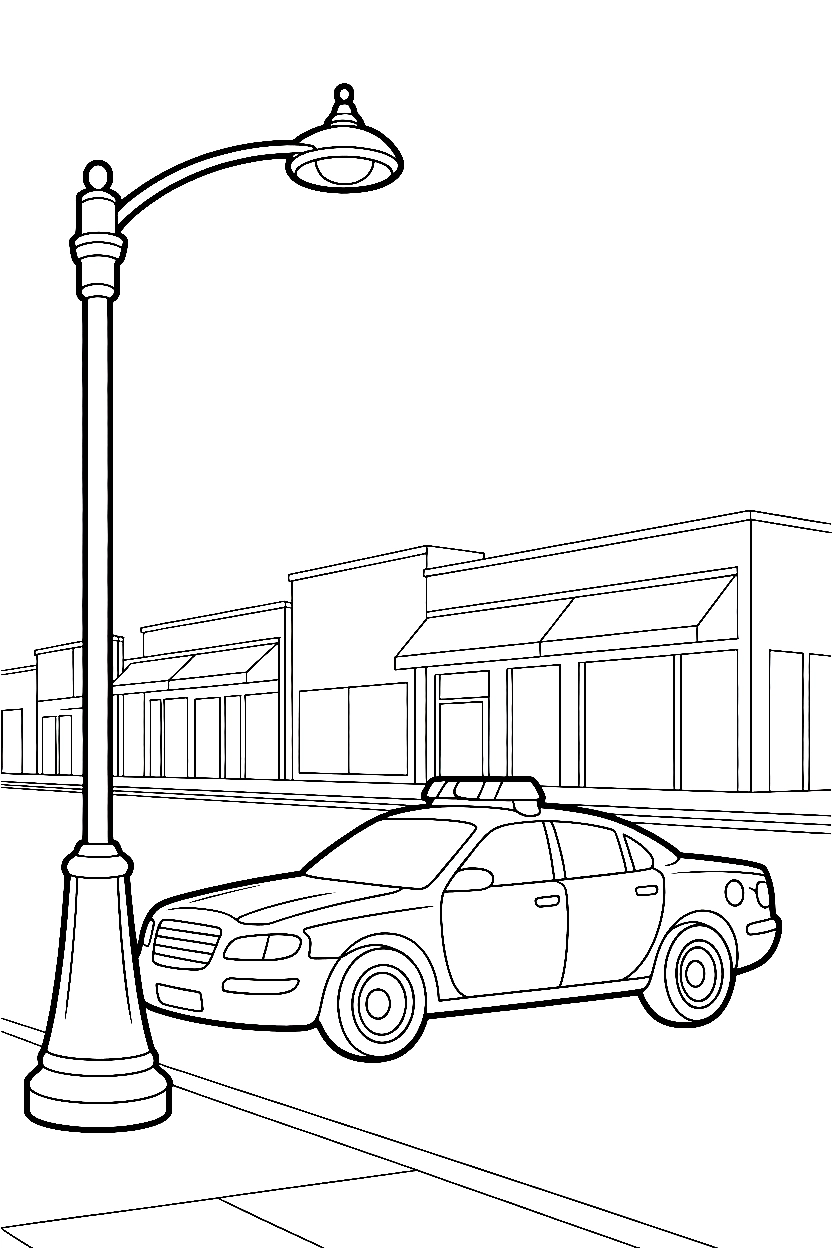
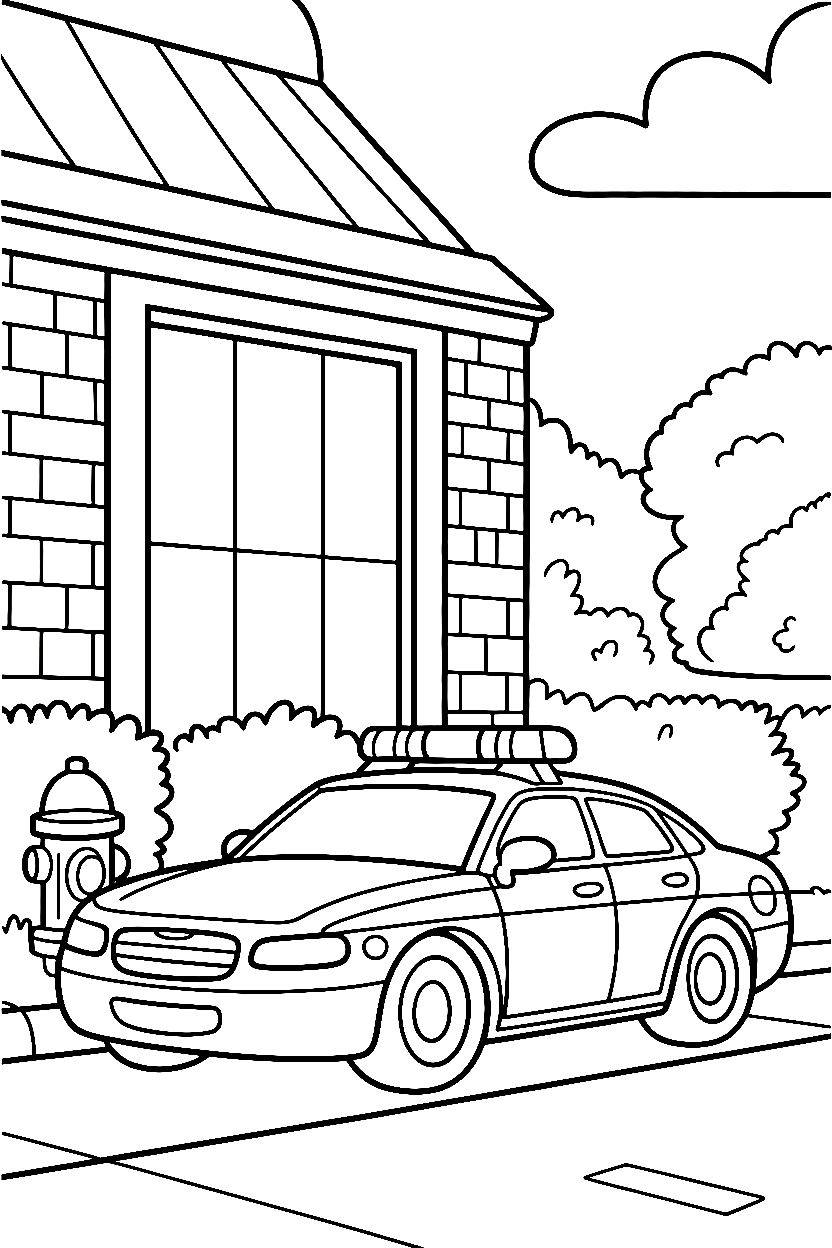
Some scenes are less about speed and more about presence. A police car parked along a city curb, slightly angled toward the sidewalk, with a fire hydrant and the lower half of a streetlight visible at the edge of the frame.
Nothing dramatic. The quiet detail of a side mirror, a partly lowered window, a wheel rim with its spoke pattern — these are the things that make a composition feel inhabited. Police car coloring pages in this register feel more documentary than action-based.
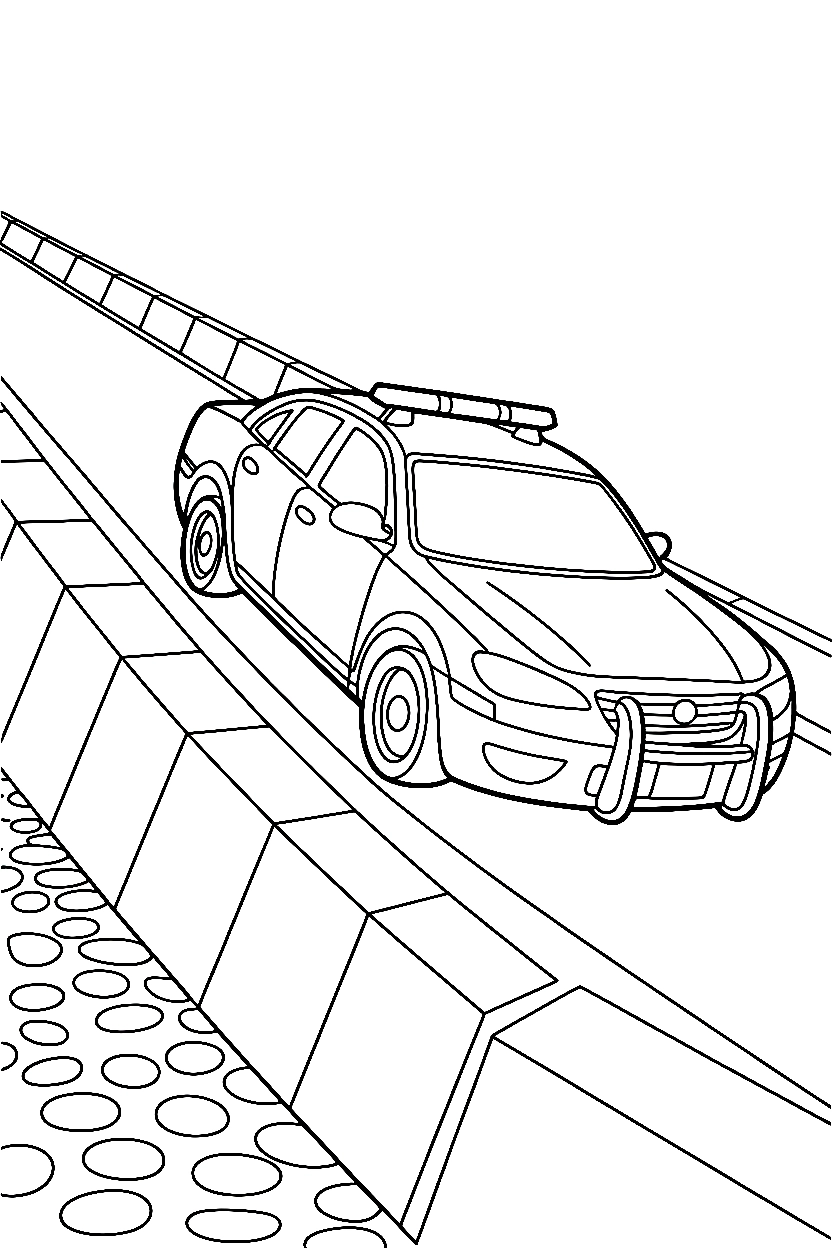
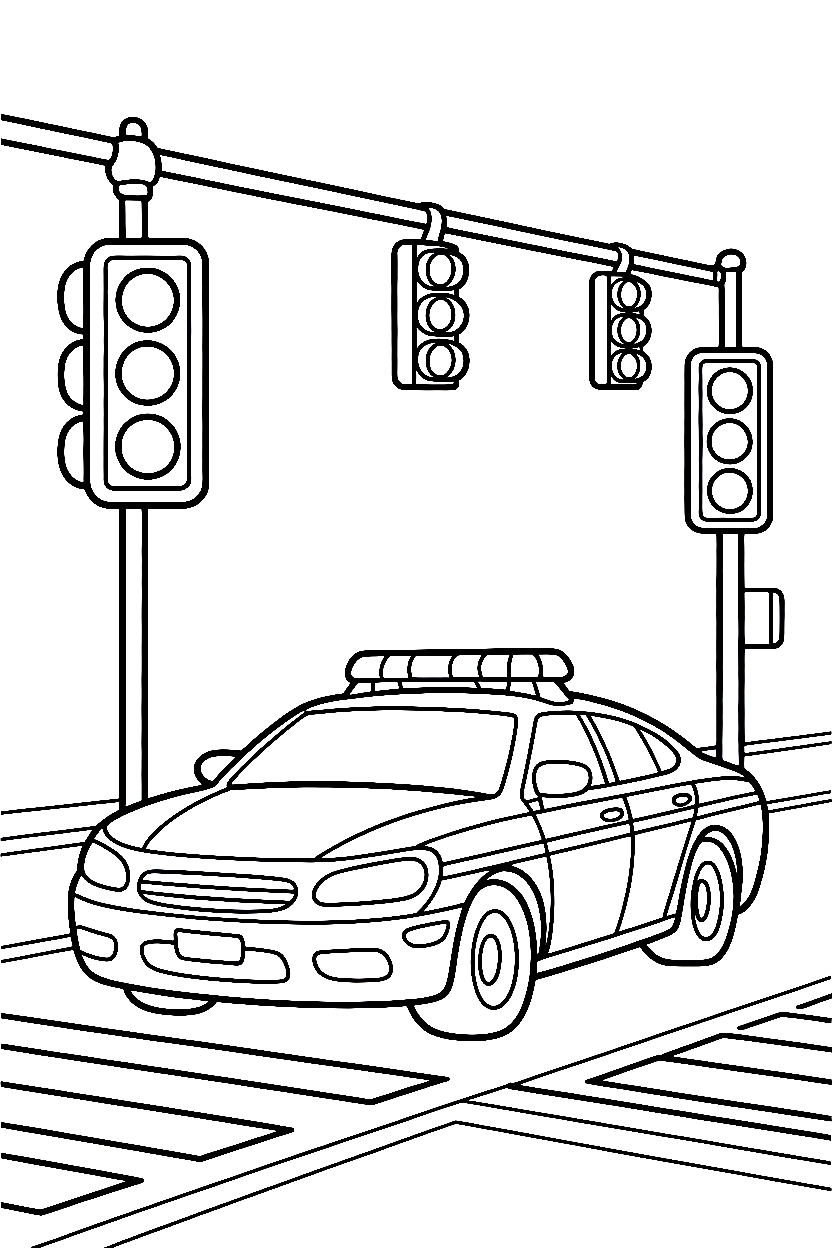
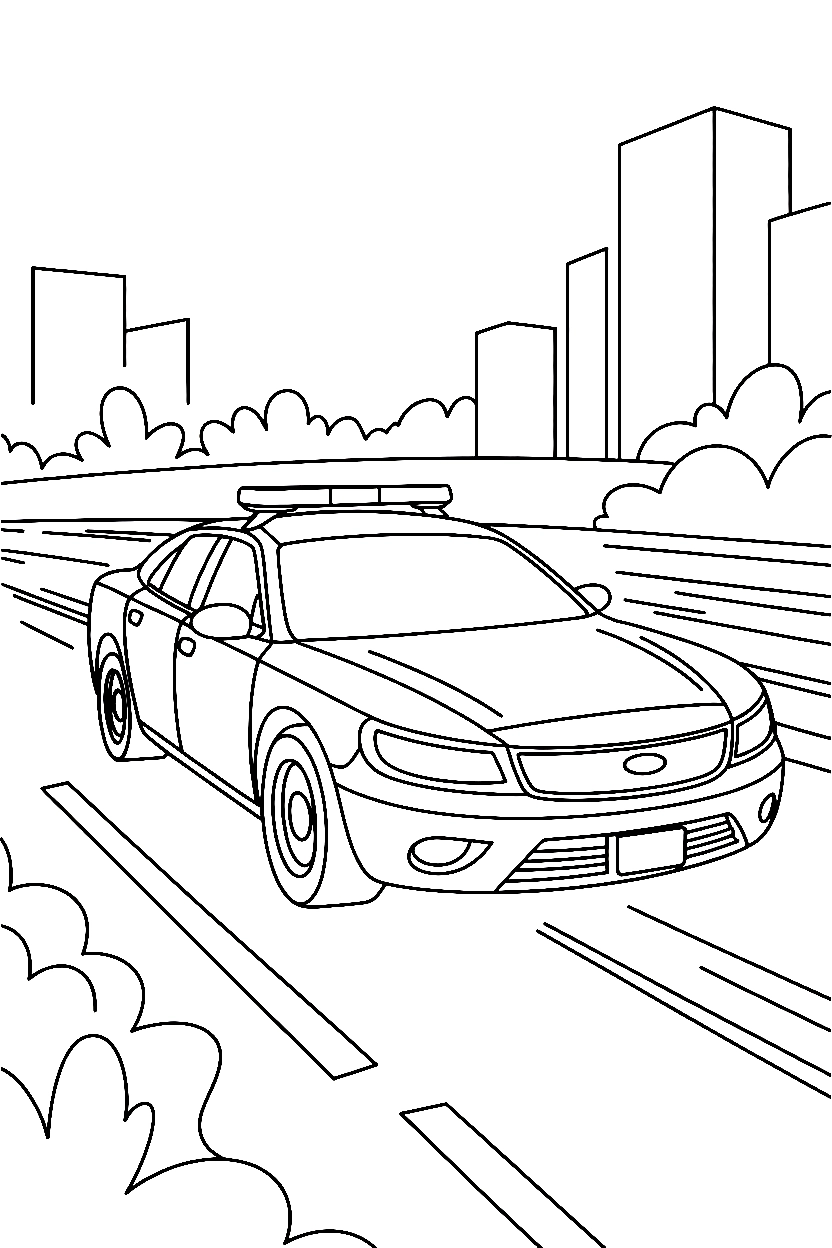
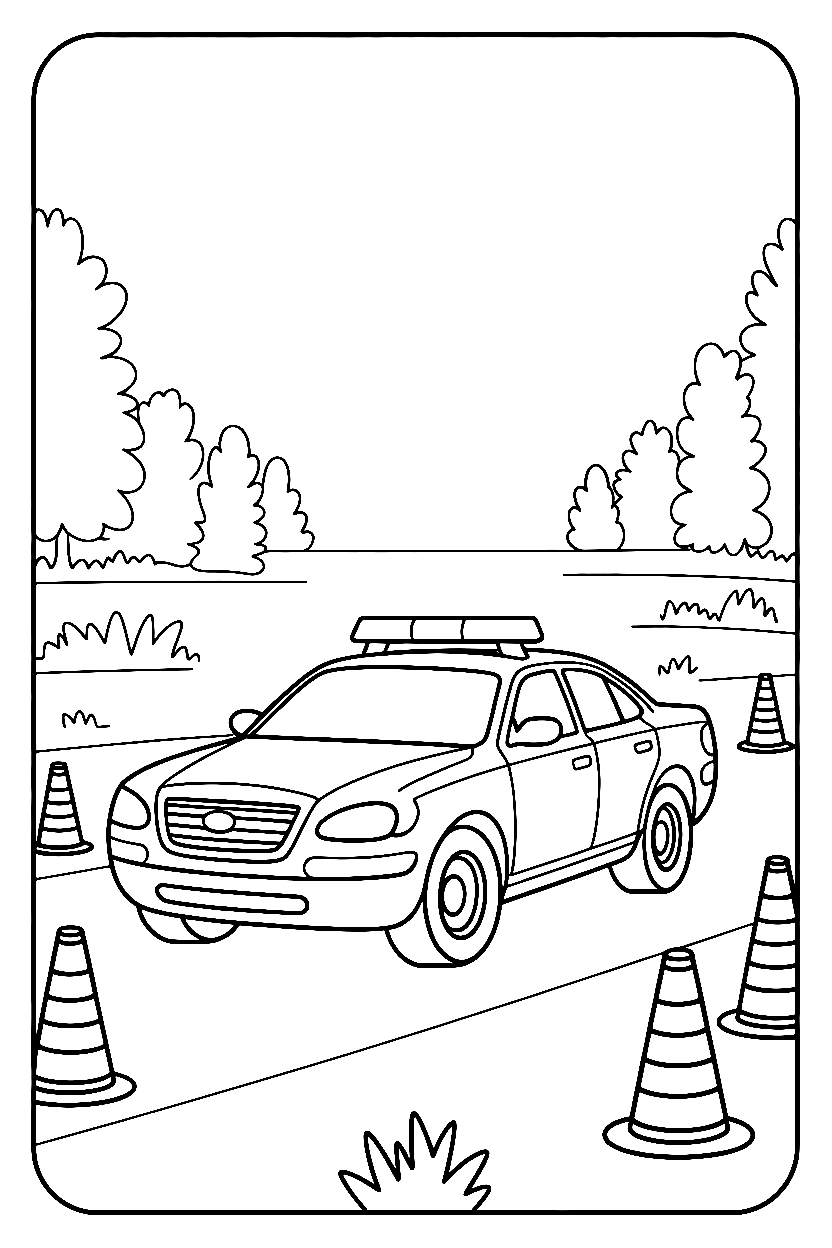
Other compositions push in the opposite direction. A vehicle mid-turn on a wide empty road, tires angled, a motion line suggested by the tilt of the frame.
The line art scene here has a directional force to it — the body of the car leaning into the curve, the background simplified to flat horizontal shapes suggesting pavement and sky. The contrast between the simplified background and the dense vehicle detail makes the car read instantly.
Some pages focus on close-up views — the dashboard and steering wheel visible through an open door, a radio clipped to the doorframe, the reflective strip running the full length of the car body.
A printable activity sheet with this kind of framing teaches the eye to slow down. The reward is in the particulars.
There is a consistent visual logic to these scenes. A police car is already a highly recognizable shape — the long hood, the reinforced bumper, the decal placement on the door.
That familiarity gives the colorist something to work with. Police car coloring pages carry that recognition into every frame, letting the detail do its quiet work.
🎨 Creative Tip Press firmly with markers along the straight door edges and panel lines to define the car’s body cleanly. Switch to a sharpened colored pencil to fill in the smaller areas around the wheels and grille.
Fun Fact: Police cars have a special cage in the back seat that is bolted right into the car so it stays in place no matter what!
How to Print Scroll down to find your preferred scene → Select the image → Click the orange “PRINT” button → Start coloring
What details are visible on the roof rack in the light bar scenes?
Individual light segments and a flat mounting rail are drawn across the roof.
Can the wheel rims be seen clearly enough to color the spoke patterns?
Yes, each rim shows a distinct spoke arrangement with open sections between them.
Do the dashboard scenes show objects clipped to the doorframe?
Yes, a radio unit and part of a strap are drawn along the inner door panel.