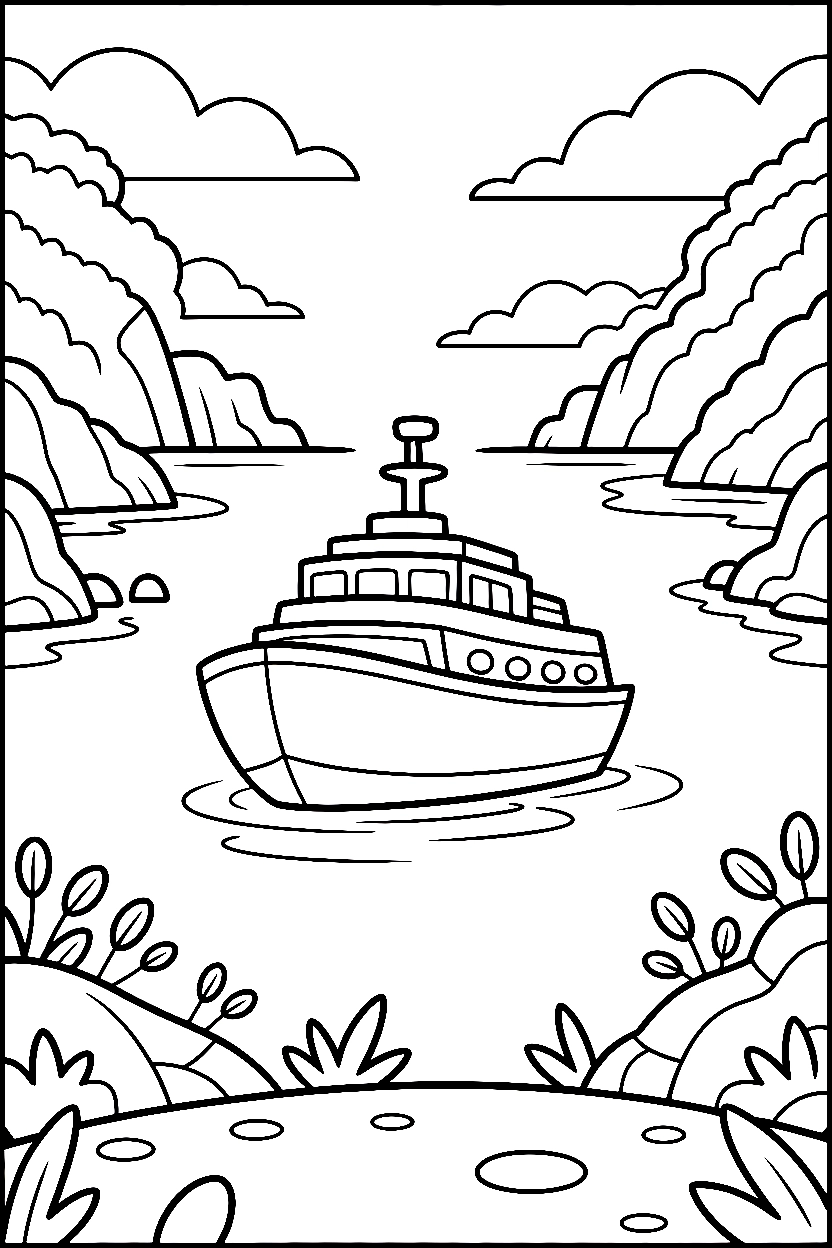
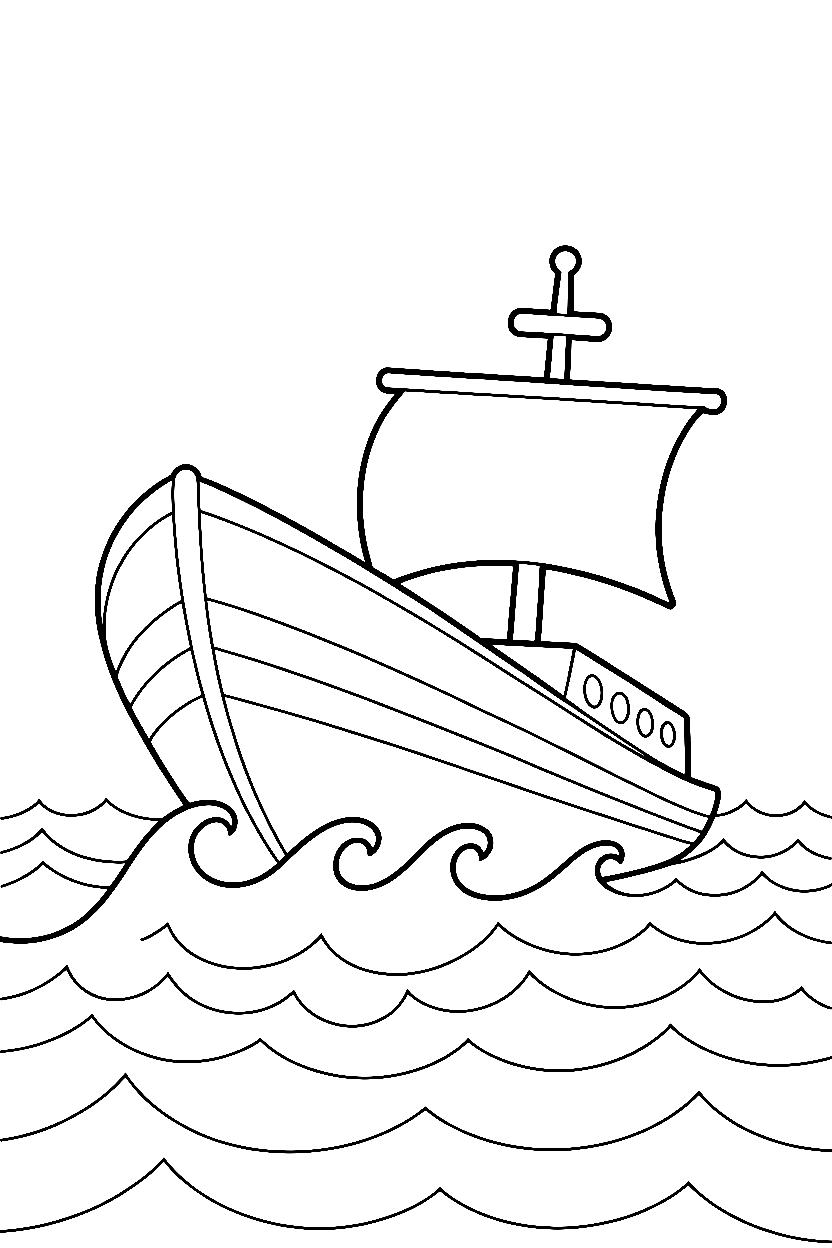
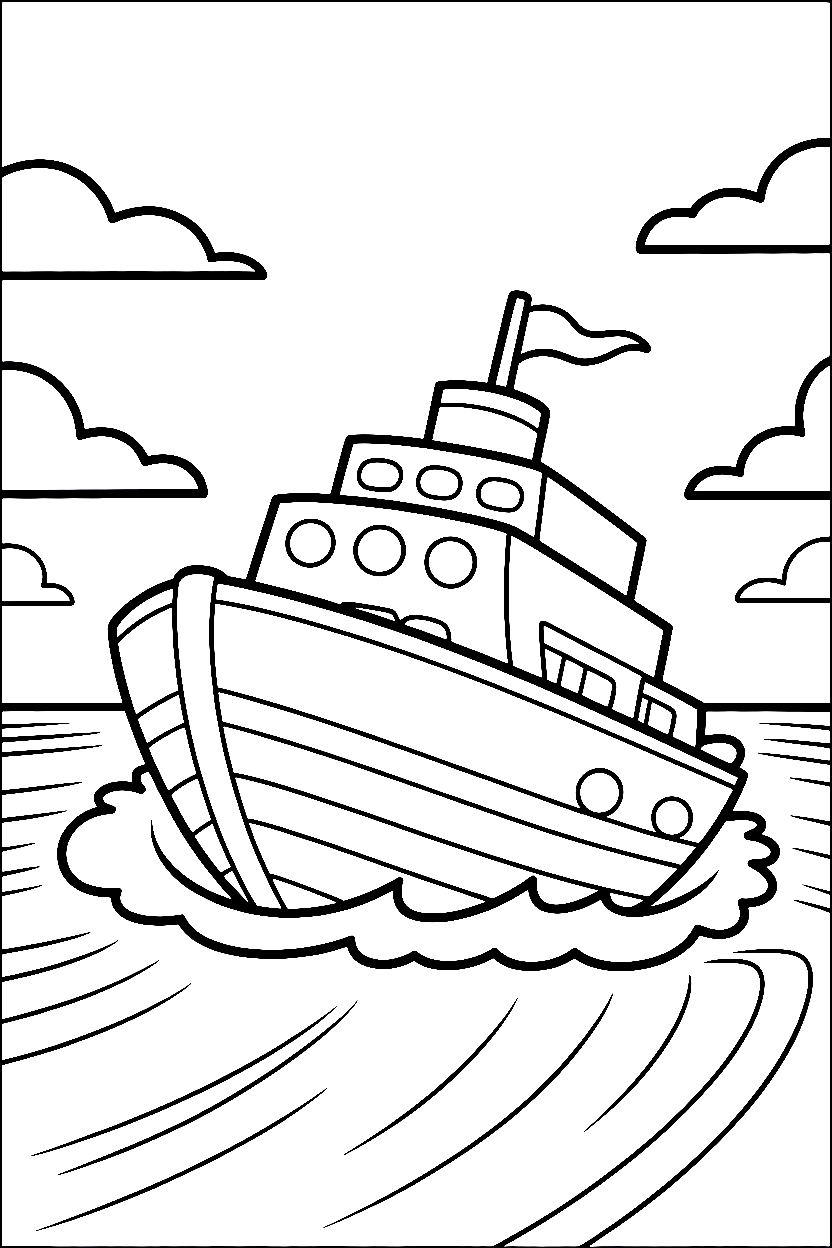
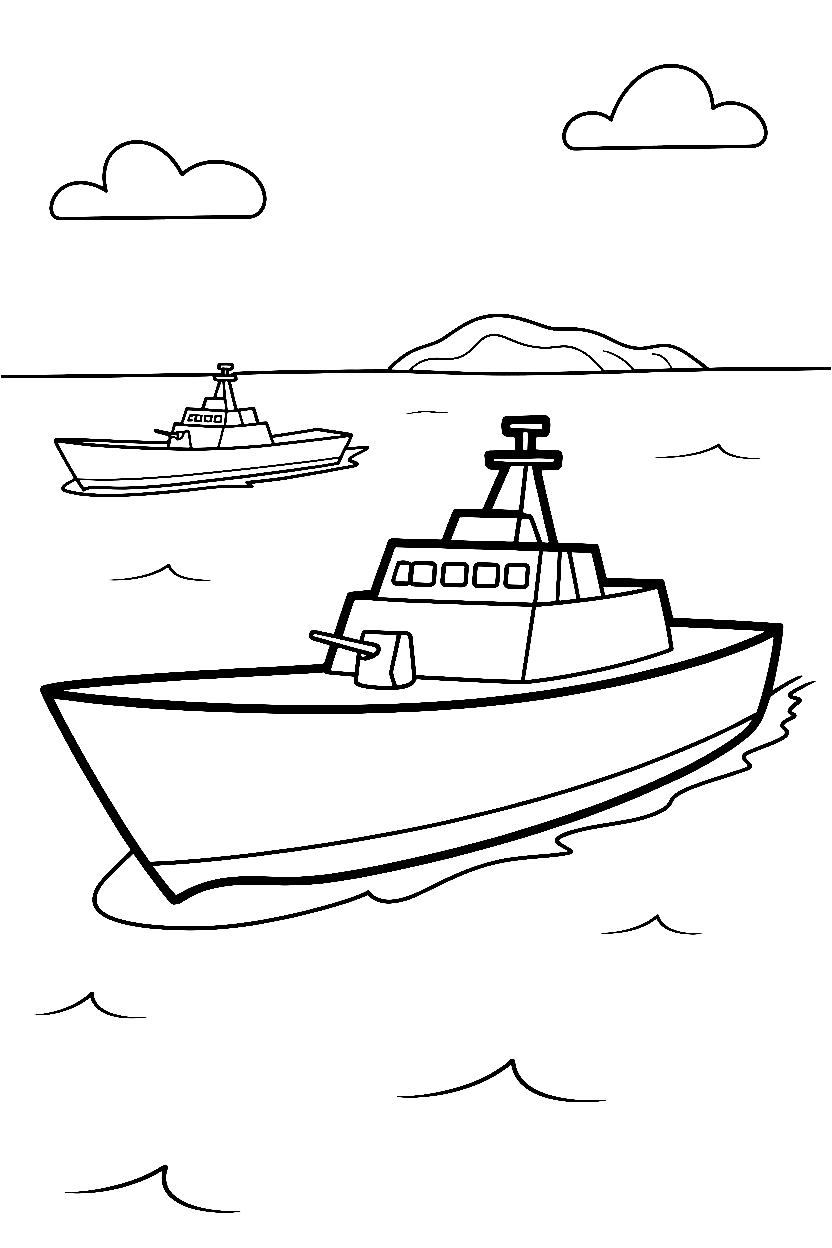
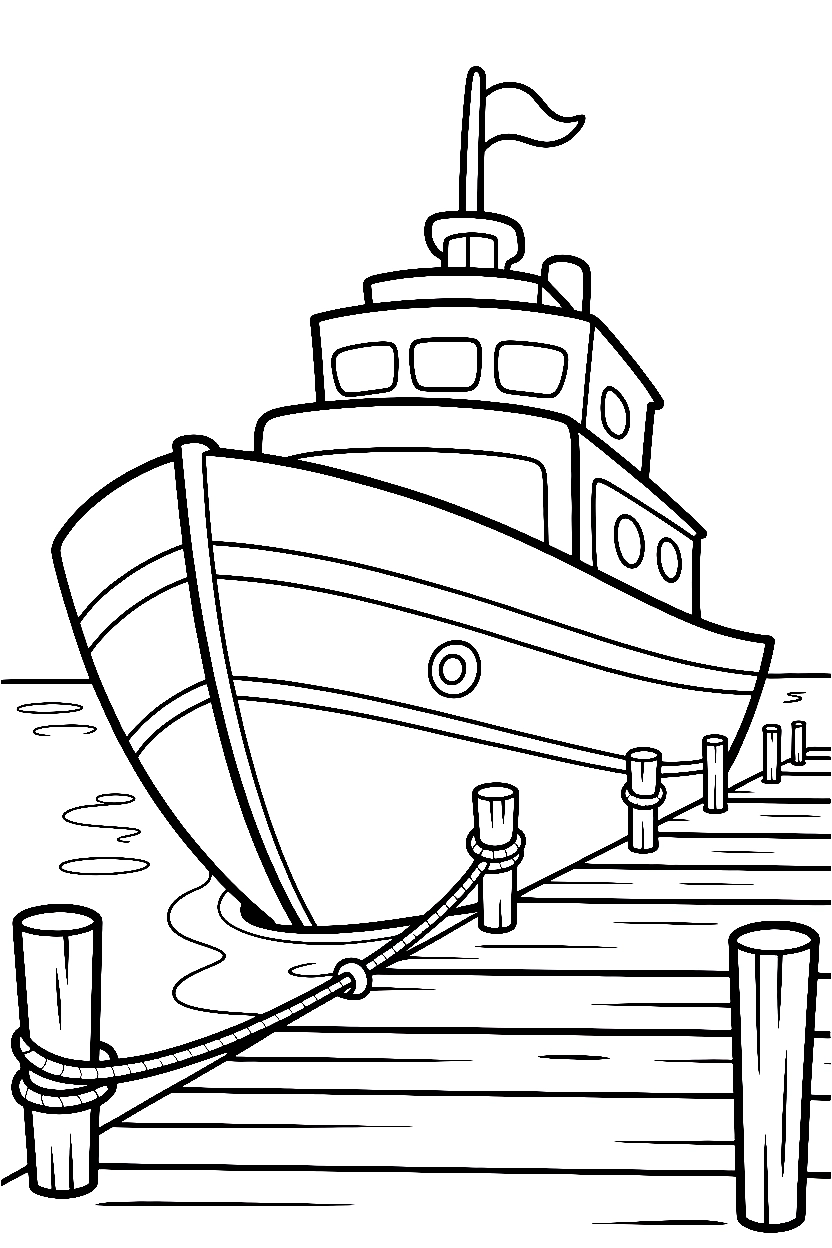
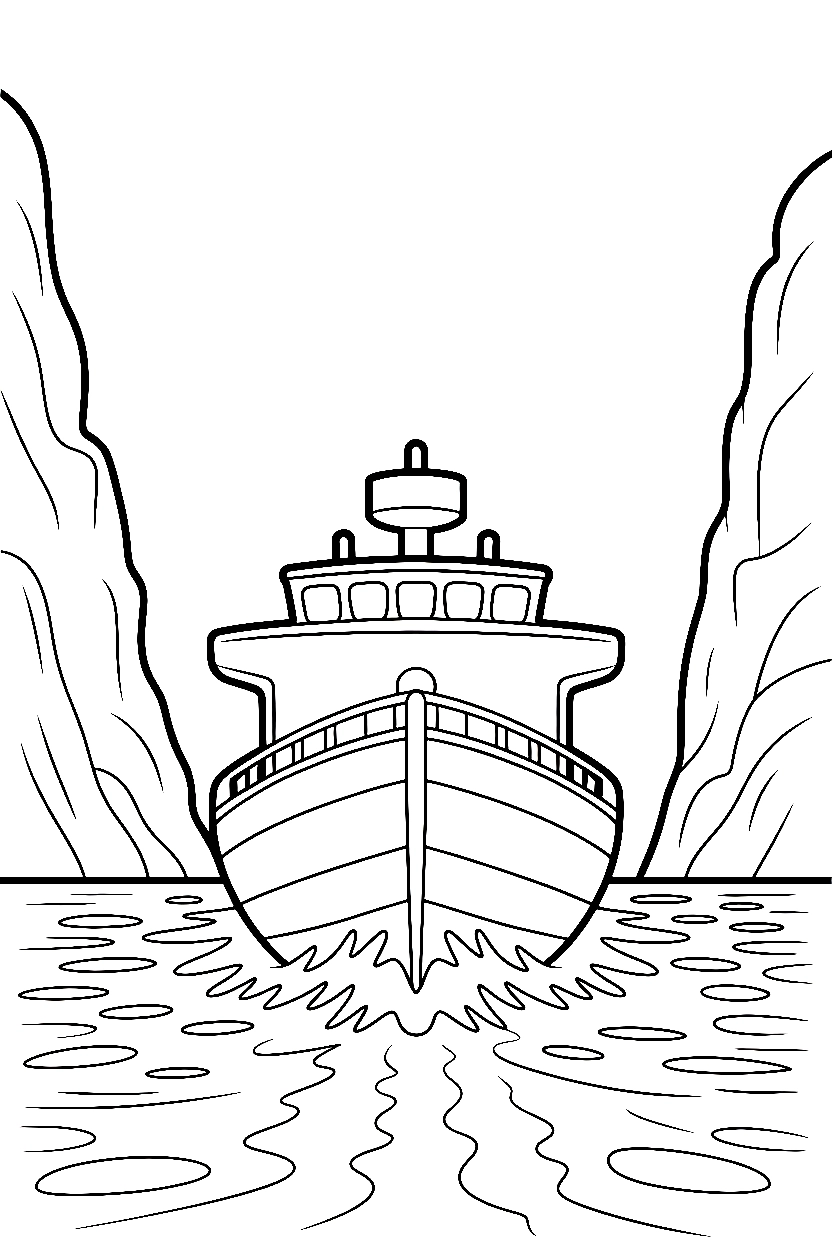
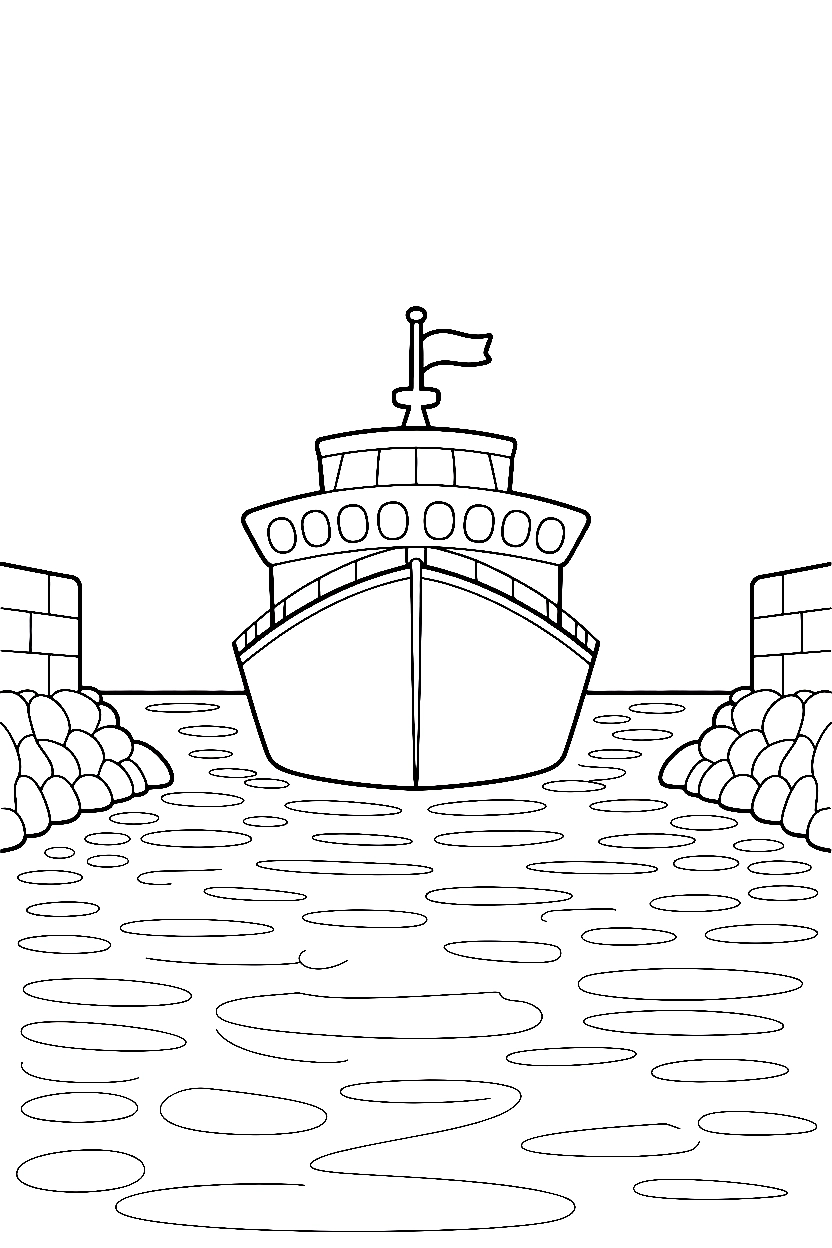
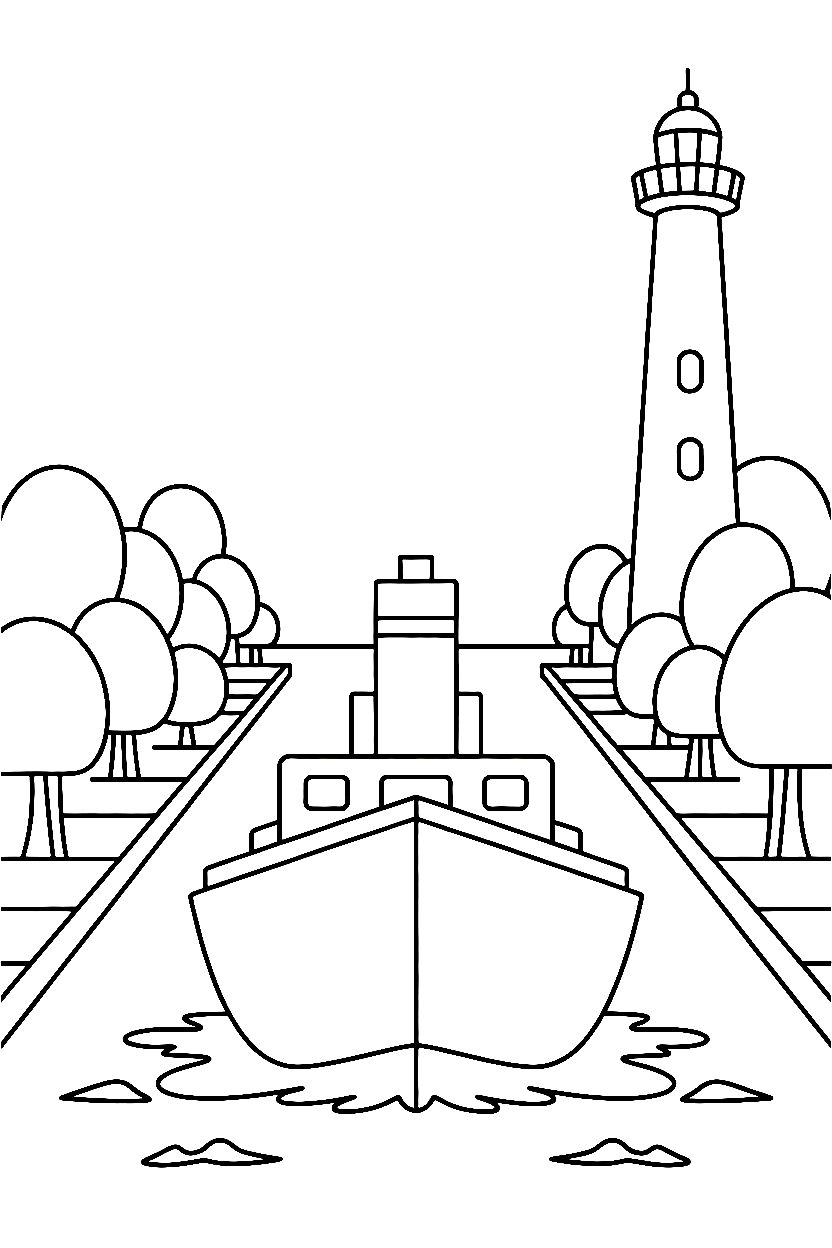
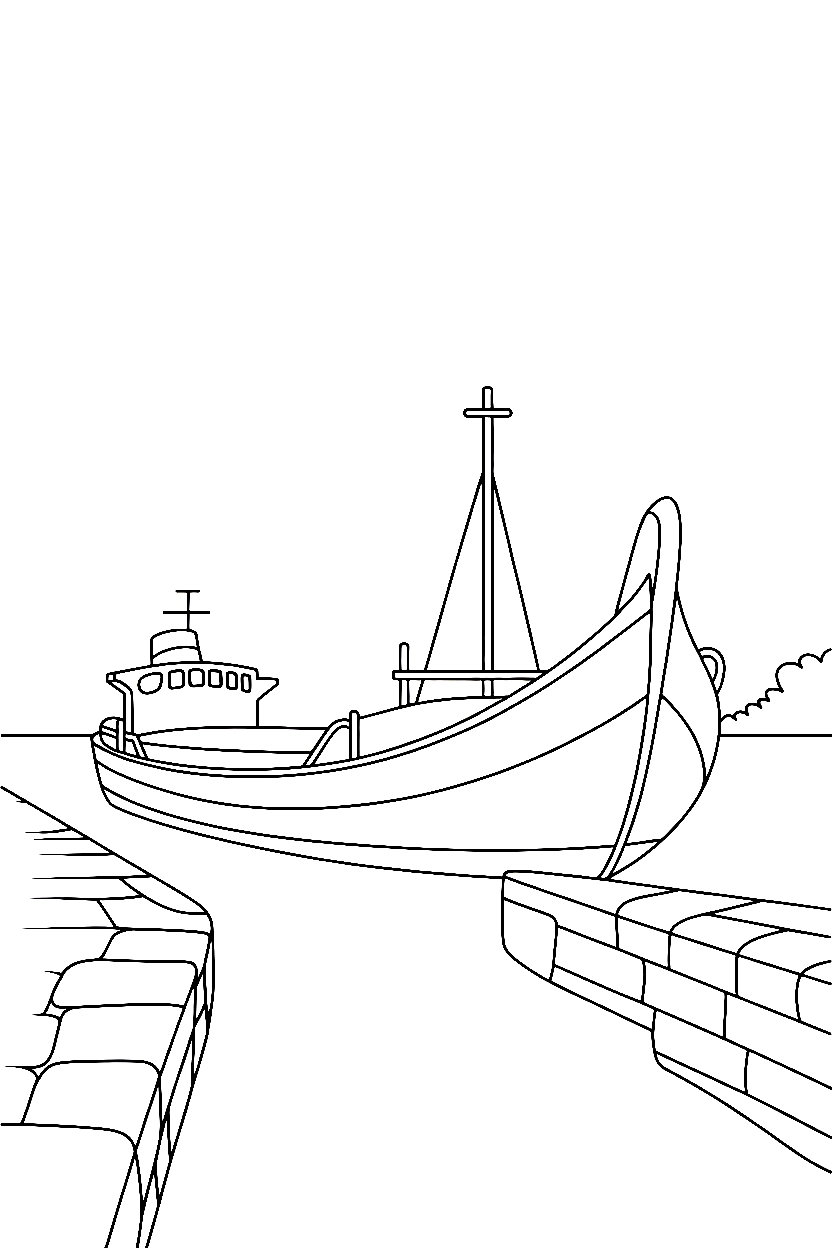
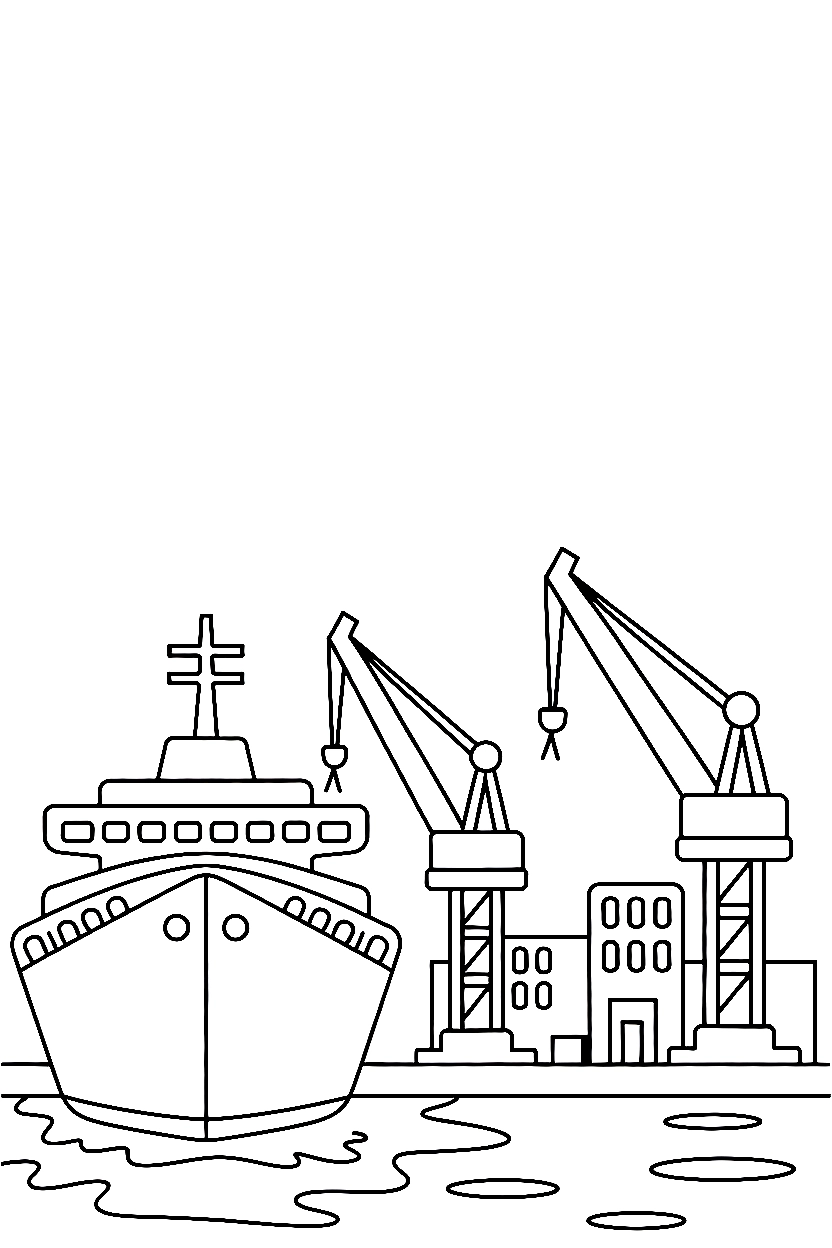
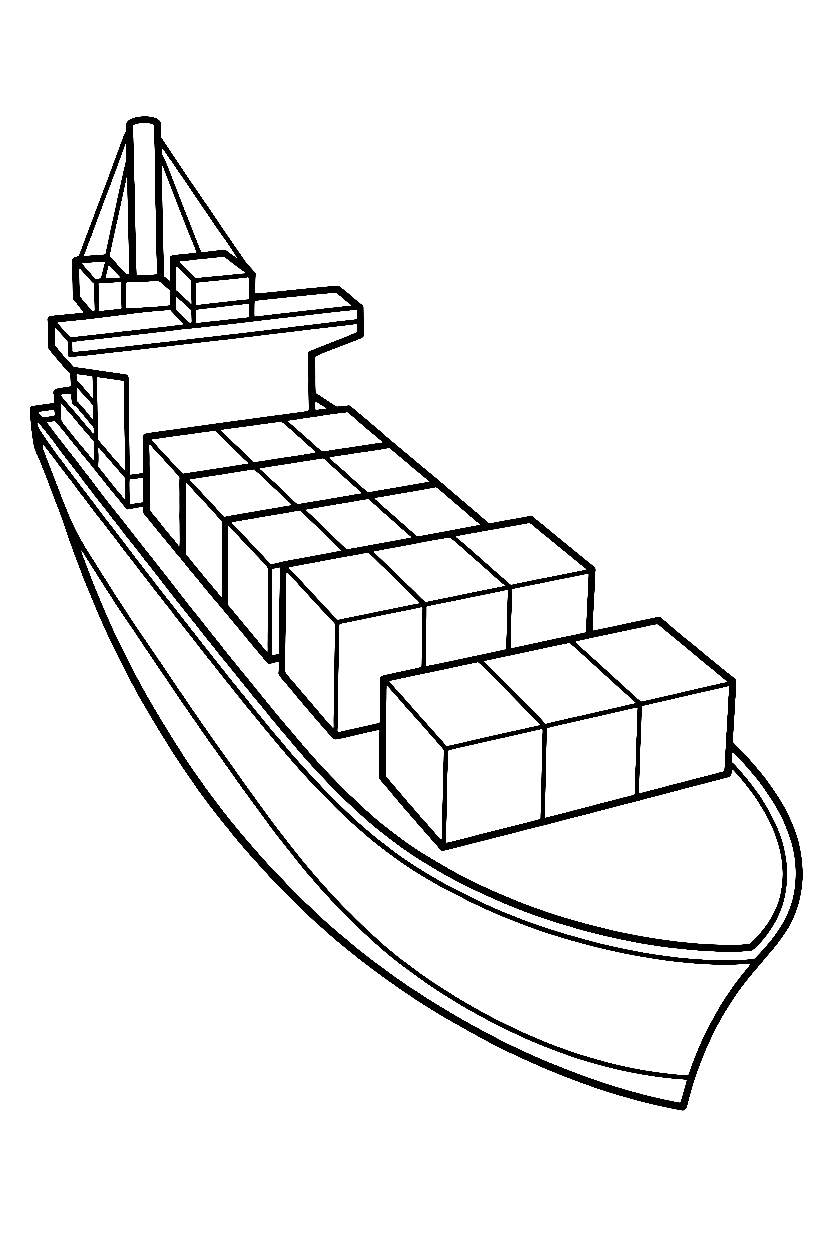
A folded stack of Ship Coloring Pages sits on the corner of a waiting room table, each sheet carrying the dense geometry of hulls, masts, and rigging stretched across white space.
The compositions vary — some wide and horizontal, others tall and vertical. The detail is immediate. A long car ride becomes quieter when hands are occupied with these intricate shapes.
A large sailing vessel drawn in profile carries particular visual weight. The multiple masts rising from the deck, the rigging lines crossing at careful angles, the curve of the hull where it meets an invisible waterline.
An outline drawing like this invites careful attention to the negative space between ropes and sails. Coloring supports fine motor skills. The narrow gaps between deck railings and the tight geometry of portholes reward slow, deliberate work.
Some scenes pull back to show a ship on open water. Waves suggested by curving horizontal lines, a horizon bisecting the frame, a distant lighthouse barely visible at the composition’s edge.
The ship itself dominates — bow pointed left or right, sails either furled tight or drawn fully open. The visual logic is clear. The ship is the anchor. Everything else orbits.
Other compositions zoom closer. A printable activity sheet showing the ship’s wheel and compass mounted on the deck brings the focus down to navigational tools and wooden texture.
The spokes radiating from the wheel’s center, the directional markings on the compass face, the planking lines running the length of the deck — all rendered in clean, patient strokes. Nothing hurried.
There are quieter moments too. A rowboat tied to a weathered dock, oars crossed inside the hull. A tall ship anchored offshore with its reflection suggested by faint lines on the water’s surface.
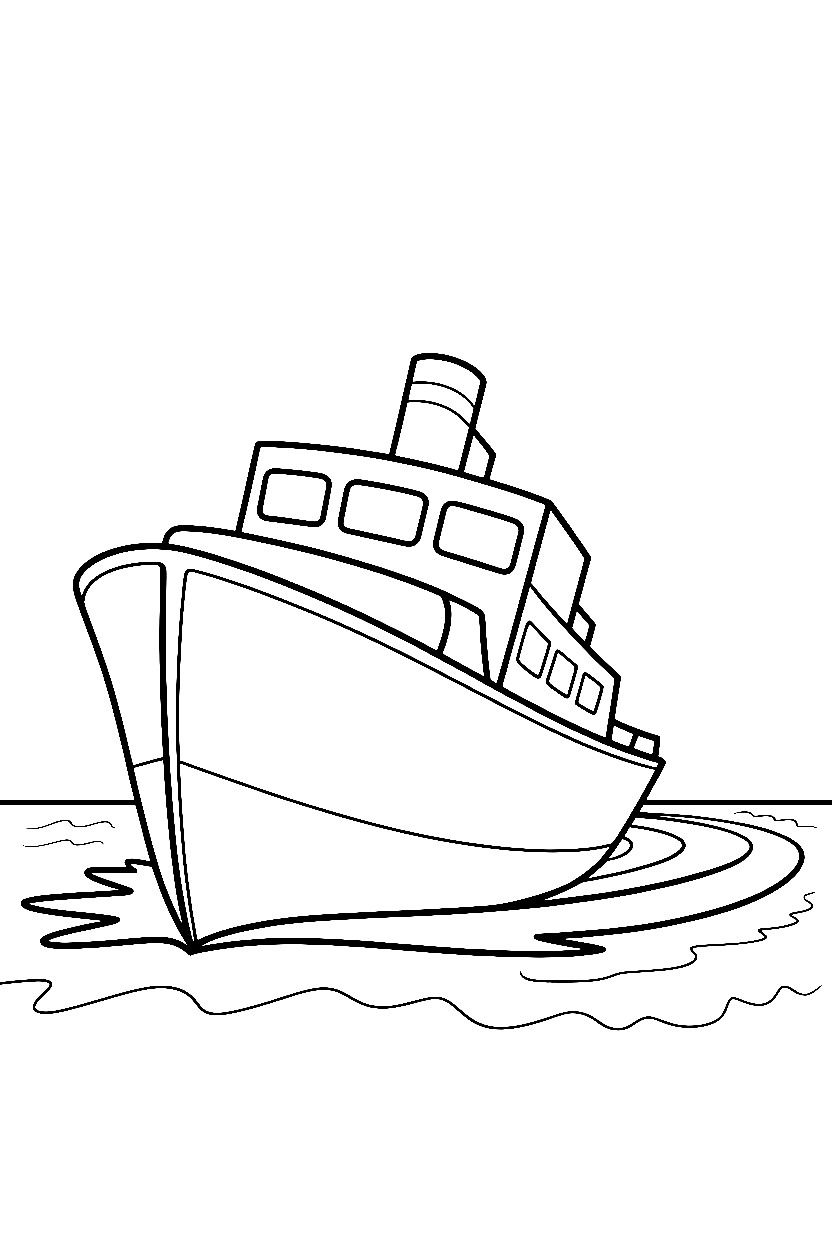
The line art scene of a steamship mid-voyage, smoke rising from its single stack, captures movement without motion lines. The tilt of the stack, the angle of the bow — these do the work.
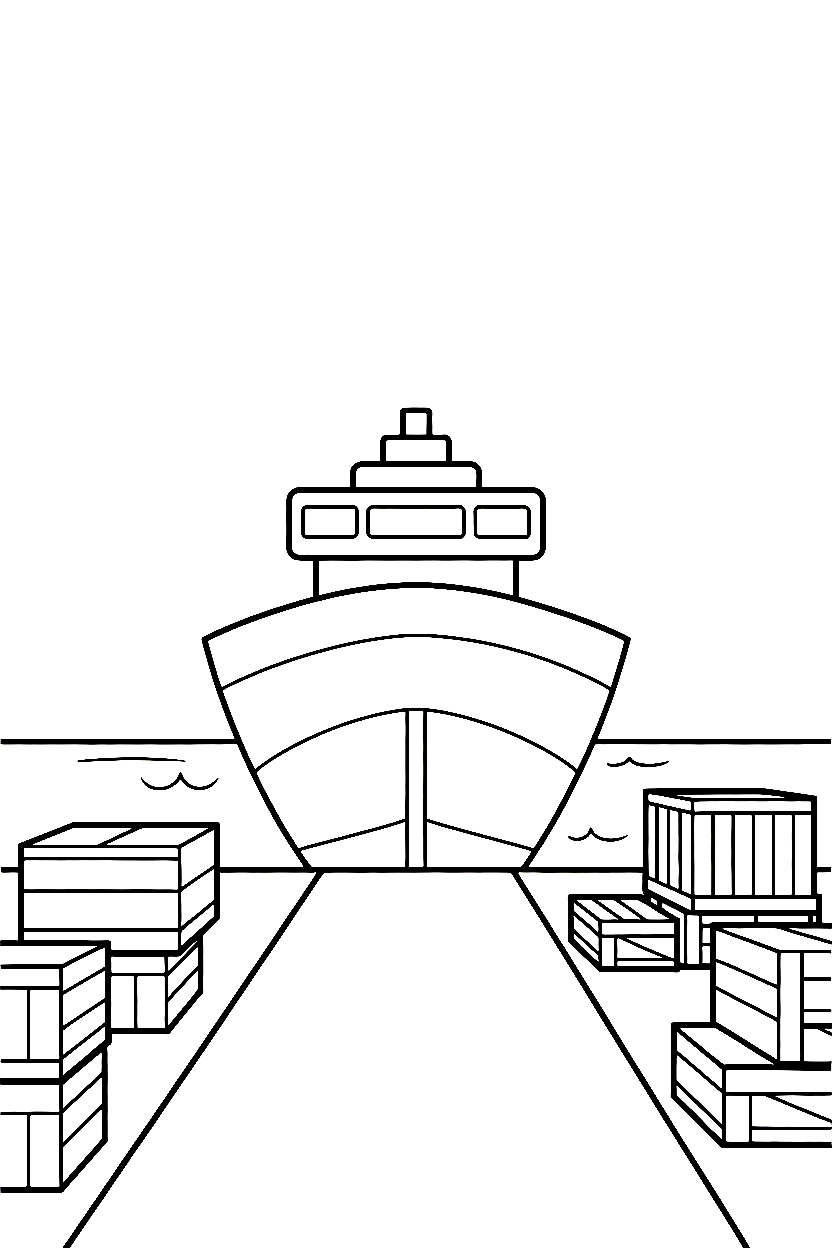
Ship coloring pages span centuries and vessel types without explanation. A Viking longship with its carved dragon prow sits two pages away from a modern cargo freighter with stacked shipping containers visible on deck.
The visual vocabulary shifts, but the fundamental appeal remains — the satisfying complexity of a large object broken into colorable sections. Hulls, decks, rigging, sails. All waiting.
The scale of these drawings makes them feel substantial. A full sailing ship can fill an entire page, leaving just enough margin to frame it. That density is part of the appeal. Ship coloring pages hold attention through sheer visual information.
🎨 Creative Tip Trace the rigging lines first with a sharpened colored pencil to keep them crisp and separate. Use the flat side of a crayon across the large sail sections for even coverage.
Fun Fact: Old sailing ships had a person whose whole job was to climb up the tall masts and look out for land or other ships far away!
How to Print Scroll down to find your preferred scene → Select the image → Click the orange “PRINT” button → Start coloring
What objects are drawn on the deck in the navigation scenes?
A wooden wheel with spokes, a mounted compass, and coiled rope sections are visible.
Do the rigging lines connect the masts to the ship’s edges?
Yes, diagonal rope lines run from the top of each mast down to the deck rails.
Are the portholes drawn along the hull’s side in rows?
Yes, small circular windows appear in evenly spaced horizontal lines along the ship’s body.