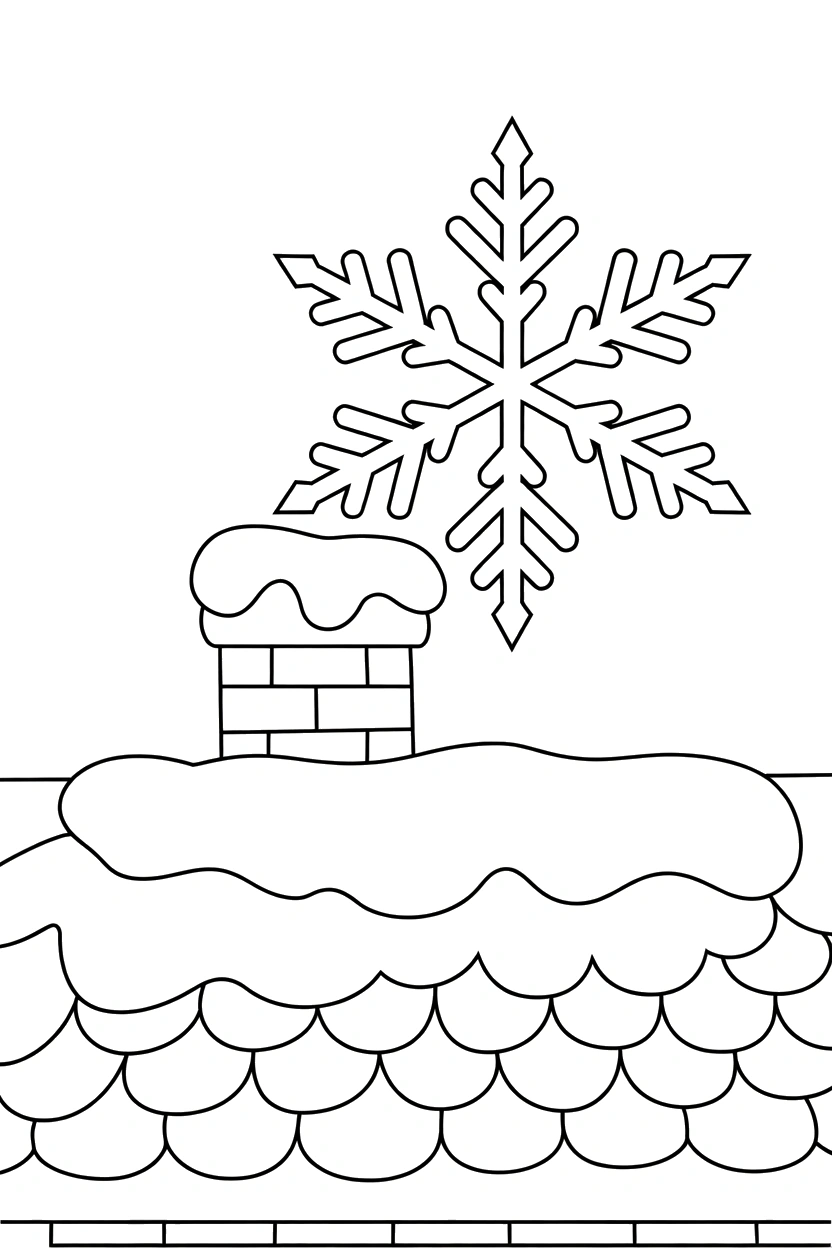
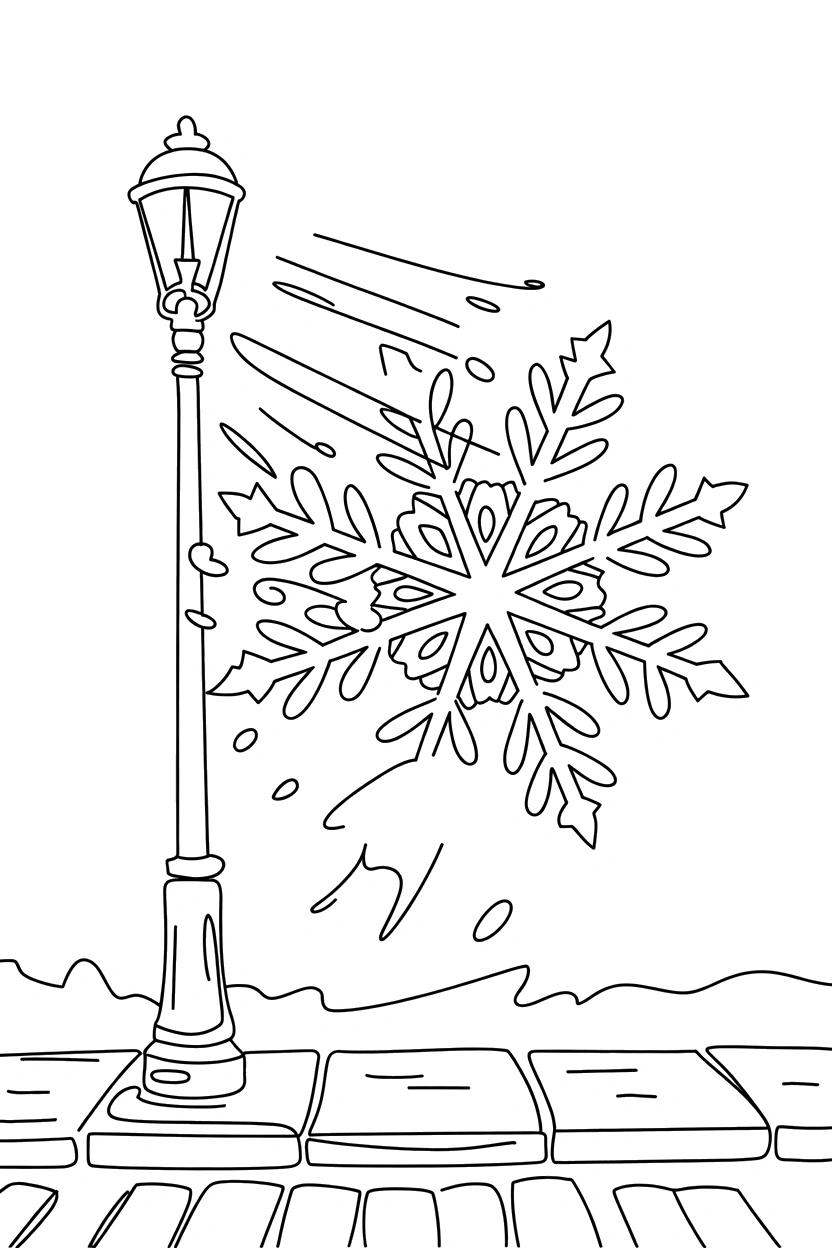
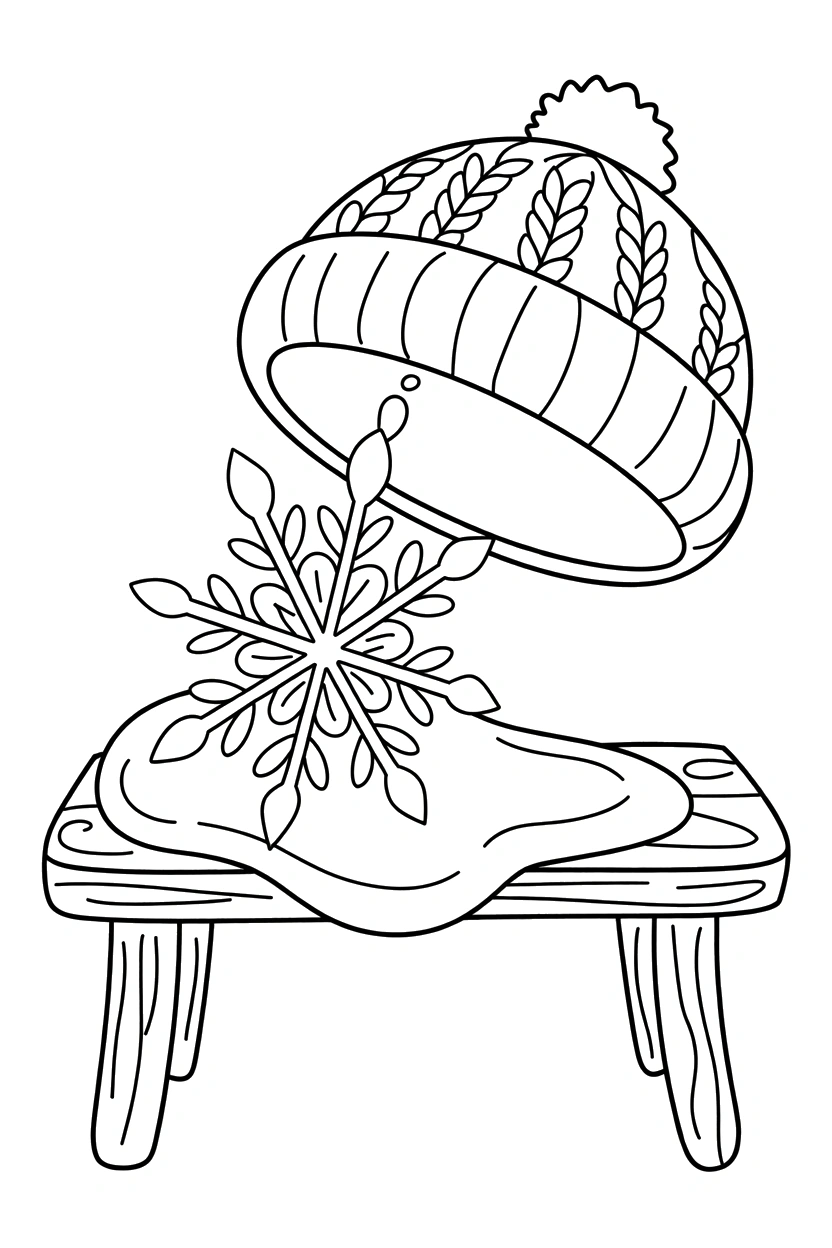
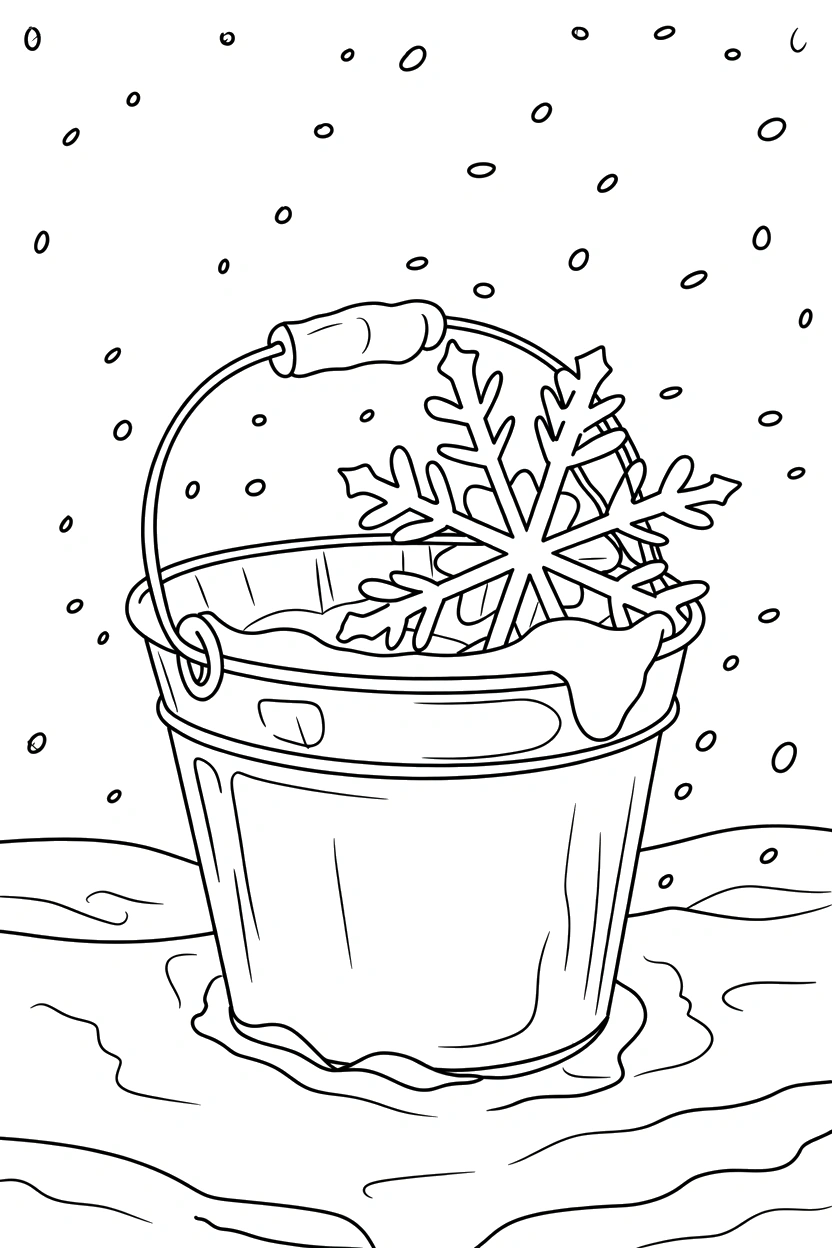
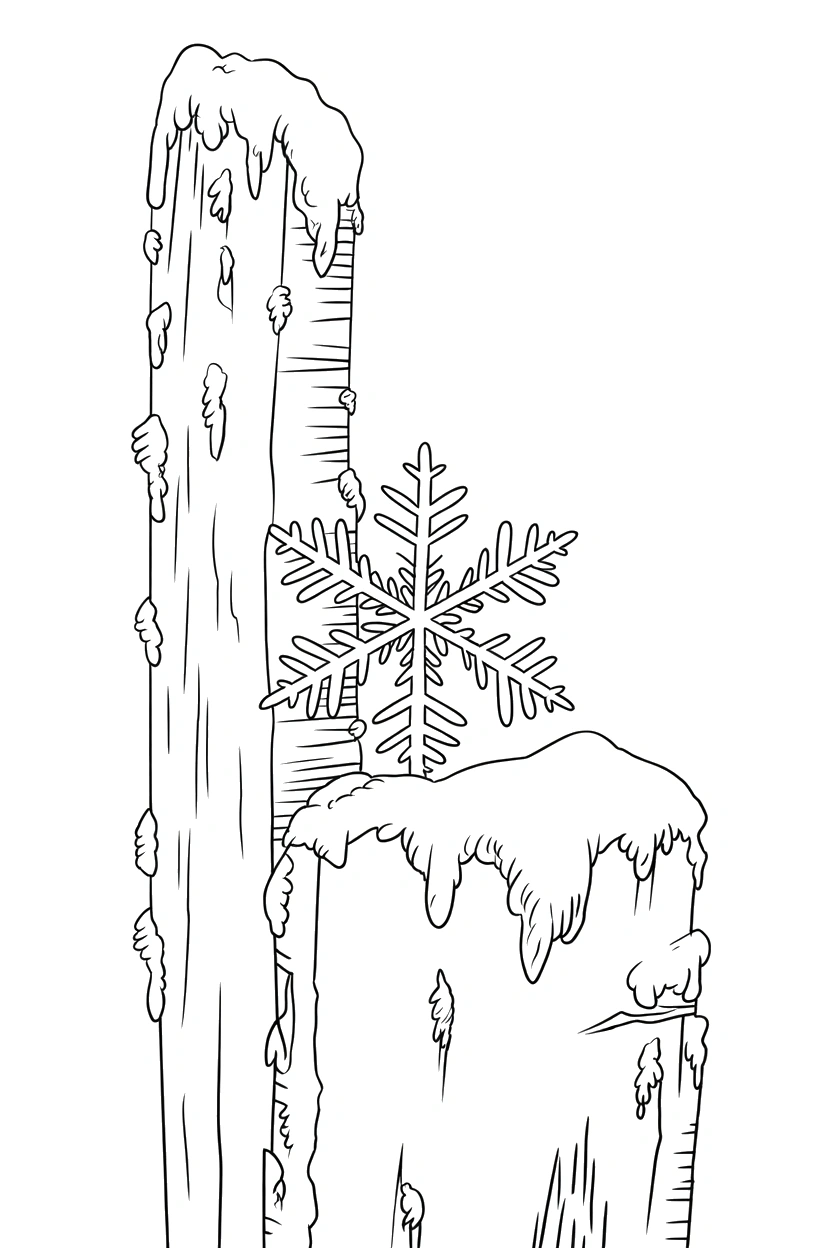
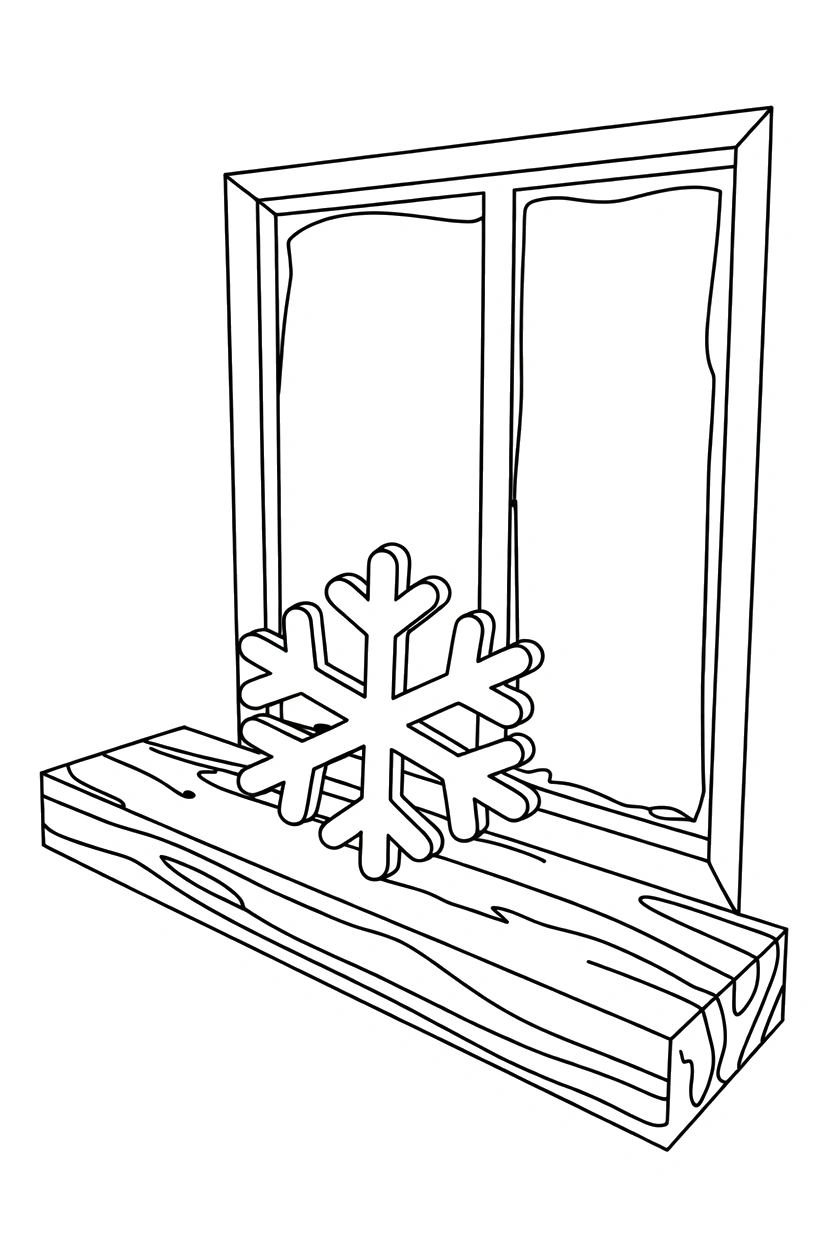
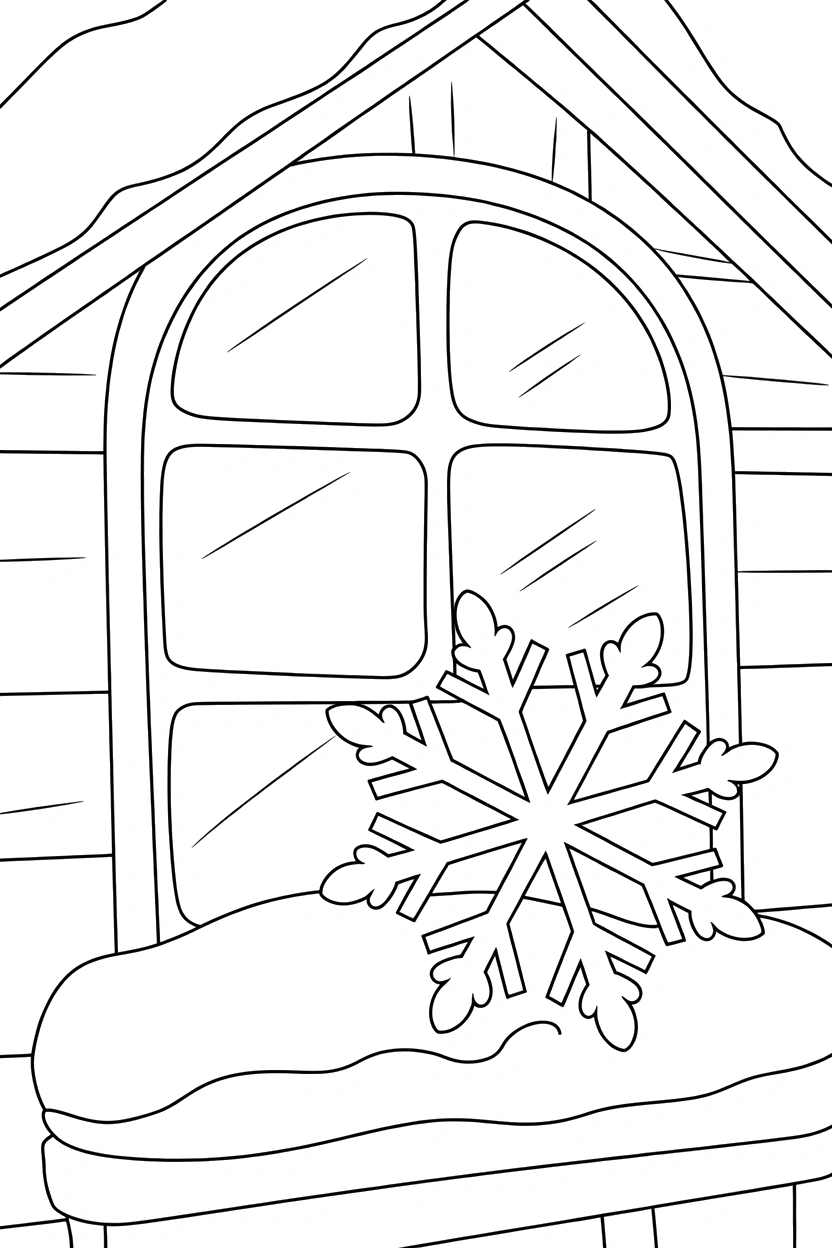
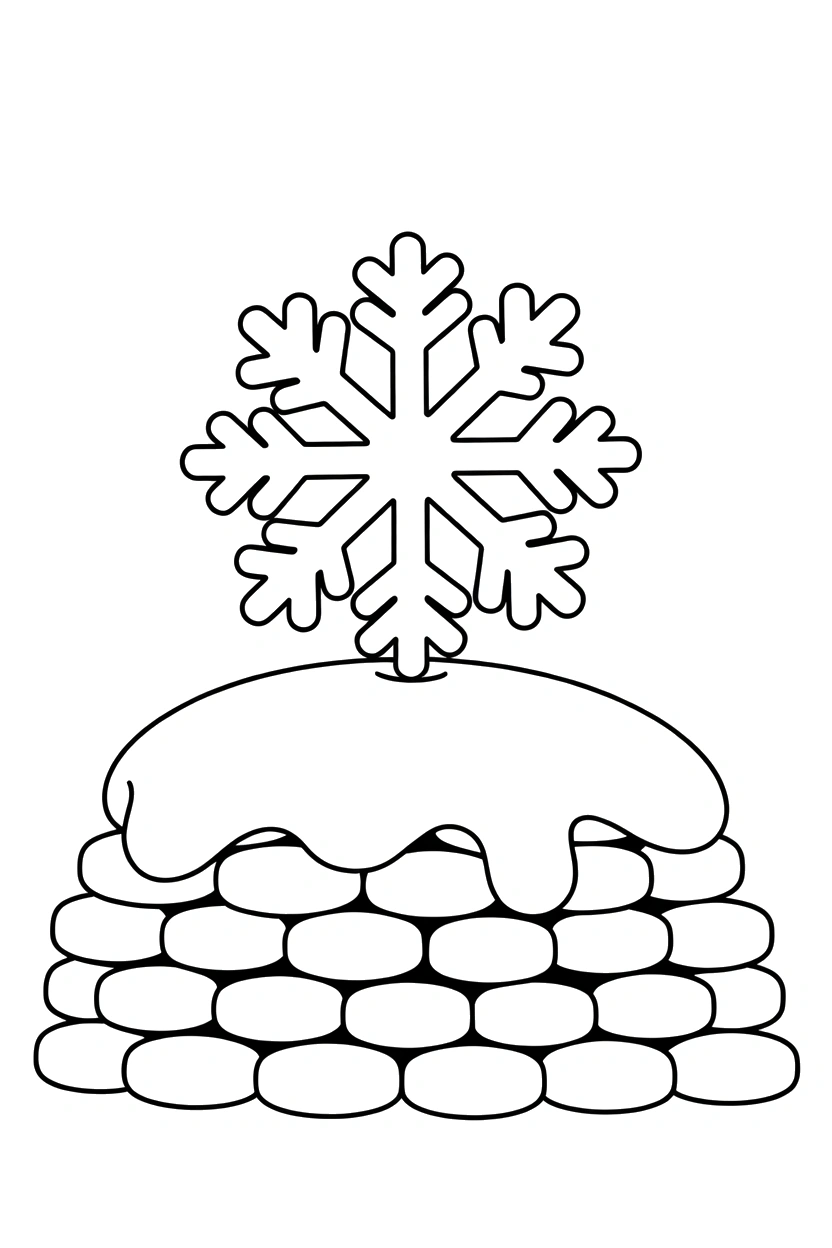
A delicate crystalline shape hovers near the center of the page, and these Snowflake Coloring Pages trace every branching arm with precision down to the smallest spoke.
The scene carries a stillness that belongs to early morning, the kind of printable activity sheet a child might work through during homeschool quiet time without saying a word.
The window ledge in the foreground is drawn with a slight dusting of snow along its edge, each flake suggested by tiny irregular shapes.
Beyond the glass, more snowflakes drift at different sizes, some close and sharp, others distant and simplified. One lands. The sill itself shows wood grain lines, a few knots, and a small crack near the corner.
Nothing moves quickly here. Coloring supports fine motor skills. The largest snowflake is built from a six-pointed radial structure, each arm mirroring the others with barbs and notches that invite slow, careful attention.
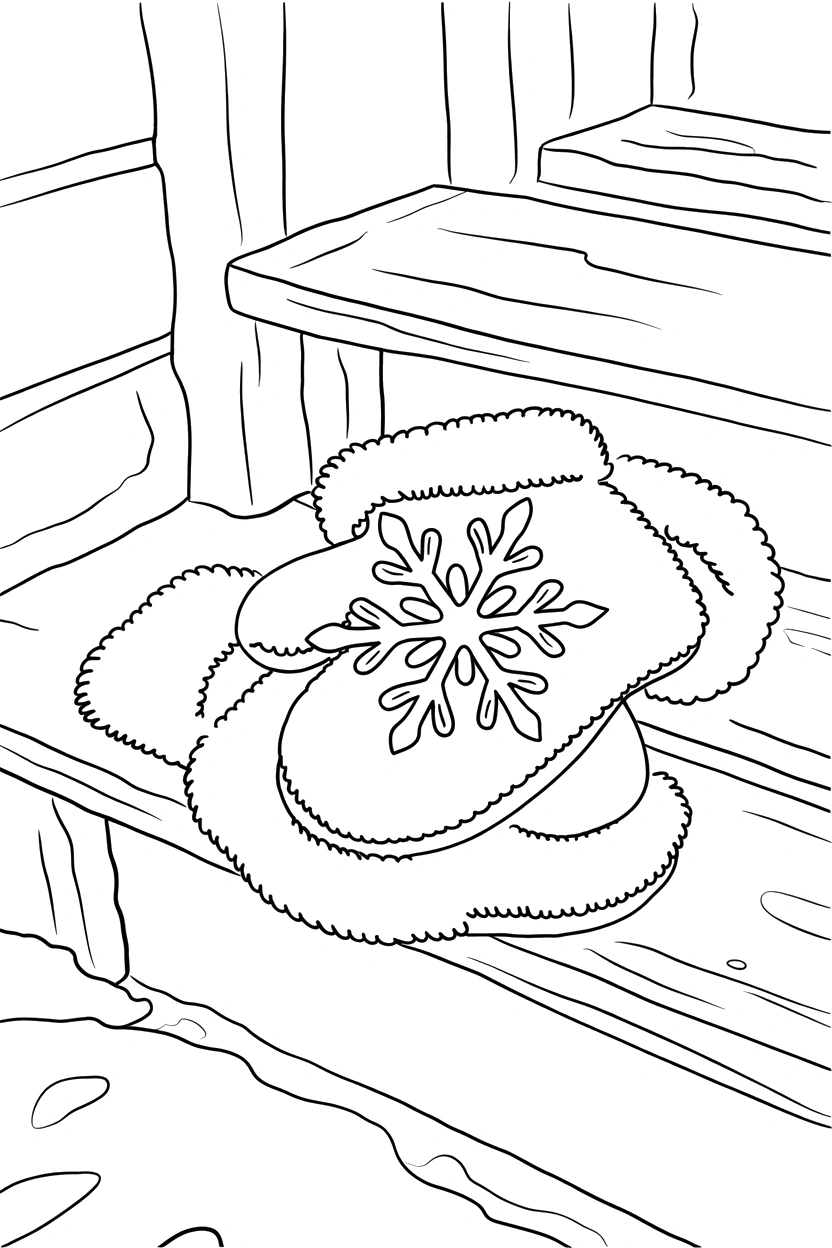
A different page shifts the view entirely. Here a snowflake rests on the surface of a woolen mitten, its outline drawing visible against the knitted texture beneath it. The mitten lies flat on what appears to be a porch step.
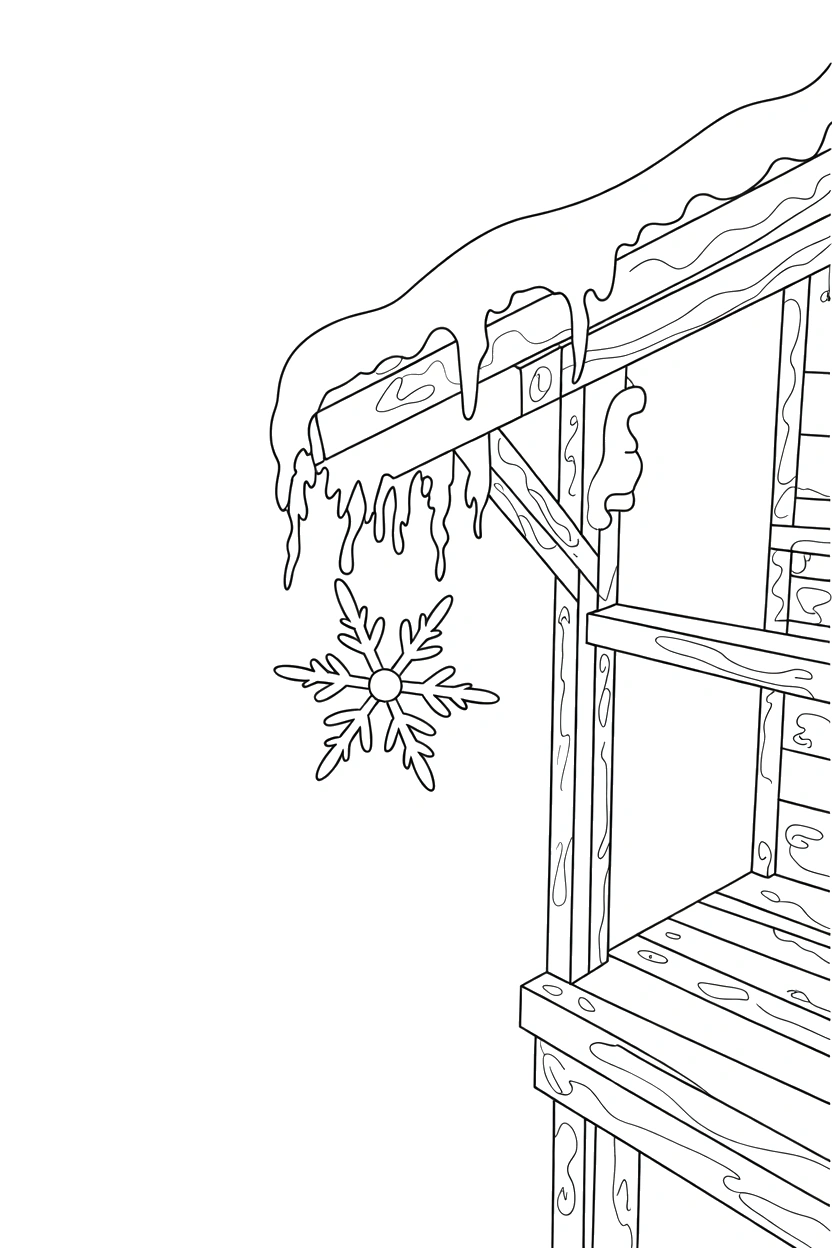
Behind it, a wooden railing rises vertically with icicles hanging from its underside. The snowflake is enormous relative to the mitten — exaggerated for the sake of the hand holding the crayon. Each geometric layer unfolds from the center like a paper cutting.
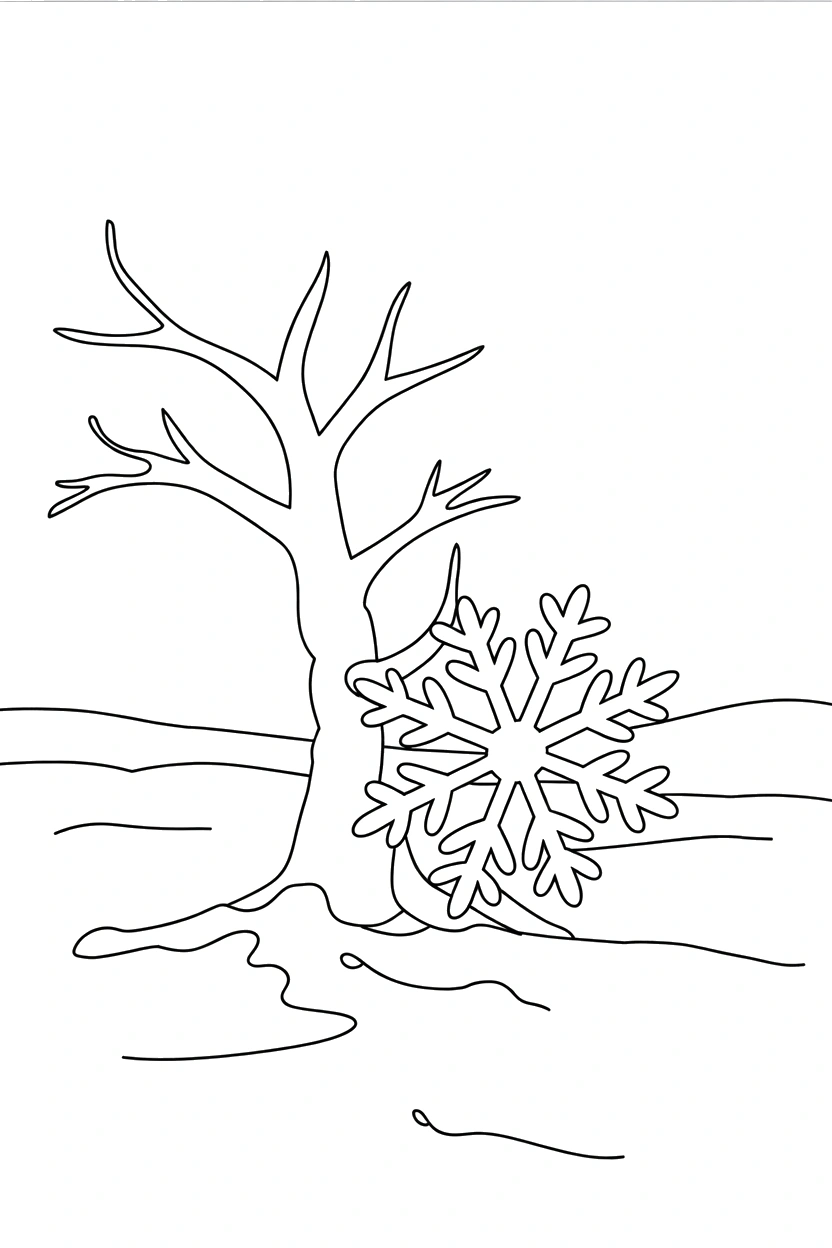
Elsewhere the scene pulls back. A cluster of snowflakes descends past a bare tree, branches splitting and splitting again until they become as fine as the line art scene surrounding them.
The trunk leans slightly. A stone wall runs behind it, low and uneven, with snow collecting in the gaps between rocks.
Snowflake coloring pages often work best when the surrounding space is left open, and this composition does exactly that — wide margins of empty sky with only a few scattered crystals interrupting the blank field.
One arrangement places a single massive snowflake against a plain background, nothing else. No trees. No ground. Just the shape and its dozens of internal lines radiating outward in perfect symmetry.
The center rosette is drawn with concentric hexagons, and each arm extends with repeating diamond and arrow patterns. It fills the frame.
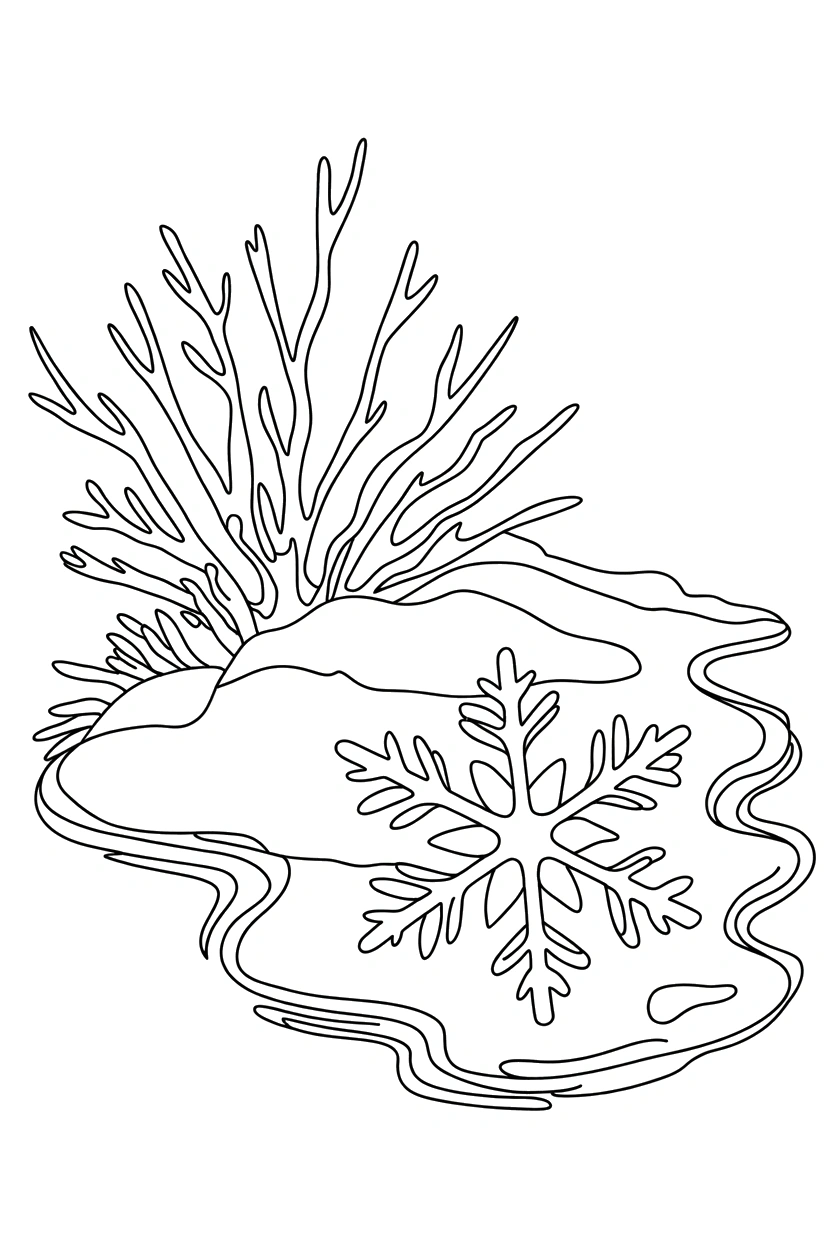
The final layout brings the snowflake close to the earth. It sits on a frozen puddle surface, its reflection barely suggested by a faint reversed outline beneath it. A few dry twigs lie nearby.
A fence post stands in the background, wrapped in a thin layer of frost. Everything is quiet and geometric and cold. Snowflake coloring pages like these hold a kind of mathematical calm that rewards patience more than speed.
Creative Tip: Use a sharp colored pencil to trace inside each arm of the snowflake first. Then fill the surrounding sky area with the broad side of a crayon.
Fun Fact: Every snowflake has six arms because of the way water freezes into crystals.
How to Print
Scroll down to browse all available images
Select the image you want to print
Click the orange “PRINT” button
Start coloring
What patterns appear inside the snowflake designs?
Diamonds, hexagons, arrows, and branching barbs fill the interior of each snowflake arm.
Do any scenes include background elements like trees or fences?
Yes, several layouts feature bare trees, stone walls, fence posts, and frosted window ledges.
Can the large single-snowflake design work as a standalone activity?
It works well alone since the intricate internal patterns provide plenty of detail to color.